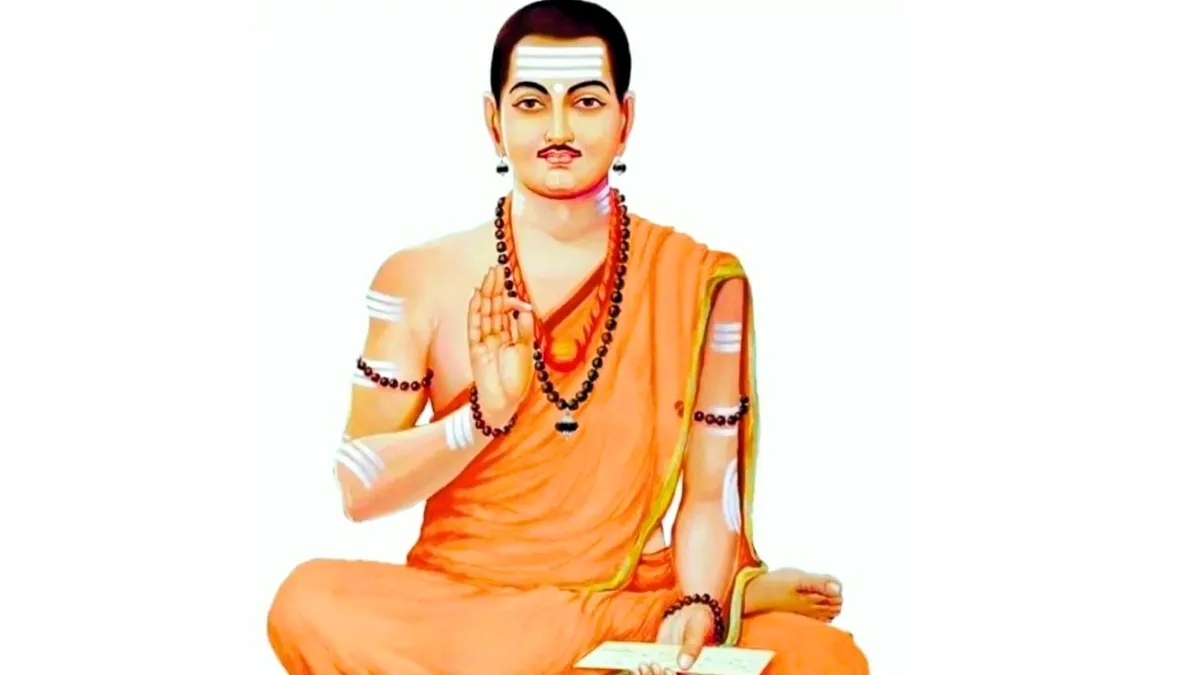
Jagadguru Basaveshwara was a 12th-century Bhakti Movement saint who reshaped the cultural fabric of India popularly known as Basavanna. He was a visionary statesman and philosopher whose early life in Karnataka set the stage for a spiritual revolution by blending a radical philosophy with active social reforms, he challenged the status quo of medieval society.
Jagadguru Basaveshwara, advocated for human rights and democratic values long before the modern world debated, led the groundwork for an egalitarian society in Karnataka. He was a statesman, poet, and social reformer who challenged the rigid caste system of medieval India. His teachings, preserved through simple prose-poems called Vachanas, founded the Lingayat faith continue to inspire millions globally as a blueprint for social justice
Early Life: The Seeds of Rebellion
Basavanna born on April 20, 2026 in Bagevadi (modern-day Bijapur district) of Karnataka, He was born to a Brahmin family. His early life was marked by a quest for a more inclusive divinity.
At age eight, Basavanna refused to undergo the Upanayana, a sacred thread ceremony, by questioning why such rituals excluded women and lower castes, seeking a path that didn't exclude individuals based on birth or gender.
He traveled to Kudalasangama to follow the path of spirituality where he studied ancient texts Vedas but concluded that true religion lies in compassion (Daya) rather than ritualism.
He eventually transitioned into statecraft, serving as the Chief Minister in the court of King Bijjala II of Kalyani. He used this high office as a platform to launch a socio-religious revolution.
Vachanas: The Language of the People
Basavanna revolutionized Kannada literature by moving away from Sanskrit and adopting the language of the common man. Vachanas became his primary vehicle to spread the message. He wrote the poems and gave the Vachanas by making complex spiritual truths accessible to everyone.
-
Democratic Spirit: Vachanas emphasized that spiritual realization was the right of every human.
-
Abolishing Rituals: They criticized animal sacrifice and hollow rituals, pointing instead toward a "living" faith.
-
Ankita Nama: Every Vachana ended with a dedication to his deity, Kudalasangama Deva.
A famous quote of Basaveshwara:
"The rich will make temples for Shiva. What shall I, a poor man, do? My legs are pillars, the body the shrine, the head a cupola of gold."
This famous Vachana highlights his belief in Dehave Degula a Body is the Temple, highlights the Divine resides within the individual rather than in stone buildings.
The Philosophy of Equality
Basavanna’s philosophy was practical and grounded in everyday existence. He redefined the relationship between man, work, and God through two core pillars: Kayakave Kailasa and Dasoha
-
Kayakave Kailasa: He taught that honest, physical labor is the highest form of worship. This belief dismantled the hierarchy that placed intellectual work above manual labor.
-
Dasoha: This principle encouraged the selfless sharing of one's earnings with the community, ensuring that wealth was never hoarded but used for the collective good.
Social Reforms: The Anubhava Mantapa
Jagadguru Basaveshwara led the social reforms that were revolutionary for the 12th century. His most significant contribution to society was the creation of the Anubhava Mantapa (Hall of Spiritual Experience).
-
Lingayat tradition: Jagadguru Basaveshwara is revered as the founding saint of the Lingayat tradition and spearheaded a socio-religious revolution that moved spirituality out of the temples and into the hearts of the common people.
-
Gender Equality: He encouraged women like Akka Mahadevi to lead intellectual discourses.
-
Caste Abolition: He fought against untouchability and orchestrated inter-caste marriages to prove that all souls are equal.
-
Ishtalinga: He introduced the Ishtalinga, a personal icon of God worn on the body to symbolize that the divine is always with the devotee by removing need for temple-based worship.
Jagadguru Basaveshwara remains a significant figure in Indian history because his philosophy and social reforms were not just theoretical but they were lived from his early life to his final days. His mission was to create a society where dignity was a birthright and "Work is Worship" was a way of life.
Also Read:



-1776494811841_t.webp)