19-Year-Old Canadian Student’s Device Made From Straws Now Helps People With Cerebral Palsy In 26 Countries


A 19-year-old Canadian student has developed a simple assistive device using materials such as straws and a sponge to help people with cerebral palsy and limited hand mobility paint, draw and write. The device is now being sold in more than 25 countries around the world.
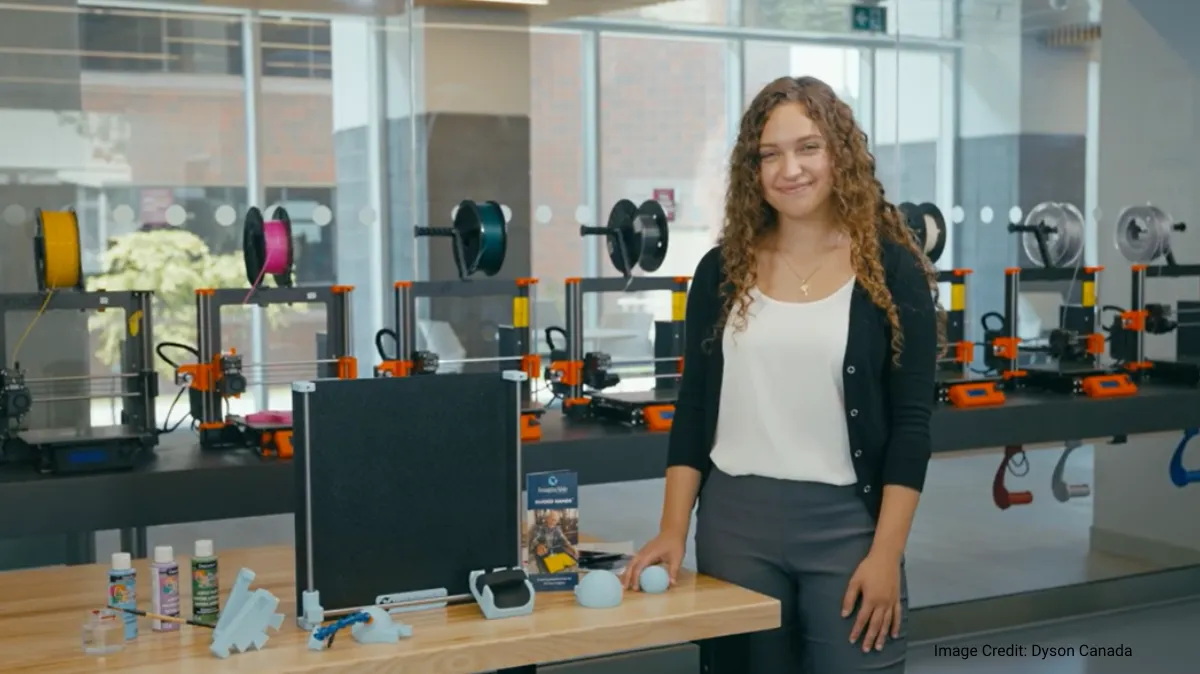
An estimated 18 million people worldwide live with cerebral palsy, a condition that can affect movement and muscle control and make everyday activities difficult. For people with limited hand mobility, even simple tasks such as holding a paintbrush can become challenging. At 19, Canadian student Lianna Genovese developed a device to help people overcome this barrier and rediscover painting. Now 26, Genovese’s invention has grown from a simple student project into an assistive technology available in 26 countries.
Genovese developed the device while studying biomedical and mechanical engineering at McMaster University. The earliest version was made using simple materials including straws, pipe cleaners and a sponge. What began as a university project has since evolved into a device used in homes, schools and hospitals to help people with limited hand mobility paint, draw, write and use touchscreen devices.
How Did Lianna Genovese Develop The Device?
Genovese came across the challenge as part of a first-year design project at McMaster University. She wanted to develop something that could help people who struggled with fine motor movements.
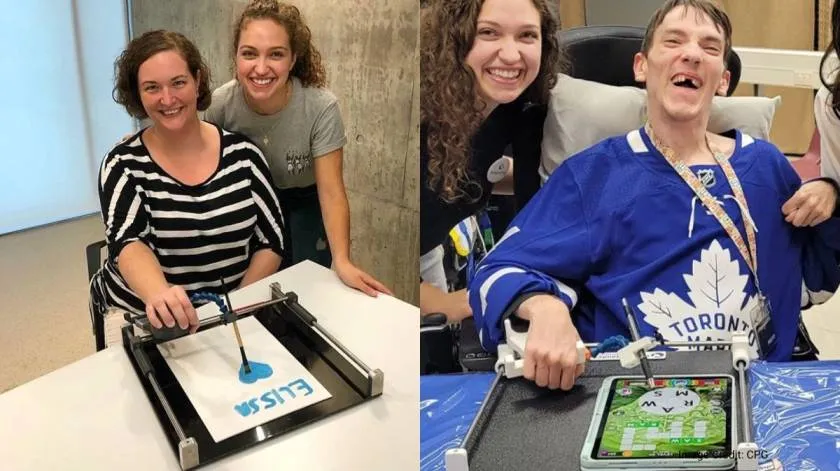
Her interaction with Elissa, a woman living with cerebral palsy, gave her a specific direction for the project. Elissa had gradually lost the ability to control a paintbrush because of the effects of her condition. Despite this, she remained passionate about painting. Genovese began looking for a way that would allow Elissa to continue painting without requiring precise movements from her fingers and hands.
The first prototype was surprisingly simple. Genovese used pipe cleaners, straws and a sponge to put together the initial version of the device.
She then asked Elissa to test it and used her feedback to make changes. Genovese continued modifying the design through several iterations to make it more useful and comfortable for people with limited hand movement.
How Does The Device Help People Paint?
The invention, known as Guided Hands, uses a different approach to movement.
Instead of depending mainly on fine motor skills in the fingers and hands, the system allows users to make use of larger movements from their shoulder and arm.
The device features a sliding mechanism inspired by the mechanics of a 3D printer. A handpiece guides the user’s movement, while an attachment can hold different tools, including paintbrushes, pens, pencils, markers and styluses.
This allows people with limited hand mobility to make controlled movements across a surface and participate in activities that may otherwise be difficult for them.
The technology is not limited to painting. It can also be used for drawing, writing, colouring and interacting with touchscreen devices, giving users more ways to participate in creative and everyday activities.
From A University Assignment To A Real Invention
For Genovese, the project became more meaningful after she saw how people responded to the early versions of the device.
She later met Bella, a child with cerebral palsy, and watched her use Guided Hands to write, colour, draw and play games on an iPad. The experience convinced Genovese that her classroom project could become something that helped many more people.
She eventually founded ImaginAble Solutions, the company behind Guided Hands, and continued developing the technology with feedback from patients and healthcare professionals.
During the development process, Genovese also connected with more than 150 patients, neurologists and occupational therapists across Canada. Their feedback helped her better understand the different challenges faced by people with limited hand mobility and improve the device accordingly.
What Happened To The Device?
The invention has come a long way from the simple prototype Genovese created as a teenager. According to a recent 2026 update, Guided Hands is now available in 26 countries and has reached thousands of people with limited hand mobility. The device is being used in different settings, including homes, schools and hospitals.
The invention has also received recognition for its approach to assistive technology. What began as a university assignment has developed into a product designed to give people greater independence in activities such as painting, drawing, writing and using technology.
A Simple Idea That Grew Globally
Genovese’s story stands out because the original invention did not begin in a major research laboratory. At just 19 years old, she started working on the idea with everyday materials such as straws, pipe cleaners and a sponge. Several years later, the project has grown into an assistive technology available across 26 countries.
For people with limited hand mobility, Guided Hands offers more than a way to hold a paintbrush. It can provide another way to communicate, create and take part in activities that might otherwise be difficult. What started as a young student’s attempt to help one person paint has ultimately developed into a technology being used by people in different parts of the world.
Sahil Behl is an education journalist at Jagran with over a year of experience in journalism. Prior to joining Jagran, he worked as a Sub-Editor in NDTV's Education department, where he was responsible for writing and editing education-related content as well as managing the department's social media presence. At Jagran, he covers a wide range of education topics, including board examinations, school updates, admissions, and job notifications, while leveraging his editorial expertise and strong understanding of digital content strategy.
Sahil holds a Bachelor's degree in Business Administration and has also completed an eight-month certification program in Data Science. Passionate about emerging technologies, particularly artificial intelligence, he closely tracks their growing role in journalism and explores how they are transforming shaping the future of the media industry.

-1787380849385_t.webp)

