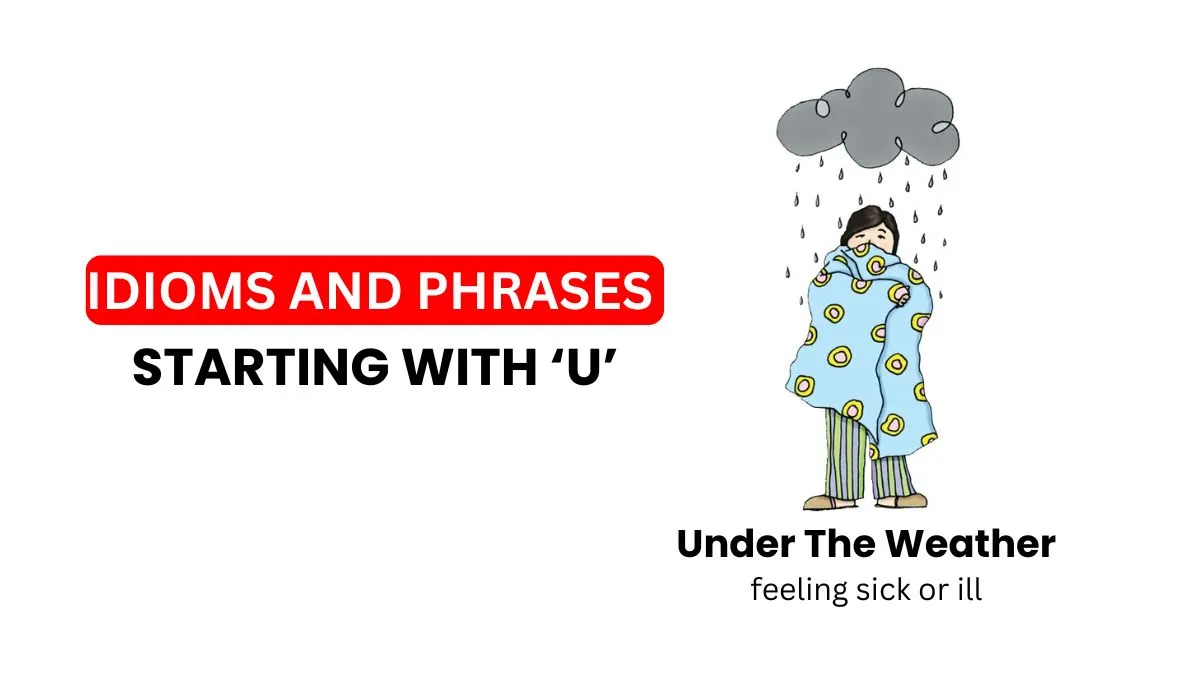
An idiom is a group of words that has a meaning that is different from the usual meanings of the individual words in it. An idiom has a figurative meaning instead of a literal meaning.
A literal meaning is the most basic sense of a word or phrase. A figurative meaning expresses an idea that is different or interesting in order to create a mental picture.
Some examples of idioms include 'cost an arm and a leg', which does not mean you literally have to pay for something with an arm and a leg. But figuratively it means that something is very expensive and costs a lot of money.
Let's take another example. 'One's cup of tea', which means something one likes or prefers. The idiom is often used in the negative form to describe something someone doesn't like.
So often readers are curious about when idioms came into use? Well, idioms did not start on a single date. These figurative expressions have evolved over centuries, often many originating in English from the 14th to 18th centuries through maritime life, literature, and folklore.
Idioms have four main types, which include pure idioms, binomial idioms, partial idioms, and prepositional idioms. In this article, we will learn the most common idioms starting with the letter 'U' with their meanings.
Most Common Idioms Starting With The Letter 'U' And Their Meanings
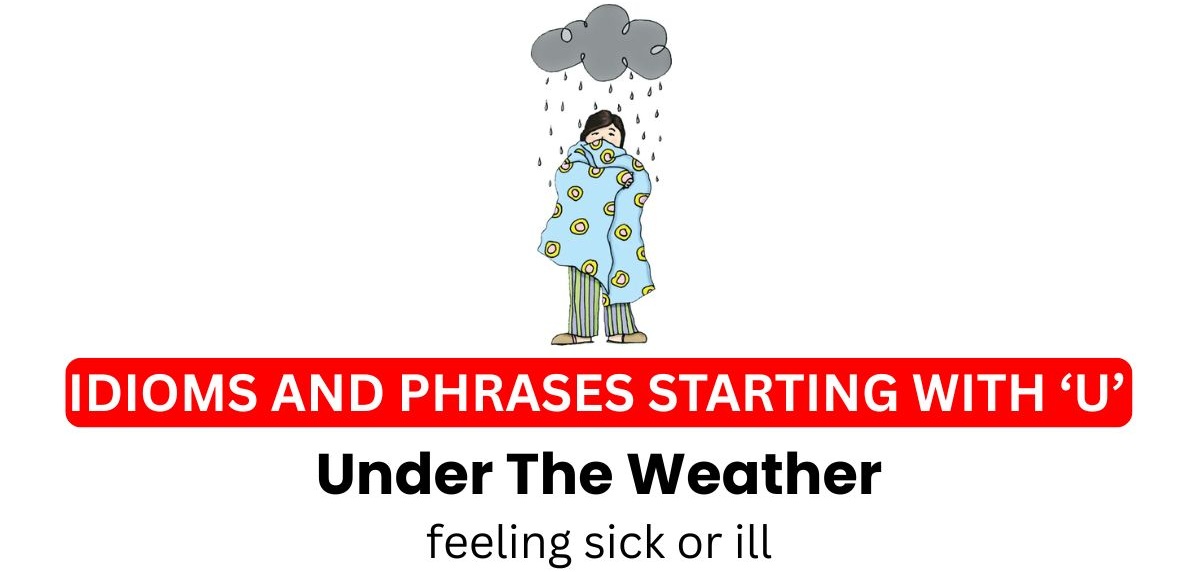
Here is the list of the most common idioms with their meanings starting with letter 'U':
| Idioms | Meaning |
| Under the weather | feeling ill or sick |
| Up in the air | uncertain, unplanned |
| Under the table | secretly |
| Up for grabs | available for anyone to take or win |
| Under wraps | secret, hidden, or not yet revealed |
| Up in arms | very angry or protesting strongly about something |
| Under your nose | right in front of you |
| Up to scratch | meeting the required standard or quality |
| Up to no good | doing something wrong or mischievous |
| Up and running | functioning smoothly |
| Under the knife | undergoing surgery |



Comments
All Comments (0)
Join the conversation