For thousands of years, the rivers were considered the lifelines for civilizations and became an important landmark for human history by providing a steady stream. However, if one inquires about which country has no rivers, it becomes apparent that there are some extraordinary countries whose existence relies on an absence of such a phenomenon.
These exceptional lands do not boast a river as a part of their geography because it is due to the presence of innovative human adaptation techniques, which help these countries exist in the absence of what others regard as indispensable for their survival.
Which Country has No Rivers?
Despite rivers being considered life-supporting water bodies, some countries survive perfectly well without any flowing rivers. In looking for which country has no rivers, the answer always comes in one of two groups; very large desert countries and very small microstates.
A classic example is Saudi Arabia. Being one of the biggest countries in the world, Saudi Arabia lacks any permanent rivers due to the presence of an extremely dry climate and landscape. Similar challenges are faced by other desert countries such as Kuwait, Qatar, UAE, and Oman, and they survive thanks to modern technology and natural sources of water.
Some microstates are so tiny that the land area cannot host a river system, such as Monaco and Vatican. Island nations such as Malta, Nauru, and Bahrain are also among countries without rivers.
Why Is There A Country Without Rivers?
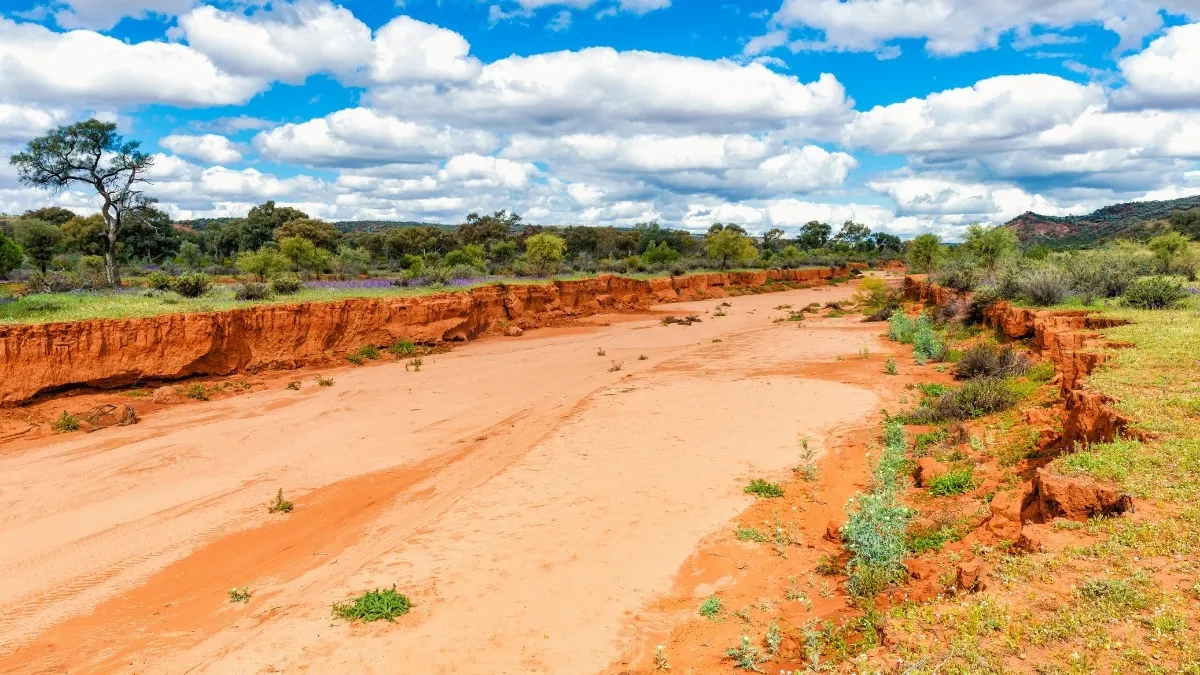
A country that lacks water courses normally suffers from geographical and climatic extremes. The major reason behind the question for which country has no rivers is their harsh desert environment, where evaporation rates exceed precipitation levels. In countries like Saudi Arabia and Kuwait, the absence of permanent rainfall means that the water cannot form any streams but creates temporary waterless streambeds called wadis.
However, size and geological nature are crucial factors here. For micro-nations like Vatican City and Monaco, there is simply no room for a river system to appear, whereas islands like Malta have a geologically permeable layer of limestone that drains all rainfall underground before the river can form. However, these nations demonstrate that it is possible to create a thriving civilization without flowing rivers by applying advanced technologies.
List Of Countries Without Rivers
While most civilizations rely on permanent waterways, a staggering 19 countries and 22 territories thrive without them. If you are wondering which country has no rivers, the answer lies in arid subregions like the Arabian Peninsula or small island states that rely on seasonal wadis and advanced desalination to survive. Below is a list of countries having no rivers along with their continents
Africa
-
Comoros
-
Djibouti
-
Libya
Asia
-
Bahrain
-
Kuwait
-
Maldives
-
Oman
-
Qatar
-
Saudi Arabia
-
United Arab Emirates
-
Yemen
Europe
-
Malta
-
Monaco
-
Vatican City
Oceania
-
Kiribati
-
Marshall Islands
-
Nauru
-
Tonga
-
Tuvalu
Dependencies and other territories
Asia
-
British Indian Ocean Territory
-
Macau
Europe
-
Gibraltar
The Americas
-
Anguilla
-
Aruba
-
Bermuda
-
Bonaire
-
Cayman Islands
-
Curaçao
-
Saba
-
Saint Barthélemy
-
Saint Martin
-
Sint Eustatius
-
Sint Maarten
-
Turks and Caicos Islands
Oceania
-
Christmas Island
-
Cocos (Keeling) Islands
-
Easter Island
-
Niue
-
Norfolk Island
-
Pitcairn Islands
-
Tokelau
How Do Countries Without Rivers Manage Water?
Nations identified for which country has no rivers overcome geographic scarcity through high-tech innovation and strategic resource management. Desalination plants act as an essential solution by transforming huge quantities of seawater into potable water on a daily basis.
Some places use groundwater by tapping into underground aquifers; however, care should be taken not to exhaust this supply. Some small countries obtain water from neighboring countries through pipelines or water transport services. Others make sure to utilize their rainfall resources during the season by collecting rainwater in large quantities. Through this approach, these countries ensure water security.