Why Red Sea in news? On 15 April 2026, a blockade of Iranian ports was fully implemented by the US forces. In less than 36 hours since the blockade was implemented, US forces have completely halted economic trade going into and out of Iran by sea. An estimated 90% of Iran's economy is fuelled by international trade by sea, said US Central Command Admiral Brad Cooper in a social media post on X.
In retaliation, Iran's armed forces have threatened to block key global trade routes, including the Red Sea, the Persian Gulf, and the Sea of Oman, if the US continues its blockade and "creates insecurity for Iranian commercial ships and oil tankers". After the US-Iran peace talks failed over the weekend, Trump ordered US forces to block all Iranian ports at Hormuz.
In this article, we will learn which countries border the Red Sea and why the Red Sea is important?
Which countries border the Red Sea?
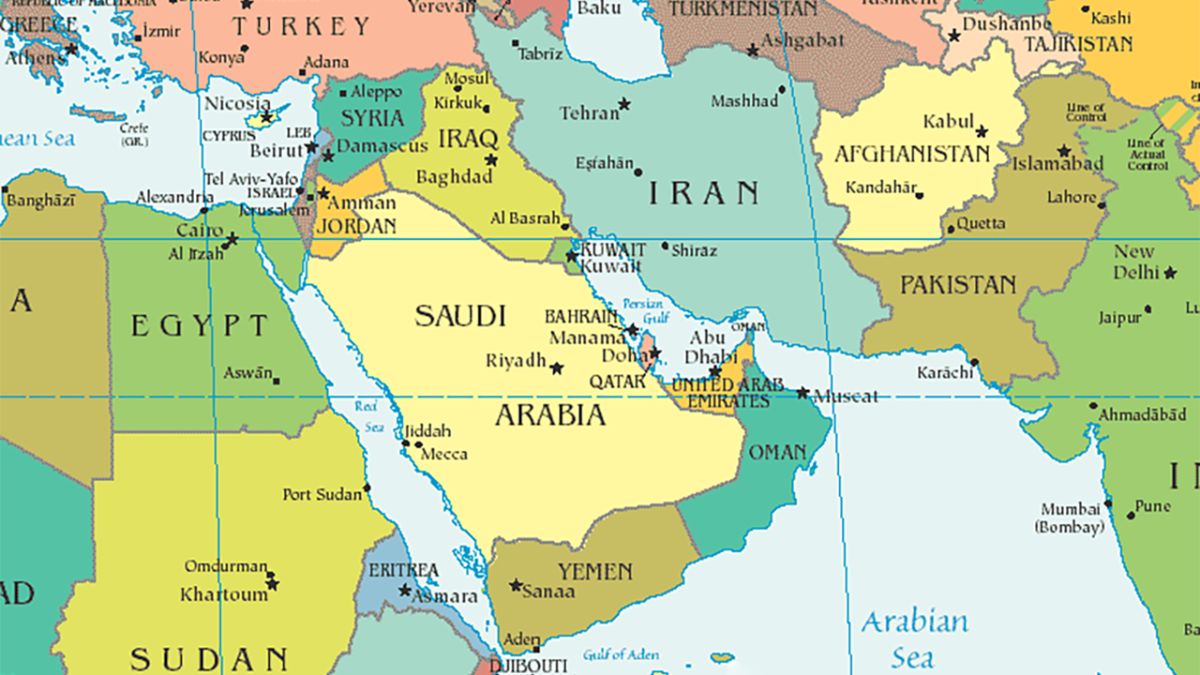
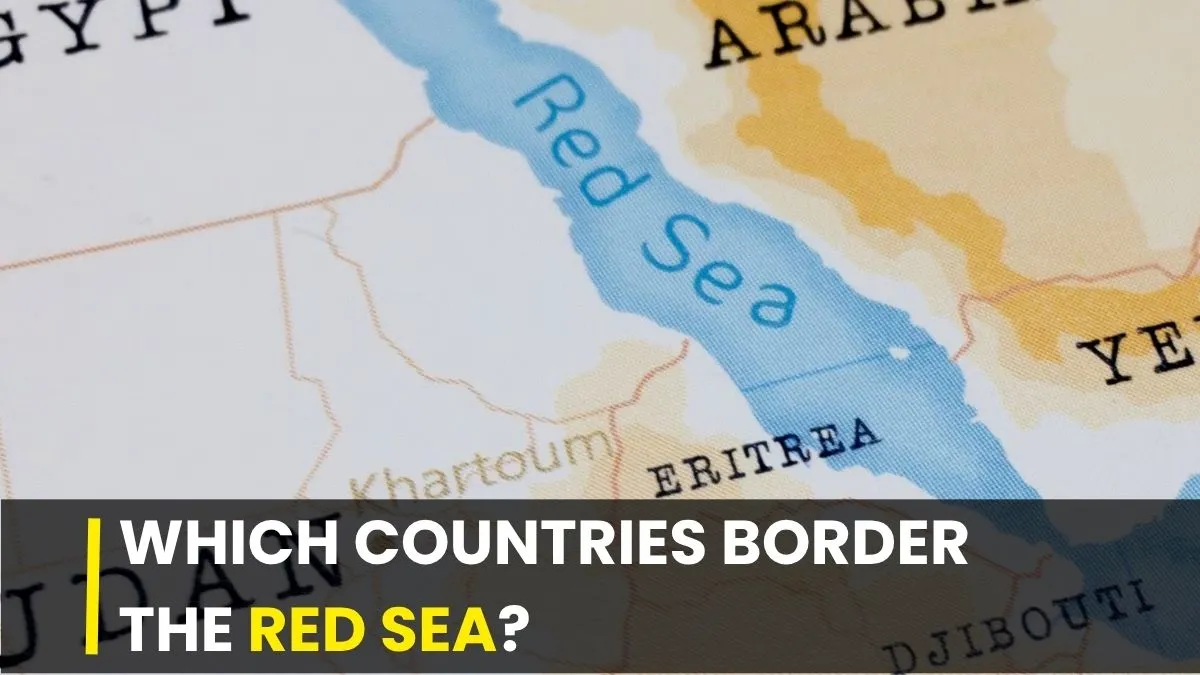
The Red Sea is bordered by six main countries: Egypt, Saudi Arabia, Yemen, Sudan, Eritrea, and Djibouti.
The Red Sea, situated between Africa and Asia, connects to the Indian Ocean via the Bab-el-Mandeb Strait and the Gulf of Aden in the south.
In the north, the sea is bordered by the Sinai Peninsula, the Gulf of Aqaba, and the Gulf of Suez leading to the Suez Canal.
The Red Sea connects the Mediterranean Sea to the Indian Ocean via the Suez Canal in the north and the Bab-el-Mandeb Strait and the Gulf of Aden in the south.
The Red Sea separates the coasts of Egypt, Sudan, and Eritrea to the west from the coasts of Saudi Arabia and Yemen to the east.
The Red Sea is one of the most hottest and saltiest water bodies in the world.
The Red Sea lies in a fault depression between the Arabian and North African tectonic plates.
Key islands in the Red Sea include Tiran Island near the Gulf of Aqaba, Shadwan Island near the Gulf of Suez, the Dahlak Archipelago
Why is the Red Sea called the Red Sea?
The Red Sea derives its name from the colour changes observed in its water. Normally, the Red Sea is blue-green.
However, due to seasonal blooms of a cyanobacteria called Trichodesmium erthraeum, the waters turn reddish-brown colour upon dying.
Why is Red Sea important?
The Red Sea is a vital global maritime, economic, and geopolitical corridor connecting Europe, Asia, and Africa, handling about 10 to 12 per cent of global trade and 30 per cent of global container traffic via the Suez Canal.
Key chokepoints in the Red Sea include the Bab-el-Mandeb Strait and the Suez Canal, a critical route for transporting crude oil and liquefied natural gas (LNG) from the Persian Gulf to Europe and North America.
As per US Energy Information Administration, about 12 per cent of total seaborne-traded oil and 8 per cent of worldwide LNG shipments passed through these routes.
The SUMED pipeline (Suez-Mediterranean pipeline) is a critical oil pipeline in Egypt connecting the Red Sea to the Mediterranean Sea, with a capacity of over 2.5 million barrels per day.
About 8.2 million barrels per day of crude oil and petroleum products passed through the Bab-el-Mandeb Strait in the Red Sea in 2023.
The Exclusive Economic Zones (EEZs) in the Red Sea include: Saudi Arabia, Sudan, Egypt, Eritrea, Yemen, and Djibouti. These zones grant coastal states sovereign right for exploring and exploiting natural resources like oil, gas, and fishing.
The Red Sea is also home to major types of mineral resources such as petroleum deposits, sulfur, phosphates, and heavy-metal deposits at the bottom of deep-sea basins such as the Atlantis II Deep and Discovery Deep.
The Red Sea also has large evaporite deposits like halite (salt), sylvite, gypsum, dolomite, and anhydrite.
The Red Sea is an important trade route for India, connecting it to Europe, Africa, and the Middle East.
The Red Sea connecting the Mediterranean Sea to the Indian Ocean, serves as the shortest sea route between Europe and Asia.
India's trade with European and African countries through the Red Sea accounts for 24 per cent of its exports and 14 per cent of its imports.
Also read: When did Vasco da Gama discover the sea route from Europe to India and why?