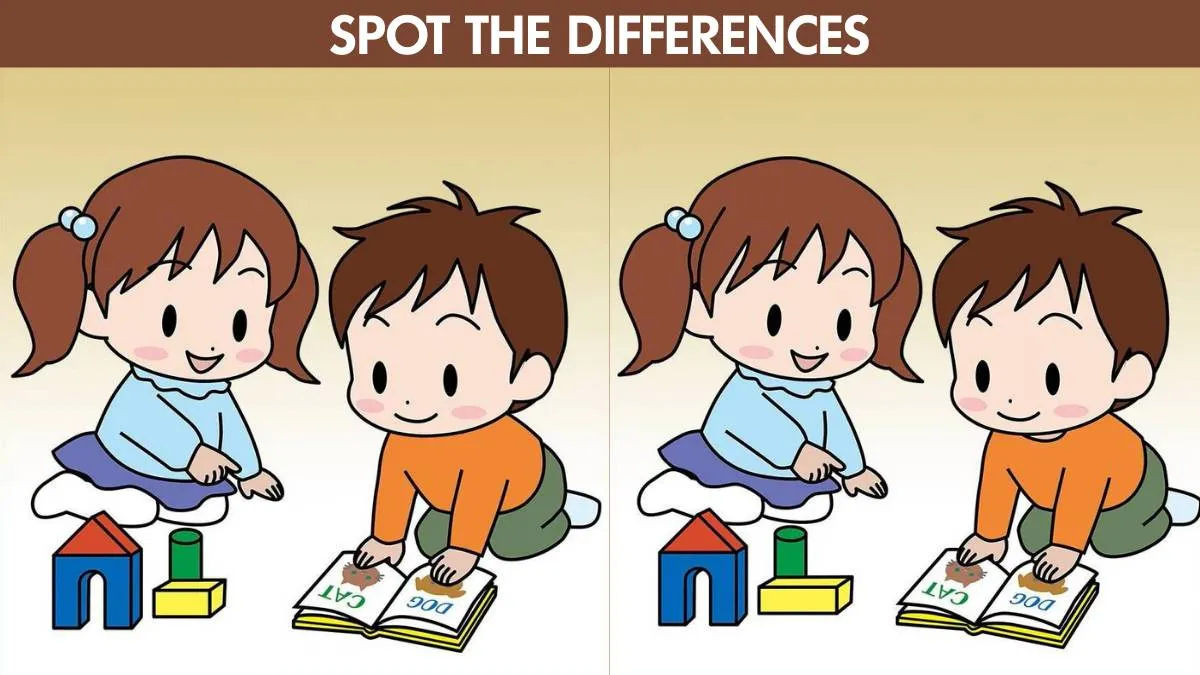
Did you know that playing visual games for ten minutes daily improves your memory? Solving picture puzzles every day builds your deep focus and keeps your mind sharp.
To spot the differences in pictures of kids reading, you compare two similar images side by side. You just scan the bright books, the clothes, and the background to find missing parts and win.
How to Spot the Differences in Puzzle Pictures
Spotting the difference is a fun mind game that tests how your brain processes details. A person compares two pictures side by side to find small changes between them. Players look closely to find simple differences like missing objects, changed colors, or new shapes.
As a puzzle solver with over 7 years of experience, I advise people to scan the art using a grid pattern. This simple visual grid method prevents your eyes from jumping around the page at random. It makes the whole process much faster and easier to complete today. You will spot the hidden differences much faster when you use a clear strategy.
Follow these three easy steps to solve any complex picture challenge you might face today. First, carefully break the entire image into four equal and smaller viewing squares.
Next, look closely at the kids reading in the first square and compare the two pictures. Finally, mark the exact visual changes before you move on to the next art section.
This highly focused approach helps you find every single hidden secret in the artwork. Playing these fun games often makes you a much better observer in the real world. You effectively train your brain to notice tiny visual details in your daily life.
3D Optical Illusion Rug: Spot the Hidden Number in 7 Seconds!
Why You Should Spot Differences Regularly
Playing visual games provides great mental exercise for people of all ages today. You actively use your short-term memory when you hold one image in your mind.
A college study found that solving visual puzzles for around twenty minutes a day boosts brain power. This daily mental workout is highly helpful for anyone who wants a sharper mind.
Here are three major benefits of playing visual games on a daily basis. First, you improve your mental focus because you must look deeply to spot differences quickly.
Second, these puzzles offer great stress relief and a fun break from your daily worries. Third, you build better visual skills and learn to process what you see much faster.
Taking a short break to solve these simple challenges is completely worth your free time. You can easily finish a quick puzzle during your quiet lunch break or morning commute.
This quick daily activity keeps your mind sharp and ready for a busy workday. Also, adding some friendly competition makes the matching game even more exciting for everyone involved.
Frequently Asked Questions
What exactly is a visual puzzle?
A visual puzzle is a special game that strongly tests your eyesight and tracking skills. Players look at detailed pictures and try to solve a specific challenge hidden inside the art.
How does this matching game help the brain function better?
These picture games force your brain to process new visual details very quickly. This constant mental effort builds new brain connections and strengthens your daily memory over time.
Why should adults play simple kid puzzles today?
Adults benefit greatly from playing these simple games because they actively relieve daily stress. These fun activities provide a calm way to practice mental focus without feeling stressed out or overwhelmed.
Solving simple picture puzzles offers a great way to boost your overall brain health. You clearly improve your daily focus when you regularly spot the differences in images.
These quick mental workouts help you build stronger memory skills and relieve your daily stress. Almost anyone can easily enjoy these fun games at any time of the day.
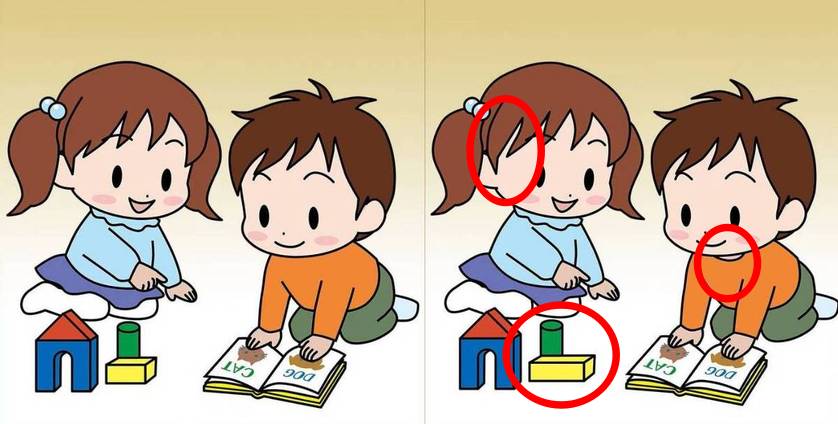
Have you finally found the three differences?
You have done an excellent job if you have spotted the three differences in the kids reading pictures.
If you couldn’t spot the differences, then check out the solution below.
Wasn’t that fun?
Only Highly Intelligent People Can Solve This Math Puzzle in 11 Seconds!



Comments
All Comments (0)
Join the conversation