Rare Blue Moon on May 31: What it Means and Why You Should not Miss it
Rare Blue Moon 2026 is set to light up the night sky soon. Learn the Blue Moon 2026 date, meaning, scientific significance, visibility in India, and why this rare full moon is attracting the attention of astronomers and skywatchers worldwide.
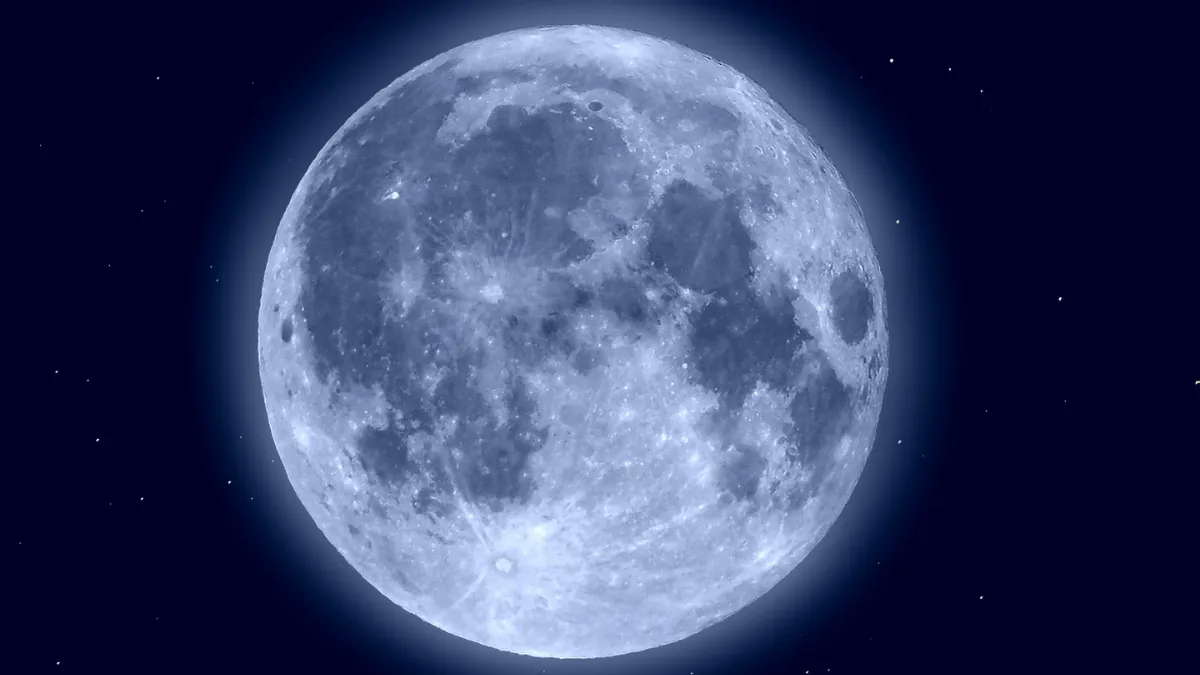
Blue Moon 2026 is one of the most anticipated astronomical events of the year. It is expected to captivate skywatchers across the globe. Although a Blue Moon does not usually appear blue, it is called a rare blue moon due to the fact that it is not common. Hence also the term - once in a blue moon!
For 2026, this rare blue moon phenomenon will happen on May 31, 2026 - Sunday. Skygazers from across the globe can witness this cosmic event and enjoy the beauty of the moon as it
The night sky is preparing to present one of the most anticipated astronomy events of the year. On Sunday, May 31, 2026, skywatchers around the globe will witness a Rare Blue Moon 2026.
The Moon will not suddenly turn a bright shade of sapphire. Instead, the term "Blue Moon" refers to a captivating cosmic quirk governed by our calendar tracking system because this rare full moon occurs quite infrequently. It has long been associated with the popular phrase "once in a Blue Moon."
What is a Blue Moon and Why Is It Called That?
In astronomy, a Blue Moon is not defined by its color but by its placement within our calendar system. There are generally two types of definition:
- The Monthly Blue Moon: This is the most popular definition. It occurs when a single calendar month features two full moons. The second full moon is officially dubbed the "Blue Moon."
- The Seasonal Blue Moon: This is the traditional definition. An astronomical season is the period between a solstice and an equinox which typically features three full moons. However, if a season contains four full moons, the third one is referred to as a Blue Moon.
- The History Behind the Name of Blue Moon: The term Blue Moon itself originates from a mixture of old folklore and a famous media misunderstanding. Historically, the Maine Farmers’ Almanac used the seasonal definition to keep tracking lunar names aligned with the seasons.
However, in 1946, an amateur astronomer wrote an article for Sky & Telescope magazine where he misinterpreted the Almanac's rules, accidentally stating that a Blue Moon was simply the second full moon in a month. This simplified monthly definition caught on globally and remains the primary Blue Moon meaning used today.
When will the Rare Blue Moon Appear in 2026?
The anticipated Rare Blue Moon 2026 will grace our night skies on Sunday, May 31, 2026 because May 2026 is uniquely bookended by two full moons. The first Full Moon 2026 of the month traditionally called the "Flower Moon" which occurred early on May 1, 2026 because the calendar month of May is 31 days long so it leaves just enough time for the moon to complete its full lunar cycle and return to peak illumination right at the end of the month on May 31. This makes it a highlight of the Night Sky Events 2026 calendar.
Why is a Blue Moon Considered a Rare Astronomical Event?
A Blue Moon is considered a rare full moon because it represents a difference between human timekeeping and celestial mechanics.
Our solar calendar splits a year into 12 months spanning 30 or 31 days (except February). However, a true lunar cycle takes exactly 29.5 days from one full moon to the next because our calendar months are slightly longer than the lunar cycle; those extra fractions of a day accumulate over time.
Every 2 to 3 years, this leftover time aggregates to create a 13th full moon within a single year, causing a month to host two full moons instead of one. This scarcity is exactly why a Blue Moon is rare and why it captures the attention of global media.
Does the Moon Actually Turn Blue During a Blue Moon?
The Blue Moon 2026 will look like a typical full moon, shining with its familiar bright pearl-grey, white, or silvery-yellow glow in normal conditions.
When the Moon rises on May 31, it will actually display warm orange and golden hues rather than blue. This happens because of an optical phenomenon called Rayleigh scattering.
When the Moon sits low on the horizon, its light must travel through a thicker layer of Earth's atmosphere to reach your eyes. The atmosphere scatters away shorter wavelengths of light like blue by allowing the longer wavelengths like red and orange to pass through cleanly.

Can the Moon Ever Turn Blue?
The moon can turn Blue only during unusual atmospheric conditions which are completely unrelated to the calendar date. If a massive volcanic eruption or severe, large-scale forest fires released an enormous amount of smoke and ash into the upper atmosphere of earth. If those airborne particles are uniformly slightly wider than 1 micron, they selectively scatter away red light. This acts like a camera filter, causing the Moon to genuinely look blue to ground observers for days at a time.
How often Does a Blue Moon Occur?
On average, a monthly Blue Moon occurs once every 2.7 years becuase a standard solar year lasts 365 days whereas 12 lunar cycles add up to roughly 354 days. The 11-day gap between the solar year and lunar year builds up progressively.
Because February is only 28 or 29 days long, it is shorter than a full lunar cycle which means February can never experience a monthly Blue Moon. In fact, every few decades, February experiences a "Black Moon" (no full moon at all), which forces both January and March of that same year to host Blue Moons.
Blue Moon vs Supermoon: What Is the Difference?
It is easy to get confused by the various types of Moon during Lunar Events 2026. The difference between Blue Moon and Supermoon:

Lunar Phenomenon | What It Means | Visual Impact |
| Blue Moon | Defined purely by timing. It is the second full moon in a single calendar month. | Looks like a standard full moon; size depends on where it is in its orbit. |
| Supermoon | Defined by distance. It occurs when a full moon coincides with perigee, the point where the Moon is closest to Earth. | Appears roughly 14% larger and 30% brighter than average. |
An Interesting Fact about Blue Micromoon May 31, 2026
The upcoming event on May 31 is unique because it is the exact opposite of a Supermoon and also called a Blue Micromoon. The Moon will be near its furthest point from Earth (apogee) during full illumination, sitting over 252,000 miles (approx. 406,000 kilometers) away.
Astronomers have predicted that it will technically appear about 6% smaller and 10% dimmer than an average full moon. The subtle difference is usually imperceptible to the naked eye to make it even more special, the brilliant red supergiant star Antares will be shining right next to it all night.
Why You Should Not Miss the Rare Blue Moon
The May 31 Blue Moon offers a compelling list of reasons why you should make it a point to step outside and look up beyond celestial math. Here is why this event is a must-watch:
Once the curtains fall on May 31, the modern calendar will not see another monthly Blue Moon for over two and a half years missing this event means waiting until late 2028 for the next opportunity.
This Blue Moon arrives on a Sunday evening, a perfect weekend timing, provides the perfect, accessible opportunity for families, hobbyists, and children to stargaze together without disrupting weekly routines.
On this exact night, the giant red star Antares will appear remarkably close to the illuminated Moon. This visual pairing creates a striking color contrast between the icy glow of the moon and the distinct reddish hue of the star, making it a dream setup for skywatchers and astrophotographers.
FAQ’s For Competitive Exams
Q1. What is a 'Super Blue Blood Moon'?
-
A combination of Full Moon, Blue Moon, and Total Lunar Eclipse.
-
A combination of Full Moon, Super Moon, and Total Lunar Eclipse.
-
A combination of Blue Moon, Super Moon, and Total Lunar Eclipse.
-
None of the above.
Correct Answer: (c) A combination of Blue Moon, Super Moon, and Total Lunar Eclipse.
Explanation: This is a direct factual question heavily targeted in railway and subordinate staff exams. The "Blood" aspect comes from the reddish tint of the earth's shadow during a total lunar eclipse. Blue moon represents the second full moon of the month where Super represents its close proximity to Earth.
Q 2. The astronomical event of two full moon days in a calendar month is called __________?
-
Blood Moon
-
Super Moon
-
Black Moon
-
Blue Moon
Correct Answer: (D) Blue Moon
Explanation: A Blue Moon occurs because a calendar month (30–31 days) is slightly longer than a lunar cycle (29.5 days). When a full moon happens on the 1st or 2nd of a month, there is enough time for a second full moon to appear before that same month ends.
Q3. The Blue Moon phenomenon occurs:
-
When two full moons occur in the same calendar month.
-
When two full moons appear in the same month thrice in a calendar year.
-
When four full moons appear in two consecutive months of the same calendar year.
-
When the moon passes completely through Earth's umbral shadow.
Correct Answer:(A) When two full moons occur in the same calendar month.
Explanation: This is the most standard, text-book definition question that frequently repeats in state subordinate exams. Option (d) describes a total lunar eclipse, not a blue moon.
Can a Blue Moon Be Seen From India?
Yes, absolutely. The Blue Moon Visibility in India is excellent. You can clearly see the blue moon across all parts of the country. The full moon will rise in the eastern sky shortly after sunset on May 31, 2026.
What is the Scientific Significance of a Blue Moon?
A Blue Moon holds no special physical properties. The Moon’s gravity, orbit, and composition remain completely unchanged. Its Blue Moon scientific significance is primarily chronological and a fascinating reminder of how human beings constructed an artificial calendar system that does not perfectly align with the natural, fluid cycles of the cosmos.
What Does the Phrase “Once in a Blue Moon” Mean?
The phrase is a popular idiom used to describe an event that happens very rarely, infrequently, or almost never. It directly references the 2.7-year gap that generally occurs between these double-full-moon calendar months.
When Will the Next Blue Moon Occur After 2026?
If you miss the celestial display this weekend, you will have to wait quite a while for the next Blue Moon date. The next Seasonal Blue Moon will occur on May 20, 2027. The next Monthly Blue Moon will happen until December 31, 2028.

Manisha Waldia is an accomplished content writer with 4+ years of experience dedicated to UPSC, State PCS, and current affairs. She excels in creating expert content for core subjects like Polity, Geography, and History. Her work emphasises in-depth conceptual understanding and rigorous analysis of national and international affairs. Manisha has curated educational materials for leading institutions, including Drishti IAS, Shubhara Ranjan IAS, Study IQ, and PWonly IAS. Email ID: manisha.waldia@jagrannewmedia.com


