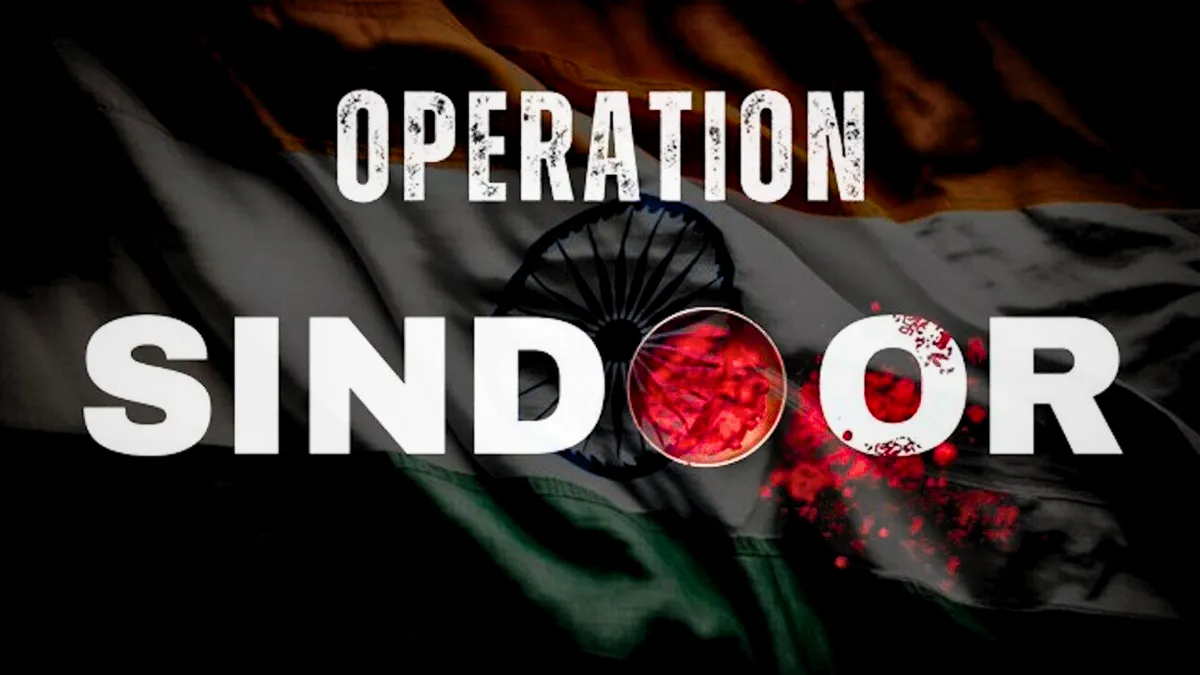
On May 7, 2025, the silence of the night was broken by the roar of Indian Air Force jets and the precise coordination of a nation that had reached its limit. Operation Sindoor was born from the tragedy of the Pahalgam massacre (April 22, 2025), an event that saw 26 innocent lives lost and sparked a national demand for justice.
Operation Sindoor was a calibrated, high-tech, and multi-dimensional campaign. It involved everything from Beyond Visual Range (BVR) air combat and a naval blockade in the North Arabian Sea to the robust defense of Indian skies using indigenous missile systems.
Today, on its first anniversary, we commemorate the courage of the Indian Armed Forces and analyse how those 88 hours of intense conflict fundamentally altered the geopolitical landscape of South Asia.
Commemorating the Anniversary: How the Nation Remembers Today
On this anniversary, the mood is one of solemn pride from the ramparts of the Red Fort to the war memorials in Jammu. The nation honors the 26 victims of Pahalgam and the soldiers who executed Operation Sindoor. It remains a definitive statement that India will no longer accept nuclear blackmail and will protect its citizens with rapid, precise, and powerful resolve.
What was Operation Sindoor? An Overview of the Mission
Operation Sindoor was a high-precision, intelligence-led military campaign designed to dismantle terror infrastructure deep inside Pakistan. It was initiated at 1:05 AM on May 7.
The mission was a direct response to the Lashkar-e-Taiba (LeT) and The Resistance Front (TRF) attack in Pahalgam, which targeted tourists to incite communal discord. The operation was unique for its tri-service integration, combining the assets of the Indian Army, Navy, and Air Force into a singular, cohesive force.
The mission was characterized as "focused, measured, and non-escalatory," specifically targeting terror launchpads rather than military or civilian installations.
Causes of the Operation: The Trigger Behind the Strike
Operation Sindoor was not an isolated event but a direct consequence of escalating cross-border aggression. The primary catalysts included:
-
The Pahalgam Massacre of April 22, 2025: The immediate trigger was a horrific terror attack in the Baisaran Valley near Pahalgam. Three Pakistan-backed gunmen opened fire on unsuspecting tourists, killing 26 innocent civilians, including newlywed couples and a local pony operator.
-
Targeting Religious Unity: Intelligence reports and the nature of the Pahalgam attack where victims were reportedly asked their religion before being shot showed a clear attempt to incite communal violence within India.
-
Provocation at the Border: The weeks leading up to the operation saw a surge in infiltration attempts and targeted drone strikes on religious sites, including the Shambhu Temple in Jammu and a Gurdwara in Poonch.
The Strategic Objectives:
The Indian government, led by Prime Minister Narendra Modi, shifted from "restraint" to "punitive deterrence." The mission's goals were to eliminate the handlers and masterminds behind the Pahalgam massacre.
Infrastructure destruction to level terror training centers in Muridke (LeT HQ) and Bahawalpur (JeM base) and calling the "Bluff" to demonstrate that nuclear blackmail would no longer prevent India from striking at the heart of terror.
Operation Sindoor: Key Highlights and Major Milestones
The operation was a masterclass in modern warfare, executed with surgical accuracy.
-
The Launch (May 7, 2025): Using "stand-off" weapons like SCALP and HAMMER missiles, the IAF targeted nine major terror camps. This led to a massive aerial engagement involving over 114 aircraft in one of the largest Beyond Visual Range(BVR) battles in history.
-
Naval Blockade: The Indian Navy deployed a Carrier Battle Group in the North Arabian Sea, effectively isolating the adversary's maritime routes.
-
The Ceasefire (May 10): Following heavy damage to terror infrastructure and a successful defense against retaliatory strikes, a ceasefire was reached between the DGMOs of both nations at 17:00 hours IST.
-
The Indian Navy's Carrier Battle Group (CBG), led by INS Vikrant and equipped with MiG-29K jets, created a strategic shield in the Arabian Sea, preventing any maritime escalation.
-
Aatmanirbhar Defense: The operation served as a "live" test for indigenous technologies. Systems like the Akash Air Defense and BrahMos cruise missiles proved their lethality by thwarting retaliatory drone waves and targeting command centers.
-
Diplomatic Fallout: In a historic shift, India placed the Indus Waters Treaty in abeyance, signaling that "trade, water, and terror" cannot coexist.
The Impact of Operation Sindoor: Successes and Challenges
According to official data, Government India confirms the elimination of over 100 terrorists and the destruction of nine critical launchpads. The operation served as a "live" test for Indian-made systems like the Akash air defense and BrahMos missiles, which significantly boosted India's defense exports in the following year.
India successfully countered a massive disinformation campaign from across the border by providing transparent briefings and high-resolution evidence of the strikes.
The Legacy of the Operation One Year Later
One year later, the legacy of Operation Sindoor is found in the "New Red Lines" of Indian diplomacy. In a historic move, India held the Indus Waters Treaty in abeyance, asserting that diplomatic cooperation cannot exist alongside cross-border violence.
The closure of the Attari-Wagah border and the suspension of bilateral trade remain powerful reminders of the cost of sponsoring terror.
PM Modi’s Speech on Operation Sindoor Anniversary
On this anniversary, Prime Minister Modi saluted the "unparalleled courage" of the forces, stating that the operation added a new dimension to India's national security. Today, Operation Sindoor is remembered not just as a military success, but as the moment India fundamentally altered its strategic calculus to prioritize the safety of its citizens above all else. The operation’s lasting legacy includes the suspension of the Indus Waters Treaty, reinforcing the doctrine that trade and water cooperation cannot coexist with cross-border terrorism.
Also Read: Hantavirus Outbreak: What is hantavirus and how does it spread?