National Handloom Day 2026: PM Modi Celebrates India's Textile Heritage, Reaffirms Support for Weavers
Celebrate National Handloom Day 2026 with PM Modi’s latest updates. Discover how the government is empowering local weavers, boosting rural employment and driving global trends.
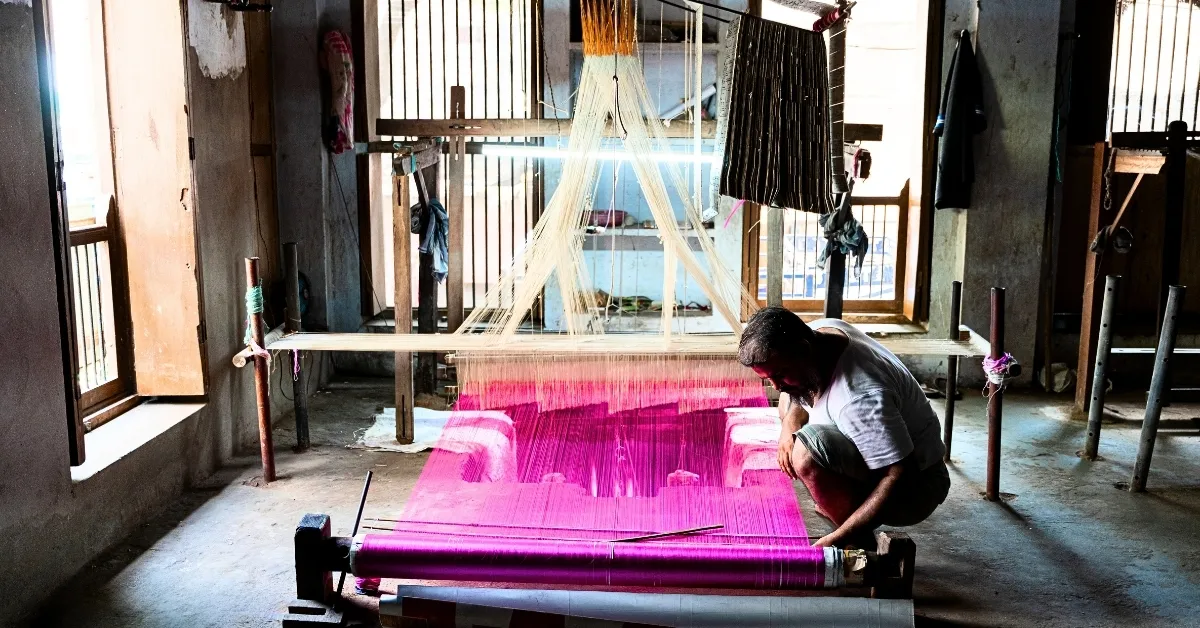
India is celebrating its 12th National Handloom Day on August 7, 2026 to commemorate India’s centuries-old handloom tradition and recognise the important contribution of weavers and artisans.
On the occasion of National Handloom day Prime Minister Narendra Modi highlighted India’s rich textile heritage and extended the government's support to strengthen India’s handloom sector.
PM Modi's Message on National Handloom Day 2026
The Prime Minister urged citizens especially the youth to support handloom products by purchasing them and promoting them on social media.
He also encouraged people to celebrate National Handloom Day with the same enthusiasm as Friendship Day.
-
Purchase directly supports the livelihood of weaving families.
-
He urged people to share creative content, including "Get Ready With Me" (GRWM) videos featuring their favorite handloom products using the hashtag
-
He also described India's handloom tradition as a symbol of the country's cultural identity, craftsmanship and self-reliance.
-
He appealed to people to support local weavers and artisans.
-
Share handloom stories and products on social media.
-
Encourage young people to embrace Indian handloom through creative content.
Key Highlights of Celebrating the 12th National Handloom Day
The ministry of Textiles organised a national celebration at the Rashtrapati Bhawan Cultural Centre in New Delhi. President Droupadi Murmu graced the occasion as the Chief Guest alongside Union Minister of Textiles Giriraj Singh and other dignitaries. Other highlights are
-
National Honors conferment of prestigious awards including 3 Sant Kabir Handloom Awards and 19 National Handloom Awards, to master artisans for exceptional craftsmanship and innovation.
-
The release of four special postage stamps celebrating diverse regional weaving traditions.
-
New publications unveiling informational books such as "Earth. Root. Thread - Aal Dyed Handloom Textiles of Central India" to document and preserve textile research.
-
Interactive showcases featuring traditional techniques like Kani weaving and wall-hanging creation.
Strengthening the handloom sector is an essential step towards building an Aatmanirbhar Bharat by creating employment and preserving India's traditional crafts.
National Handloom Day 2026 Theme
The Ministry of Textiles has focused on ‘Local for Vocal’ by celebrating India's weaving traditions while encouraging citizens to support local artisans and promote sustainable, handmade textiles.
Why do we celebrate National Handloom Day?
National Handloom Day is observed on August 7 of every year to commemorate the launch of the Swadeshi Movement in August 1905. The movement advocated the use of indigenous products and played a significant role in encouraging India's handloom industry during the freedom struggle.
The Government of India declared August 7 as National Handloom Day in 2015 to recognise the importance of the sector. The first celebration was inaugurated by Prime Minister Narendra Modi in Chennai, Tamil Nadu.
Socio-Economic Impact of Handlooms
The handloom sector is much more than a cultural heritage and it has huge economic potential in rural employment and women empowerment.
Handlooms remain one of the largest sources of employment in rural India after agriculture,
Over 70% of the 35+ million workforce in the handloom sector comprises women which makes it a powerful drive for financial independence and bringing more equality in economic equality.
Handlooms of India has significant global reach such as Patola from Gujarat. The weavers from Kutch are gaining global traction supported by Geographical Indication (GI) tags and enhanced digital marketplaces
India's Rich Handloom Heritage
India is home to hundreds of traditional weaving styles from North to South and East to West India. Every handloom has its regional influence and unique quality. Some of the most famous handloom traditions include
-
Banarasi Silk from Uttar Pradesh
-
Kanchipuram Silk from Tamil Nadu
-
Chanderi from Madhya Pradesh
-
Pochampally Ikat from Telangana
-
Patola from Gujarat
-
Muga Silk from Assam
-
Kota Doria from Rajasthan
-
Jamdani from West Bengal
These handwoven textiles are recognised for their craftsmanship, intricate designs and cultural significance.
The Ministry of Textiles has launched many initiatives to strengthen the handloom industry in India like celebrating National Handloom Day across the country. Marketing support for weavers, Promotion of GI-tagged handloom products etc.,

Manisha Waldia is a distinguished content strategist with 5 years of experience crafting premium educational content for UPSC and State PCS, with a focus on deep conceptual analysis across Polity, Geography, History, and Environment. She currently brings this expertise to Jagran Josh, where she covers major national and international events, current affairs, and static general knowledge. Over her career, Manisha's specialized insights have led her to curate high-impact materials and serve as a UPSC Mains answer-evaluator for India’s top institutes—including Drishti IAS, Shubhra Ranjan IAS, Study IQ, GS Score, and PWonlyIAS. She has also worked alongside leading NGOs like Oxfam India and Avani Kumaon.
Contact: manisha.waldia@jagrannewmedia.com

-(1)-1786086089471_t.webp)

-1786076345475_t.webp)
![[लाइव] UPTET Result 2026: इंतजार खत्म! यूपी टेट रिजल्ट upessc.up.gov.in पर होगा घोषित, ऐसे करें चेक](https://img.jagranjosh.com/images/2026/August/782026/up-tet-result.jpg)