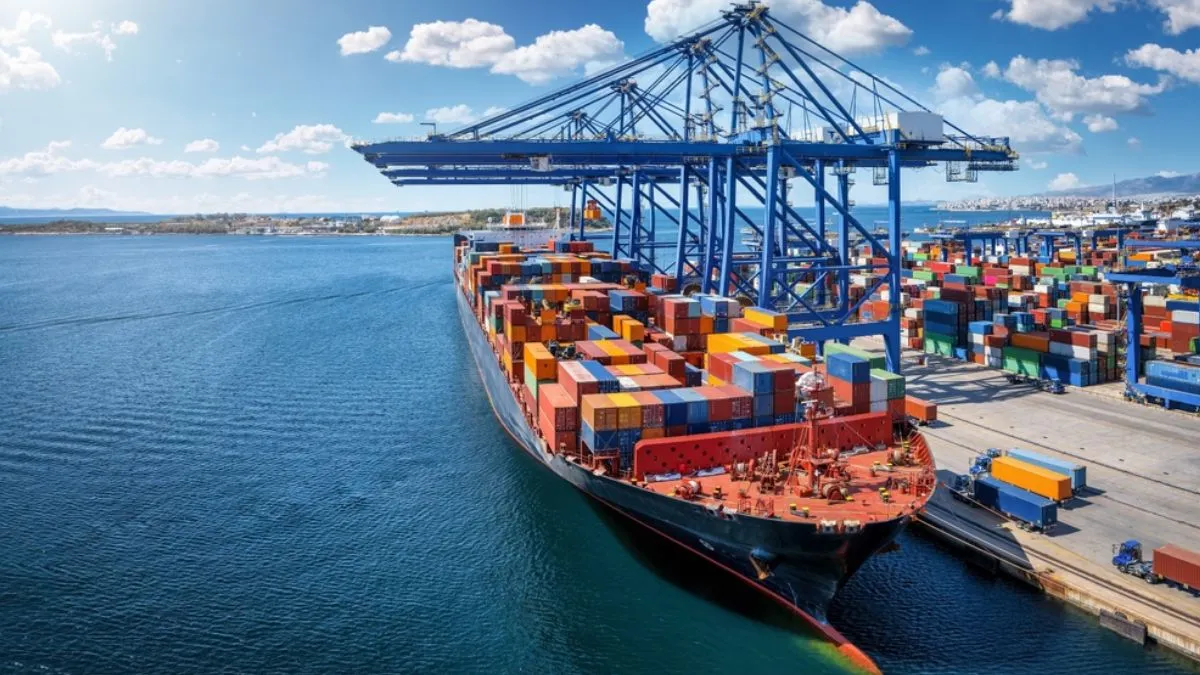
Major Ports in India: In the landscape of global trade, Major Ports in India hold the key to the economy of the country, where about 95 per cent of the foreign trade is processed through the ports. By 2026, the maritime industry in India is going through an enormous change under the Maritime Amrit Kaal Vision 2047 and should be centred on port-led development and globally high standards of infrastructure. India has 12 active major ports which are strategically located on the 11099 kilometres km coastline to be able to maximise its maritime logistics to counter the increasing global demands. In this article, we give a detailed list of 12 Major Ports in India with the latest performance measures and government statistics of the current fiscal year.
12 Major Ports in India
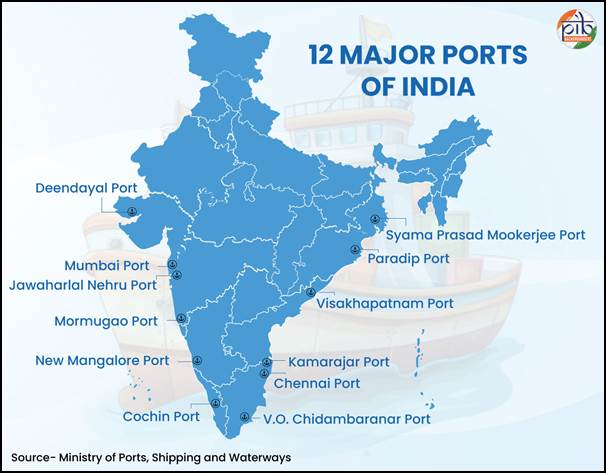
Source: PIB
These 12 major ports are the primary gateways of Indian maritime trade. These ports are under the Major Port Authorities Act, 2021, according to official data provided by the Ministry of Ports, Shipping and Waterways.
Here is the list of 12 Major Ports in India, categorised by coast:
Western Coast Ports (Arabian Sea)
| Port Name | State | Type | Key Features & Significance |
| Deendayal Port (Kandla) | Gujarat | Natural/Tidal | The biggest port in India in terms of cargo. It is a big petroleum, chemical and food grains centre. |
| Mumbai Port | Maharashtra | Natural | The oldest and the largest natural port of India. It deals with bulk cargo, chemicals and finished products. |
| Jawaharlal Nehru Port (JNPA) | Maharashtra | Artificial | India’s premier container port handles over 50% of the country's container traffic. |
| Mormugao Port | Goa | Natural | It is the main iron ore exporting port in the country, and is located at the mouth of the Zuari River. |
| New Mangalore Port | Karnataka | Artificial | Handles iron ore, fertilisers and petroleum products to southern India and is an all-weather port. |
| Cochin Port | Kerala | Natural | On Willingdon and Vallarpadam islands. It has the first container transhipment terminal (ICTT) in India. |
Eastern Coast Ports (Bay of Bengal)
| Port Name | State | Type | Key Features & Significance |
| V.O. Chidambaranar Port | Tamil Nadu | Artificial | It is an all-weather port in the Gulf of Mannar (formerly called Tuticorin), with the key to fertilisers and coal. |
| Chennai Port | Tamil Nadu | Artificial | The biggest port at the Bay of Bengal and the second-largest container port in India among the major ones. |
| Kamarajar Port (Ennore) | Tamil Nadu | Artificial | The first major port in India that is corporatised (a government company). It is a significant coal and automobile centre. |
| Visakhapatnam Port | Andhra Pradesh | Natural | It is a vital link for iron ore exports and the seafood industry. |
| Paradip Port | Odisha | Artificial | It is found at the riverside of Mahanadi. It is an important coal and iron ore export port. |
| Syama Prasad Mookerjee Port | West Bengal | Riverine | The only significant riverine port of India (on Hooghly River). It is composed of the Kolkata and Haldia dock systems. |
Key Facts & Performance Data (FY 2025–26)
The Indian maritime sector achieved a historic milestone this year, because of increased efficiency and digitization.
-
Record Cargo Handling: In the fiscal year 2025–26, India’s major ports collectively handled a record 915.17 million tonnes (MT) of cargo, surpassing the government's annual target of 904 MT.
-
Growth Trajectory: The sector witnessed a robust year-on-year growth of 7.06%, driven by increased handling of coal, crude oil, and containerised cargo.
-
Top Performing Ports:
-
Deendayal Port Authority (Kandla): Remained the volume leader, handling 160.11 MT.
-
Paradip Port Authority: Followed closely with 156.45 MT, becoming a critical hub for iron ore and coal.
-
Jawaharlal Nehru Port Authority (JNPA): India’s premier container port handled 102.01 MT, maintaining its status as the gateway for international trade.
-
Oldest Port: Syama Prasad Mookerjee Port (established in 1870) remains the oldest operating port in the country.
-
Deepest Port: Vizhinjam Port holds the title for India’s deepest natural port among major ports, allowing it to handle massive Capesize vessels.
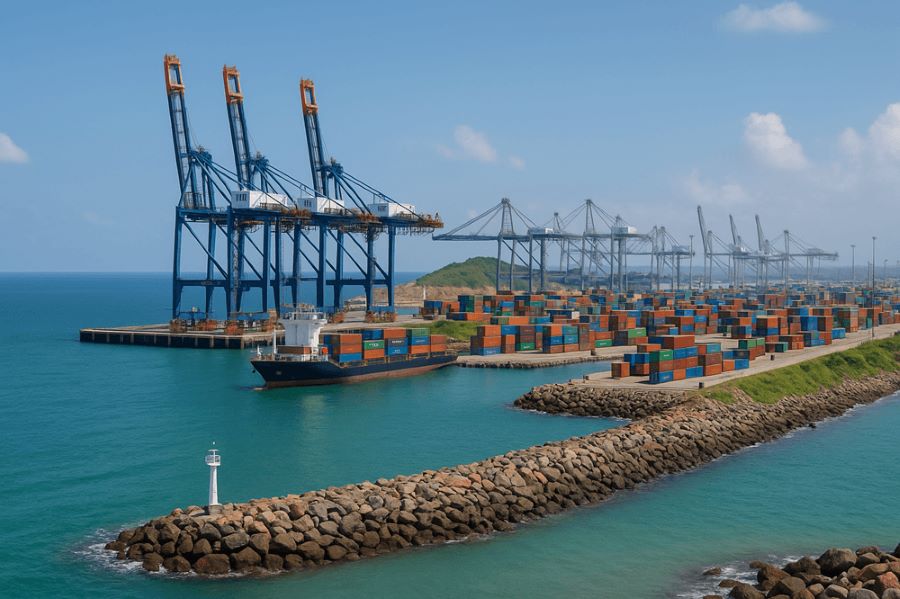
Source: Vizhinjam Port
-
Efficiency Leaders:Mormugao Port recorded the highest individual growth rate at 15.91%, followed by the Kolkata Dock System at 14.28%.
-
Sustainable Initiatives: Under the Green Tug Transition Programme (GTTP), major ports are transitioning toward carbon neutrality, aiming to reduce the carbon footprint of maritime operations by 30% by 2030.
-
Future Infrastructure: The Vadhavan Port in Maharashtra is currently under development as a "Mega Port" to handle ultra-large container ships, further boosting India’s ranking in the Logistics Performance Index (LPI).
The transformation of the Indian major ports into so-called Smart Ports is a success story of the rise in the Indian role in the international supply chain. Combining innovative technologies, such as the use of the National Logistics Portal (Marine) and broadening the Sagarmala Project, the Indian government makes sure that these maritime centres are future-ready. With the passage of further into 2026, the emphasis will be on shortening turnaround time and logistics expenses, which will make Indian exports more competitive in the global market. To both stakeholders and students, it is important to understand these 12 key ports in order to know how the Indian economy performs.