List of Prime Ministers of Finland (1917-2026)
Petteri Orpo is the current Prime Minister of Finland. As head of government, he wields primary executive power, leads the Cabinet, directs day-to-day national administration, and shapes domestic policy alongside a unicameral parliament.
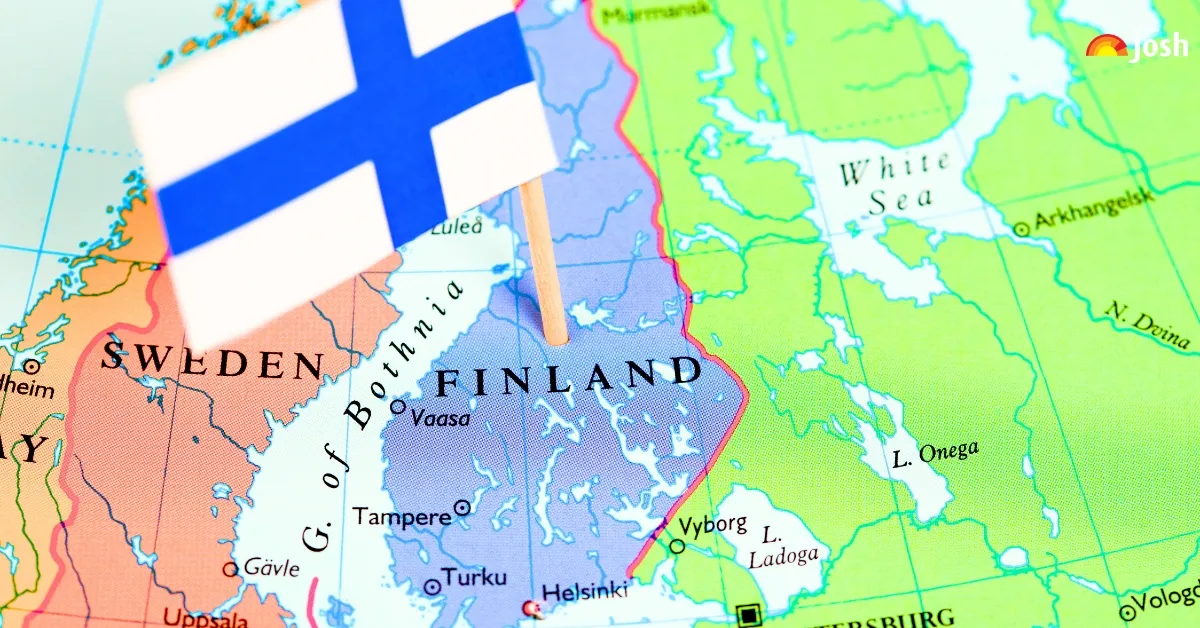
Finland is a Nordic country located in Northern Europe. The country shares its borders with Russia, Sweden and Norway. What makes Finland different from other countries is that it consistently ranks among the happiest in the world. Not only that, but Finland also ranks #1 in the list of countries with the best education system in the world. The country is home to 5.63 million people, and Helsinki is Finland's capital.
The Finnish government is a unitary parliamentary republic. In other words, it is a democracy where citizens elect representatives from various political parties to govern them. The political power is divided into three branches to avoid any dictatorship.
Executive branch (Leaders):
- Prime Minister – the head of the government (Petteri Orpo), the person who has all the political power, leads the Cabinet and is responsible for governing the country.
- President - the head of state (Alexander Stubb). The President is elected by citizens every six years and works together with the Cabinet to deal with foreign and security issues.
Legislative branch (Lawmakers):
All the power to pass legislation is granted to the Parliament of Finland (Eduskunta), which consists of a single body of 200 representatives chosen by voters every four years.
Judicial branch (Courts):
The Finnish court system is an independent institution. Lawmakers and the prime minister cannot influence any decision of the court.
List of Prime Ministers of Finland (1917-2026)
In order to understand the structure of the current Finnish leadership, it is important to trace how its governmental system developed during the last century.
What Was the Finnish Senate?
Before Finland gained full independence, there was a governing body known as the Finnish Senate. It handled the day-to-day running of the country's economy. However, during that time, the head of government did not hold the title of Prime Minister but was referred to as the "vice-chairman of the economic division".
Why Did It Transform?
It all changed at the end of 1917, when Finland announced its independence. In 1918, the Finnish government resolved to update their political system, and the old Finnish Senate became the Finnish Government.
In addition to that, the vice-chairman's position was updated and renamed as the position of Prime Minister. Not long after that, in 1919, a magnificent property known as 'Kesäranta' in Helsinki became the official residence of the Prime Minister of Finland.
Here is the list of the Finnish prime ministers from 1917 to today:
| No. | Prime Minister | Term of Office | Party | President / Regent |
| 1 | Pehr Evind Svinhufvud | 1917–1918 | Young Finnish | None |
| 2 | Juho Kusti Paasikivi | 1918 | Finnish | P. E. Svinhufvud (Regent) |
| 3 | Lauri Ingman | 1918–1919 | National Coalition | C.G.E. Mannerheim (Regent) |
| 4 | Kaarlo Castrén | 1919 | National Progressive | K. J. Ståhlberg |
| 5 | Juho Vennola | 1919–1920 | National Progressive | K. J. Ståhlberg |
| 6 | Rafael Erich | 1920–1921 | National Coalition | K. J. Ståhlberg |
| (5) | Juho Vennola | 1921–1922 | National Progressive | K. J. Ståhlberg |
| 7 | Aimo Cajander | 1922 | Independent (Caretaker) | K. J. Ståhlberg |
| 8 | Kyösti Kallio | 1922–1924 | Agrarian League | K. J. Ståhlberg |
| (7) | Aimo Cajander | 1924 | Independent (Caretaker) | K. J. Ståhlberg |
| (3) | Lauri Ingman | 1924–1925 | National Coalition | L. K. Relander |
| 9 | Antti Tulenheimo | 1925 | National Coalition | L. K. Relander |
| (8) | Kyösti Kallio | 1925–1926 | Agrarian League | L. K. Relander |
| 10 | Väinö Tanner | 1926–1927 | Social Democratic | L. K. Relander |
| 11 | Juho Sunila | 1927–1928 | Agrarian League | L. K. Relander |
| 12 | Oskari Mantere | 1928–1929 | National Progressive | L. K. Relander |
| (8) | Kyösti Kallio | 1929–1930 | Agrarian League | L. K. Relander |
| (1) | Pehr Evind Svinhufvud | 1930–1931 | National Coalition | L. K. Relander / P. E. Svinhufvud |
| — | Juho Vennola (Interim) | 1931 (32 days) | National Progressive | P. E. Svinhufvud |
| (11) | Juho Sunila | 1931–1932 | Agrarian League | P. E. Svinhufvud |
| 13 | Toivo Mikael Kivimäki | 1932–1936 | National Progressive | P. E. Svinhufvud |
| (8) | Kyösti Kallio | 1936–1937 | Agrarian League | P. E. Svinhufvud / K. Kallio |
| — | Rudolf Holsti (Interim) | 1937 (24 days) | National Progressive | Kyösti Kallio |
| (7) | Aimo Cajander | 1937–1939 | National Progressive | K. Kallio |
| 14 | Risto Ryti | 1939–1940 | National Progressive | K. Kallio / R. Ryti |
| — | Rudolf Walden (Interim) | 1940–1941 (17 days) | Independent | Risto Ryti |
| 15 | Johan Wilhelm Rangell | 1941–1943 | National Progressive | R. Ryti |
| 16 | Edwin Linkomies | 1943–1944 | National Coalition | R. Ryti / C.G.E. Mannerheim |
| 17 | Antti Hackzell | 1944 | Independent | C.G.E. Mannerheim |
| 18 | Urho Castrén | 1944 | National Coalition | C.G.E. Mannerheim |
| (2) | Juho Kusti Paasikivi | 1944–1946 | National Coalition | C.G.E. Mannerheim / J. K. Paasikivi |
| — | Carl Enckell (Interim) | 1946 (18 days) | Independent | Juho Kusti Paasikivi |
| 19 | Mauno Pekkala | 1946–1948 | SKDL | J. K. Paasikivi |
| 20 | Karl-August Fagerholm | 1948–1950 | Social Democratic | J. K. Paasikivi |
| 21 | Urho Kekkonen | 1950–1953 | Agrarian League | J. K. Paasikivi |
| 22 | Sakari Tuomioja | 1953–1954 | Independent (Caretaker) | J. K. Paasikivi |
| 23 | Ralf Törngren | 1954 | Swedish People's Party | J. K. Paasikivi |
| (21) | Urho Kekkonen | 1954–1956 | Agrarian League | J. K. Paasikivi / U. Kekkonen |
| (20) | Karl-August Fagerholm | 1956–1957 | Social Democratic | U. Kekkonen |
| 24 | V. J. Sukselainen | 1957 | Agrarian League | U. Kekkonen |
| 25 | Rainer von Fieandt | 1957–1958 | Independent (Caretaker) | U. Kekkonen |
| 26 | Reino Kuuskoski | 1958 | Independent (Caretaker) | U. Kekkonen |
| (20) | Karl-August Fagerholm | 1958–1959 | Social Democratic | U. Kekkonen |
| (24) | V. J. Sukselainen | 1959–1961 | Agrarian League | U. Kekkonen |
| — | Eemil Luukka (Interim) | 1961 (12 days) | Agrarian League | Urho Kekkonen |
| 27 | Martti Miettunen | 1961–1962 | Agrarian League | U. Kekkonen |
| 28 | Ahti Karjalainen | 1962–1963 | Agrarian League | U. Kekkonen |
| 29 | Reino Ragnar Lehto | 1963–1964 | Independent (Caretaker) | U. Kekkonen |
| 30 | Johannes Virolainen | 1964–1966 | Agrarian / Centre Party | U. Kekkonen |
| 31 | Rafael Paasio | 1966–1968 | Social Democratic | U. Kekkonen |
| 32 | Mauno Koivisto | 1968–1970 | Social Democratic | U. Kekkonen |
| 33 | Teuvo Aura | 1970 | Independent (Caretaker) | U. Kekkonen |
| (28) | Ahti Karjalainen | 1970–1971 | Centre Party | U. Kekkonen |
| (33) | Teuvo Aura | 1971–1972 | Independent (Caretaker) | U. Kekkonen |
| (31) | Rafael Paasio | 1972 | Social Democratic | U. Kekkonen |
| 34 | Kalevi Sorsa | 1972–1975 | Social Democratic | U. Kekkonen |
| 35 | Keijo Liinamaa | 1975 | Independent (Caretaker) | U. Kekkonen |
| (27) | Martti Miettunen | 1975–1977 | Centre Party | U. Kekkonen |
| (34) | Kalevi Sorsa | 1977–1979 | Social Democratic | U. Kekkonen |
| (32) | Mauno Koivisto | 1979–1981 | Social Democratic | U. Kekkonen / M. Koivisto |
| — | Eino Uusitalo (Interim) | 1981–1982 (117 days) | Centre Party | Mauno Koivisto |
| (34) | Kalevi Sorsa | 1982–1987 | Social Democratic | M. Koivisto |
| 36 | Harri Holkeri | 1987–1991 | National Coalition | M. Koivisto |
| 37 | Esko Aho | 1991–1995 | Centre Party | M. Koivisto / M. Ahtisaari |
| 38 | Paavo Lipponen | 1995–2003 | Social Democratic | M. Ahtisaari / T. Halonen |
| 39 | Anneli Jäätteenmäki | 2003 | Centre Party | T. Halonen |
| 40 | Matti Vanhanen | 2003–2010 | Centre Party | T. Halonen |
| 41 | Mari Kiviniemi | 2010–2011 | Centre Party | T. Halonen |
| 42 | Jyrki Katainen | 2011–2014 | National Coalition | T. Halonen / S. Niinistö |
| 43 | Alexander Stubb | 2014–2015 | National Coalition | S. Niinistö |
| 44 | Juha Sipilä | 2015–2019 | Centre Party | S. Niinistö |
| 45 | Antti Rinne | 2019 | Social Democratic | S. Niinistö |
| 46 | Sanna Marin | 2019–2023 | Social Democratic | S. Niinistö |
| 47 | Petteri Orpo | 2023–Present | National Coalition | S. Niinistö / A. Stubb |
The Power Shift: President vs. Prime Minister
The Finnish government, however, has undergone many changes since those times. One could classify the history of the nation's leadership into two distinct periods:
- Before 1980 (Presidential Era): The government was characterised by political instability and frequent changes in terms. The President exercised all the political powers, and he had the right to dissolve the cabinet and form another government if he was not satisfied with the situation.
- After 1980 (Era of the Prime Minister): The political system developed into a model that gave power to the ministers elected directly by the citizens of Finland. Currently, the government enjoys its full term of existence.
The current Finnish constitution states that the Prime Minister is appointed by the Parliament, while the President formally appoints him. It is worth noting that the Prime Minister is much more influential politically than the President today. To date, Finland has formed 75 different cabinets since gaining its independence.

Kriti Barua is a skilled digital journalist and communications professional with 4+ years of experience, currently writing for the General Knowledge section at Jagran New Media. She has established herself as a subject matter expert in History, Geography, Trending National and International News, Sports, Science, and Defence, producing clear, reliable, and search-optimised content that connects with readers worldwide.
Kriti holds a BA degree from Delhi University and a one-year diploma in TV Production and Journalism, an academic background that adds research depth and strong storytelling instincts to her writing. Her experience spans brand writing, content marketing, and digital media, giving her a sharp understanding of what makes content both helpful to readers and visible in search.
At Jagran New Media, she applies this expertise to national and international news coverage, query-based articles, and in-depth pieces across her specialist subject areas. Her content is defined by easy language, factual accuracy, strong keyword strategy, and reader-friendly storytelling.