7 Notable Indian Ministers Who Resigned on Moral Grounds as Dharmendra Pradhan Steps Down
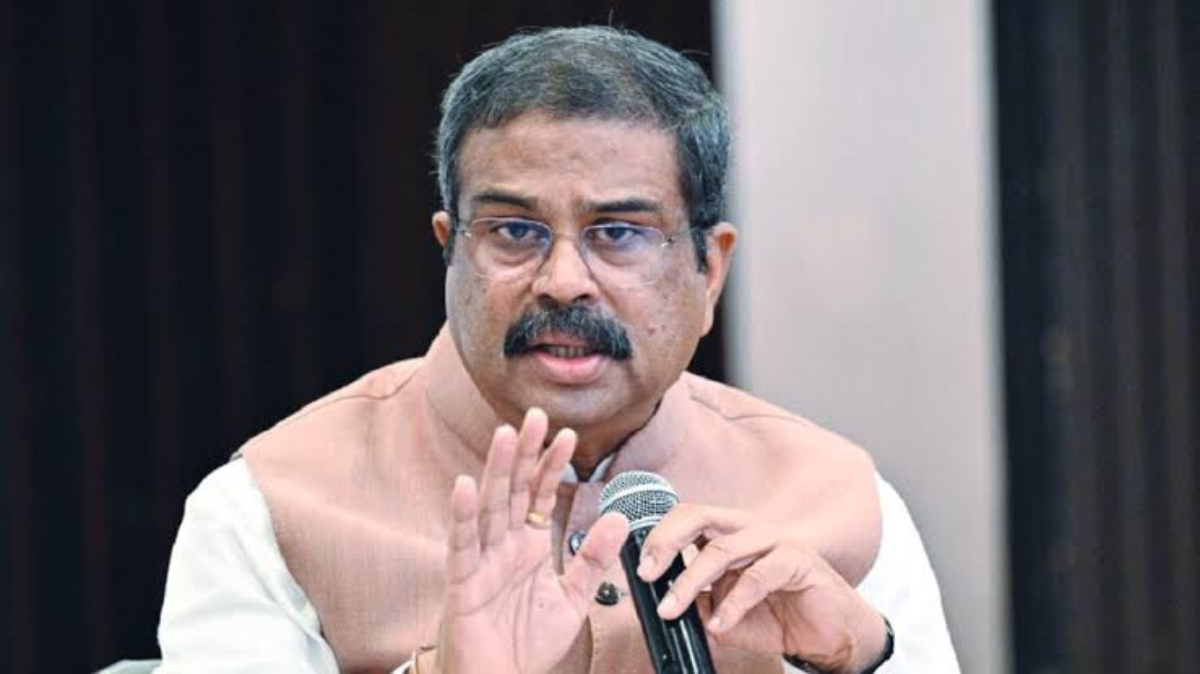
Union Education Minister Dharmendra Pradhan has submitted his resignation to Prime Minister Narendra Modi following widespread protests over exam irregularities. Here is a look at seven notable Indian cabinet ministers who stepped down taking moral responsibility.

The resignation of an Indian minister on the grounds of moral accountability has returned to the headlines after Dharmendra Pradhan resigned as Union Education Minister of India.
Pradhan sent his resignation letter to Prime Minister Narendra Modi on July 25 2026. His resignation comes after nationwide student protests over a National Testing Agency (NTA) exam paper leak.
Pradhan in his letter states that holding public office was never about personal prestige and he chose to step aside to protect student interests.
Voluntary exits over administrative failure are rare today but India has a long history of important leaders leaving their offices after a major national crises.
List of 7 Indian Ministers Who Resigned on Major Moral Grounds
Apart from recent resignation of Dharmendra Pradhan India has witnessed the following exits of notable ministers since independence which were a major news headlines in the Indian history:
| S. No. | Minister Name | Ministry Held | Year | Reason for Exit |
| 1 | Dharmendra Pradhan | Education | 2026 | Entrance exam paper leaks |
| 2 | Lal Bahadur Shastri | Railways | 1956 | Ariyalur train disaster |
| 3 | T.T. Krishnamachari | Finance | 1958 | LIC Mundhra stock scam |
| 4 | V.K. Krishna Menon | Defence | 1962 | 1962 border war unpreparedness |
| 5 | Madhavrao Scindia | Civil Aviation | 1993 | Indian Airlines plane crash in Delhi |
| 6 | Mamata Banerjee | Railways | 2000 | Punjab train collision |
| 7 | Shivraj Patil | Home Affairs | 2008 | 26/11 Mumbai terror attacks |
1. Dharmendra Pradhan
Dharmendra Pradhan stepped down as Union Education Minister after facing weeks of protests over NEET UG exam paper leaks. In his letter Pradhan stated he was taking direct responsibility so that students could focus on their studies without getting caught up in legal issues.
— Dharmendra Pradhan (@dpradhanbjp) July 25, 2026
2. Lal Bahadur Shastri
Lal Bahadur Shastri set an early example for political accountability in India. He served as Railway Minister under Prime Minister Jawaharlal Nehru and resigned after a train disaster in Ariyalur, Tamil Nadu. The train disaster killed over 140 people. Nehru accepted the exit saying that it set a high standard for governance.
3. T.T. Krishnamachari
Finance Minister TT Krishnamachari resigned after the Chagla Commission probed stock purchase irregularities in the Life Insurance Corporation (LIC). He took full responsibility for the decisions made within his ministry and resigned.
4. V.K. Krishna Menon
Defence Minister VK Krishna Menon left the office during the 1962 border war with China. He faced criticism over military unpreparedness and mounting pressure from lawmakers. Menon accepted the criticism and quit to clear the path for new leadership in the defence ministry.
5. Madhavrao Scindia
Civil Aviation Minister Madhavrao Scindia resigned after an Indian Airlines plane crashed at Delhi airport in 1993. Everyone on board survived but Scindia immediately sent his resignation to then Prime Minister of India PV Narasimha Rao. He stated that he felt personally responsible for flight safety standards.
6. Mamata Banerjee
Mamata Banerjee was serving as Railway Minister of India when she offered to quit after two trains collided in Punjab and killed 43 people. She stated publicly that as head of the ministry she had to take moral responsibility for passenger safety.
7. Shivraj Patil
Home Minister Shivraj Patil had resigned days after the 26/11 Mumbai terror attacks. His letter came as public outrage intensified over security lapses and intelligence coordination gaps. Patil took moral responsibility and offered his resignation to former Prime Minister Manmohan Singh.
How Political Accountability Works in India
Stepping down on moral grounds has long served as a way for leaders to protect the integrity of public office. Modern governments often rely on court probes or committee reviews to handle operational failures.
Resignations of an important leader however show that final responsibility rests with top decision makers. These historic exits remain historical points of reference whenever citizens demand political accountability from their leaders.

Harshita Singh is an education and general knowledge journalist with over 5 years of experience in educational writing. Specializing in US affairs and GK, Harshita has a track record of breaking down intricate geopolitical and historical subjects into clear, digestible insights for learners. Her strong background in text analysis, coupled with a Bachelor of Arts (Hons) in English from the University of Delhi, helps her produce authoritative, thoroughly researched content that empowers readers to engage confidently with global current affairs. For inquiries or academic insights, you can reach out to her directly at harshita.singh@jagrannewmedia.com.


-1784978527792_t.webp)

![Kerala SAY +2 Result 2026 LIVE: [Link Active] Class 12 HSE Marks Memo Released; Check School-Wise Results at results.kite.kerala.gov.in](https://img.jagranjosh.com/images/2026/July/2572026/Kerala+2SAYResult2026out.png)