Who Invented Morse Code?
Learn who invented Morse code and how Samuel Morse and Alfred Vail developed the electric telegraph system that changed global communication in the 1830s.
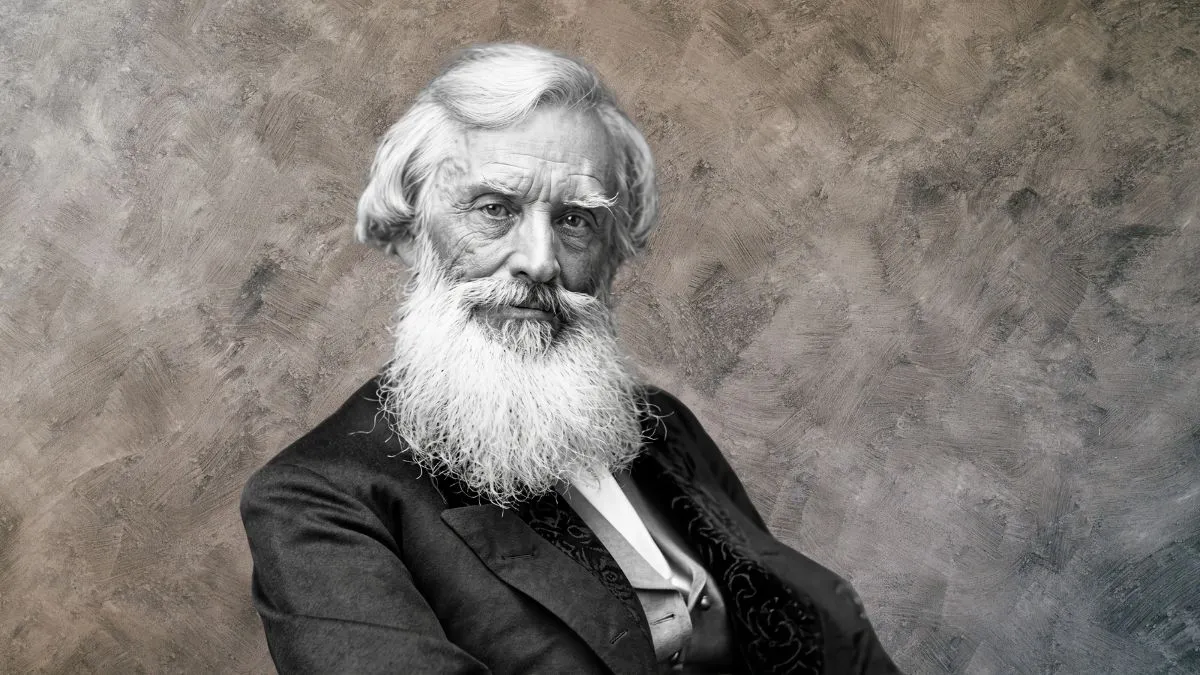
Morse code was invented by American inventor Samuel Morse and his assistant Alfred Vail during the period of 1837–1844. This system enabled them to transmit messages over long distances by means of electrical pulses. Prior to this invention, the only way to send news fast was by horse or ship. Letters and numbers are represented by unique patterns of short and long signals. These signals are referred to around the world as dots and dashes. This discovery was the basis for the modern telecommunications and the digital age.
What was the reason behind the Invention?
Before he was an inventor, Samuel Morse was a successful professional painter. A personal tragedy in 1825 changed his life. At the time he was in Washington, D.C., and received a letter that his wife was sick. She was buried by the time he got home to Connecticut.
Morse was overwhelmed with the slow pace of communication. He was fascinated with the idea of communicating instantly over long distances. On a ship in 1832, he met a scientist named Charles Thomas Jackson. They discussed electromagnetism. During this discussion, Morse conceived of the electric telegraph. Samuel Morse received his first patent for the telegraph.
The Contribution of Alfred Vail in Morse Code
Alfred Vail contributed much of the technical skill, while Samuel Morse was the visionary. In 1837, Vail joined Morse. He contributed to the development of the telegraph machine and the code itself.
Vail observed that certain letters are used more frequently than others in the English language. He went to a local printing shop to see how many metal type pieces were used for each letter. He assigned the least number of codes to the most frequently used letters. The letter "E" is one dot for instance. This greatly accelerated the system's use.
How Morse Code Works?
The system involves sending electrical pulses through a wire. At one end a person presses a "key" that makes an electrical circuit. This sends a pulse to a receiver at the other end.
With a short press, you will make a dot. Long press to make a dash. The dash is 3 times the length of the dot. The operators listen to the clicks or view marks on a paper tape to convert the code back to words. This binary mode of communication is a direct forerunner of the code used in computers today.
The First Long-Distance Success
The United States Congress allocated money to construct a telegraph line in 1843. It was a line from the U.S. Capitol in Washington, D.C. to Baltimore, Maryland. The first official long-distance message was sent by Morse on May 24, 1844.
It said, "What hath God wrought. This event demonstrated the usefulness of the telegraph for government and business. In a few years, telegraph lines were laid between cities in North America and Europe.
Evolution into International Morse Code
The code developed by Morse and Vail is now known as "American Morse Code. It was a system that was a little different from the one in use today. A new version was developed in 1851 by the European countries and known as International Morse Code.
This version was more user friendly with various languages. It also proved to be more effective in radio communication. Today, the International Morse Code is still used for emergency signaling and for amateur radio.
Morse code was invented by Samuel Morse and Alfred Vail, and it was the beginning of the telecommunications revolution. They used to translate the language into electrical pulses, which enabled information to be transmitted at light speed for the first time. They made the world a smaller place and led the way to the telephone, radio and later the internet.
Check out some more interesting articles from the general knowledge section to boost your knowledge of national and international topics. Stay connected with Jagran Josh for more topics like this.
ALSO READ

Mriganka Chakraborty is a seasoned digital journalist and communications professional who is currently working as Deputy Manager at Jagran Josh, where he leads the General Knowledge Section. As a subject matter expert with 8+ years of editorial experience, he has created authoritative content that is trusted by millions of readers around the world in Science, History, Geography, Polity, Economy, Sports, and Technology. His extensive expertise in these subjects enables him to present complex topics in an engaging, accurate, and reader-friendly manner to a global audience, making learning addictive and fun.
His background in a wide range of content areas and his ability to move between them make him a trusted voice to readers who want reliable, well-researched content across a variety of disciplines.
In his leisure time, Mriganka enjoys reading fiction novels and watching action and thriller movies, and cricket, which not only hone his storytelling skills but also keep his editorial vision fresh and dynamic.


