Show Key Points
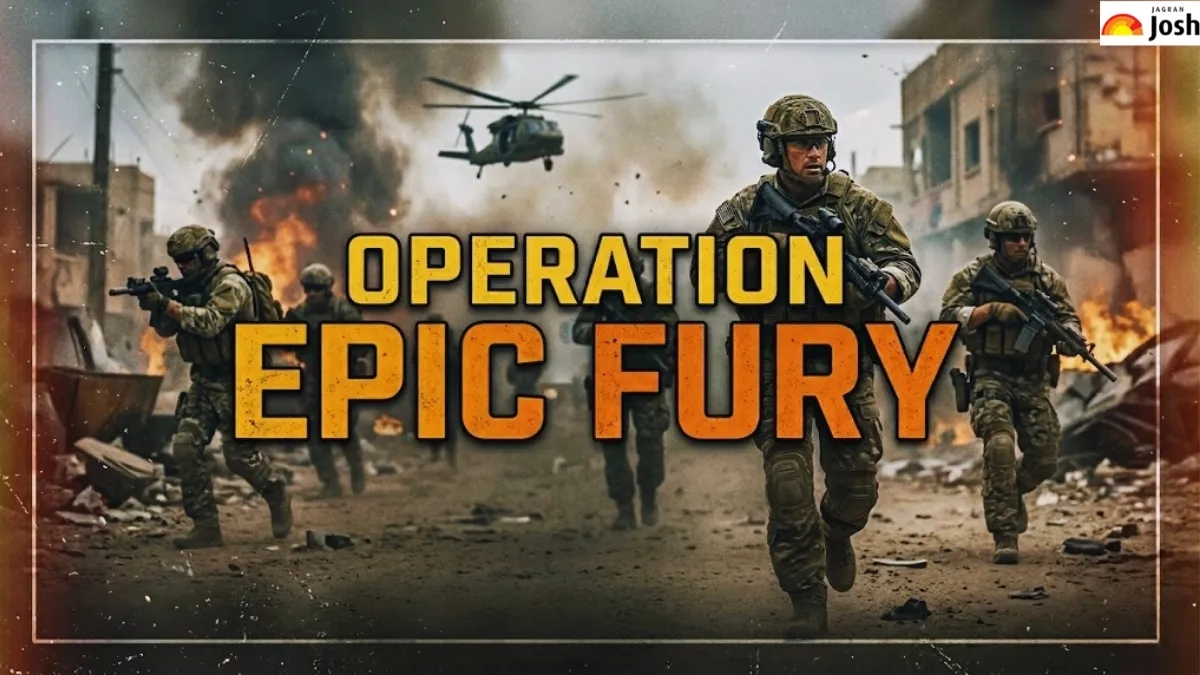
Operation Epic Fury: On February 28, 2026, the United States and Israel launched a massive, coordinated military campaign codenamed Operation Epic Fury against Iran. The operation involves air and naval strikes targeting Iranian military command nodes, missile infrastructure, and key government establishments. The campaign follows stalled nuclear negotiations and is described by U.S. leadership as a major combat operation aimed at dismantling Iran's nuclear and ballistic missile capabilities.
What is Operation Epic Fury?
Operation Epic Fury was a multi-national law enforcement and intelligence operation led by the United States, in collaboration with over a dozen international partners including Europol and the UK's National Cyber Security Centre (NCSC).
The primary goal was to dismantle the "command and control" (C2) servers of a high-level Advanced Persistent Threat (APT) group. This group was notorious for deploying ransomware and stealing sensitive intellectual property from Government agencies, Energy infrastructure providers and Major healthcare systems. Unlike traditional military maneuvers, Operation Epic Fury was fought in the "fifth domain" of warfare: cyberspace. The operation involved three distinct phases:
- Intelligence agencies tracked the digital footprints of the threat actors back to specific server farms and localized data centers.
- Using specialized "sinkholing" techniques, authorities redirected the malware's traffic away from the hackers' servers and into secure, controlled environments managed by the FBI.
- Simultaneously, physical raids were conducted in multiple jurisdictions to seize hardware and freeze cryptocurrency wallets used to launder ransom payments.
Why the Name "Epic Fury"?
The name Operation Epic Fury signals a shift from defensive protection to a high-intensity offensive doctrine aimed at dismantling entire military infrastructures by utilizing "Strategic Signaling," the U.S. projects overwhelming force to transition from mere deterrence to the active elimination of threats. This "Multi-Domain" approach serves as psychological warfare against regional proxies, simultaneously attacking an adversary's kinetic assets and their "fifth domain" cyber-communications.
What are the Global Impacts of Operation Epic Fury?
Within hours of the initial strikes on February 28, 2026, the Middle East experienced an immediate and volatile transformation in its security landscape. The fallout has moved beyond the borders of Iran, affecting global commerce and regional safety.
Military Retaliation or The Counter-Strike, In direct response to the bombardment of its command nodes, Iran’s Revolutionary Guard Corps (IRGC) initiated "Operation True Promise III," launching waves of ballistic missiles and "suicide" drones.
Significant targets strikes were reported near Al Udeid Air Base in Qatar and Al-Asad Airbase in Iraq. Israel’s multi-layered defense system including Arrow-3 and David’s Sling was activated to intercept projectiles targeting Tel Aviv and Haifa.
Total Airspace Closure, for the first time since the early 2000s, a massive "No-Fly Zone" effectively emerged over the heart of the Middle East. Major hubs like Dubai (DXB) and Doha (DOH) saw hundreds of cancellations as civilian GPS signals were jammed to prevent drone navigation. Civil defense sirens were triggered in several Gulf capitals, and U.S. embassies issued "Level 4: Do Not Travel" advisories for the entire region.
The "Strait of Hormuz" Lockdown the most significant immediate economic impact was the reported mining of the Strait of Hormuz. As Iran threatened to block the transit of 20% of the world’s petroleum, global oil prices spiked by over 15% in a single trading session.
Maritime security, the U.S. 5th Fleet has been engaged in active minesweeping operations to keep global shipping lanes open, leading to direct naval skirmishes in the Persian Gulf.
Also Read: US-Iran War: Trump Launches ‘Operation Epic Fury’ as Massive Strikes on Tehran
Enter your Blink text here...



-1772090263494_t.webp)

Comments
All Comments (0)
Join the conversation