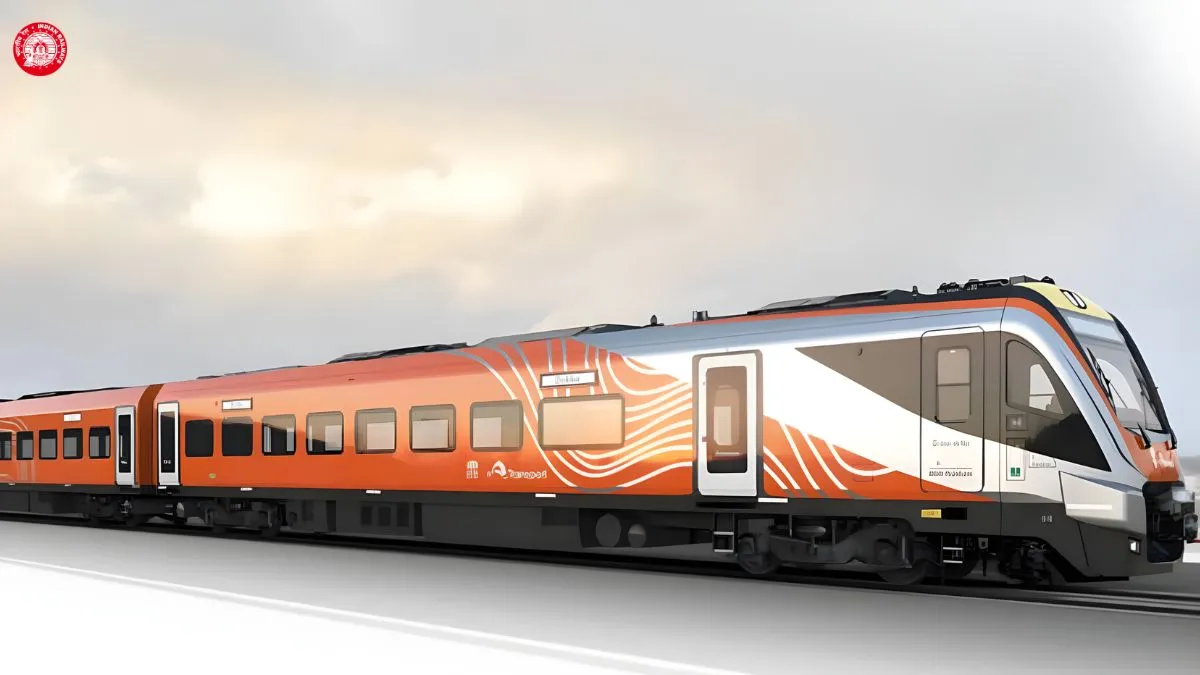
Railway Zones in India: Indian Railways is a network of rail that is one of the largest railway networks in the world, and it is a major transport and economic route in the country. Compared to other rail networks in the world, India has the greatest number of 7,325 stations. More rail tracks have been constructed in India in the last 10 years than the total rail system of other countries like South Africa, Ukraine, Poland, the UK and Sweden. Indian Railways will be the biggest green rail network in the world when it is fully electrified. But, do you know, how many railway zones are in India? To know the answer, explore this article and get to know how many railway zones are in India.
How Many Railway Zones are in India?
Indian Railways has a total of 18 administrative zones that are further divided into 68 operating divisions according to the Ministry of Railways, Government of India. Each zone is headed by a General Manager (GM).
What is a Railway Zone?
Indian Railways covers the entire country and there is no way that such large network can be controlled in one place. In this way the railway system of the country was divided by the Government of India into different zones. The trains, tracks and stations in the areas are under the jurisdiction of the zones.
The zones also further break down into smaller units called divisions. Every zone has a General Manager (GM) and every division a Divisional Railway Manager (DRM).
-
18 Railway Zones
-
68: Divisions
-
69,000+ km of Route
-
7,300+ Stations
Source: Reddit
Complete List of Railway Zones in India
The table given below gives the name of all the rail zones, short code, headquarters city and the number of divisions in each. The following is the list based on the information released by the Ministry of Railways, Government of India.
| ~ | Railway Zones in India | Code | Headquarters | No. of Divisions |
| 1 | Central Railway | CR | Mumbai (CST) | 5 |
| 2 | Eastern Railway | ER | Kolkata | 4 |
| 3 | East Central Railway | ECR | Hajipur | 5 |
| 4 | East Coast Railway | ECoR | Bhubaneswar | 3 |
| 5 | Northern Railway | NR | New Delhi (Baroda House) | 5 |
| 6 | North Central Railway | NCR | Prayagraj (Allahabad) | 3 |
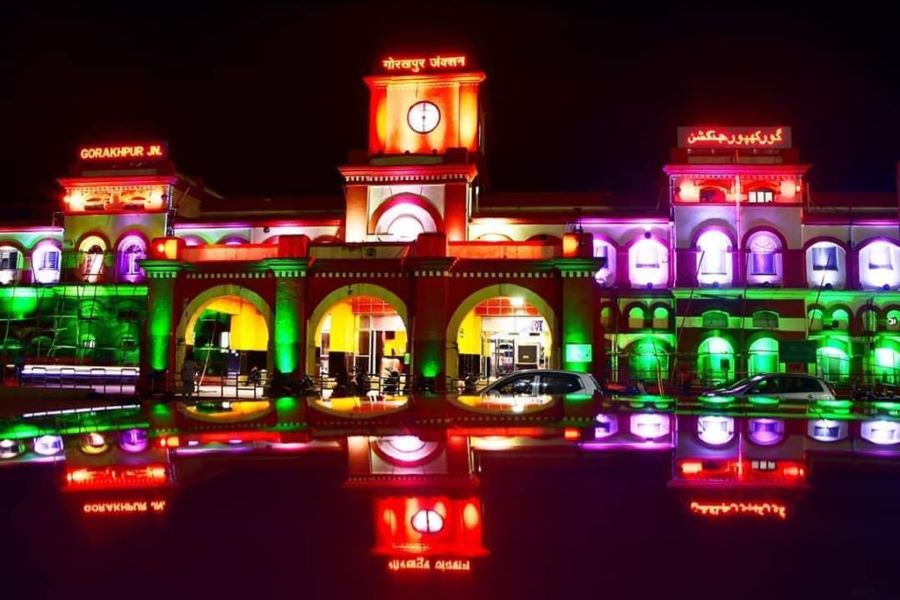
| 7 | North Eastern Railway | NER | Gorakhpur | 3 |
| 8 | Northeast Frontier Railway | NFR | Maligaon, Guwahati | 5 |
| 9 | North Western Railway | NWR | Jaipur | 4 |
| 10 | Southern Railway | SR | Chennai | 5 |
| 11 | South Central Railway | SCR | Secunderabad | 5 |
| 12 | South Eastern Railway | SER | Kolkata | 4 |
| 13 | South East Central Railway | SECR | Bilaspur | 3 |
| 14 | South Western Railway | SWR | Hubballi (Hubli) | 3 |
| 15 | Western Railway | WR | Mumbai (Churchgate) | 6 |
| 16 | West Central Railway | WCR | Jabalpur | 3 |
| 17 | Metro Railway Kolkata | MR | Kolkata | 1 |
| 18 | South Coast Railway (SCoR) NEW | SCoR | Visakhapatnam | 4 (announced) |
The decisions on the zone boundaries are made based on the needs of operation and administration, rather than based on the boundaries of the states. Consequently, there are states with over one zone or division of the railway lines.
How Did the Number of Railway Zones in India grow over time?
There were 18 zones not in all of India. It increased gradually with the decades with the expansion of the railway network and the addition of trains. Here is a simple timeline:
1. 1951: Indian Railways reorganised. When all the private railway companies were nationalised by the government, the network had 6 zones.
2. 1951-52: Two more zones were added to have a total of 8 zones. The first to be put into operation was the Southern Railway on 14 April 1951.
3. 1952: The count grew to 9 zones. This building was not altered much over a period of about 40 years.
4. 2002-03: Seven more new districts were created including the East Central, North Central, North Western, East Coast, South Western, West Central and South East Central making the total number of zones 16.
5. 2010: Kolkata Metro officially became a zonal railway on 29 December 2010, becoming the 17th zonal railway.
6. 2019: South Coast Railway (SCoR) located in Visakhapatnam was announced as the 18th zone. It is cut out of East Coast
Key Facts About Indian Railway Zones
Which city is the headquarters of the most railway zones?
In India, Kolkata has the greatest number of zonal headquarters. It has three zones, Eastern Railway, South Eastern Railway and Metro Railway Kolkata, all of which are based in Kolkata.
Second is Mumbai which has two zones Central Railway (CST) and Western Railway (Churchgate).
Largest and smallest Zones.
The Northern Railway has been rated as one of the largest zones in India in relation to route length, states served are Uttar Pradesh, Punjab, Haryana, Himachal Pradesh, Uttarakhand and Union Territories like Delhi and Jammu and Kashmir.
The North Eastern Railway (with its base at Gorakhpur) is one of the smallest in terms of length of routes.
What is special about the Kolkata Metro?
Kolkata Metro is a high speed (underground) railway. It is electrically operated and is utilized in the local movements in the city. Despite not being a normal long distance zone, on 29 December 2010 the Ministry of Railways accorded it full zone status. It is thus rated the 17 th zone of Indian Railways.
What is South Coast Railway (SCoR)?
In 2019, the South Coast Railway zone was announced. It has its headquarters in Visakhapatnam, Andhra Pradesh. It was formed under Andhra Pradesh reorganisation act, 2014. The new zone encompasses key areas of Andhra Pradesh as well as some areas of Telangana and Tamil Nadu. It consists of divisions in Guntur, Guntakal, Vijayawada and Waltair (renamed Visakhapatnam Division).
What is a Railway Division?
The zones are further divided into smaller divisions. By 2025, there are 68 divisions of Indian Railways.
Divisional Railway Manager (DRM) is in charge of each division. The zone has the DRM who is the General Manager of the zone. The DRM is in charge of day to day running of trains, safety, and track maintenance, as well as passenger services in that division.
Division boundaries and zone boundaries are set based on the requirements of operations - not state boundaries. It is because of this fact that there can be two or more zones which control the same railway lines.
Who Manages Indian Railways?
The Government of India owns Indian Railways which are operated by the Ministry of Railways. The Railway Board takes care of the overall management and is headed by a Chairman and Chief Executive Officer (CEO). The members of the board are in charge of such topics like infrastructure, finance, operations and rolling stock.
Each zone has semi-autonomous operation of this board. Each of the zones has General Managers with considerable powers to manage their region.