Show Key Points
The Amazon River is the world’s largest river by volume. Located in South America, it flows through 9 countries, including Brazil and Peru.
This massive waterway holds about 20% of the Earth’s fresh water and supports over 3 million species in its rainforest. It is the lungs of our planet.
But did you know which river is known as the Amazon of India? This unique Indian river flows through a region receiving over 2,500 mm of rainfall annually. It is famous for its lush green banks and incredible biodiversity.
In this article, we'll take a look at the "Amazon of India", exploring its unique ecosystem and why it earned such a powerful nickname.
ALSO READ: Which River is known as the Nile of India?
Quick Fact Check the Brahmaputra River
| Feature | Details |
| Official Name | Brahmaputra (India), Yarlung Tsangpo (Tibet), Jamuna (Bangladesh) |
| Total Length | Approximately 2,900 km |
| Average Width | 5.46 km (expands to over 10 km during monsoon) |
| Maximum Depth | 135 meters (making it the deepest river in India) |
| Starts From | Angsi Glacier (near Mount Kailash), Tibet |
| Flows Through | Arunachal Pradesh and Assam (India) |
| Ends In | Bay of Bengal (merges with the Ganges to form the world's largest delta) |
| Major Tributaries |
|
| Known As | The largest river of India by Volume (discharges approximately 19,800 cubic meters per second) |
| Nicknames | The "Amazon of India" and the "Red River" (due to iron-rich silt) |
| 3 Lesser-known Facts |
|
Which River is known as the Amazon of India?
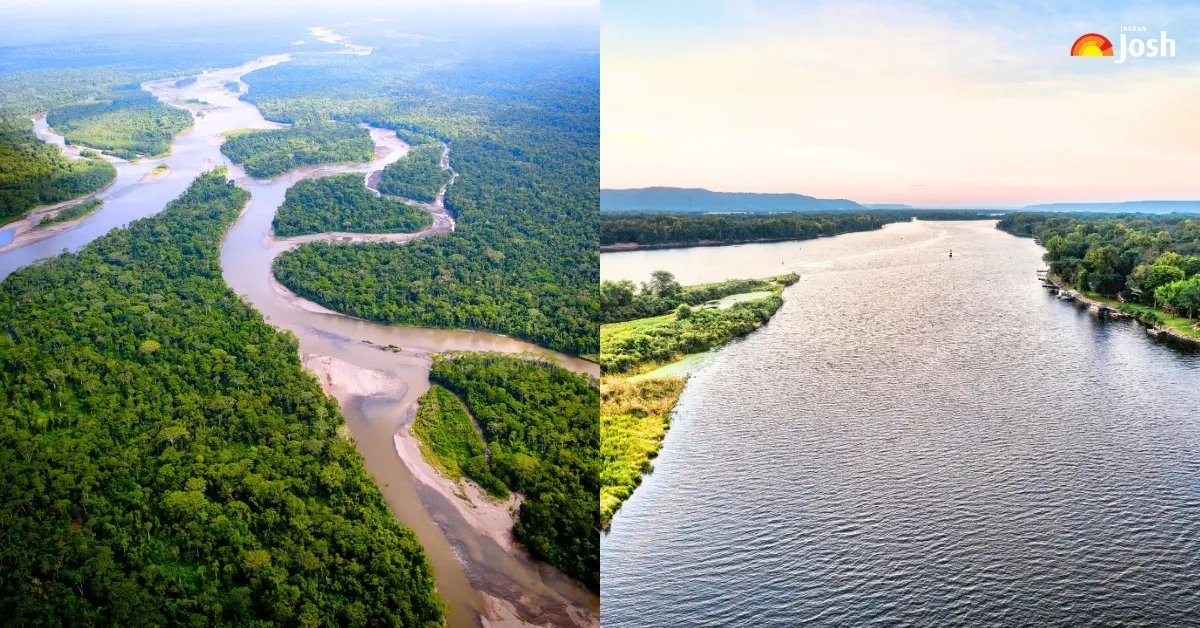
The Brahmaputra River is often called the "Amazon of India". Like the Amazon in South America, it is known for its huge volume of water, frequent flooding, and the thick green forests along its banks.
The Journey of the Brahmaputra
The river follows a long and winding path through three different countries:
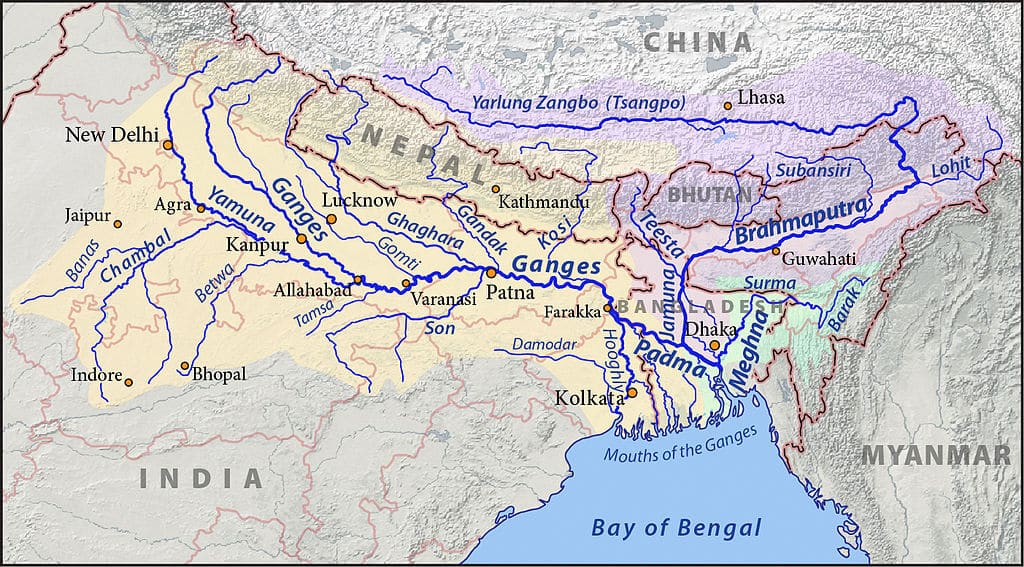
- Where it Starts: The river begins high up in the Himalayas. Its source is the Angsi Glacier in Tibet, at an altitude of about 5,300 metres. In Tibet, it is known as the Yarlung Tsangpo.
- The Path through India: It enters India through the state of Arunachal Pradesh, where it is called the Siang or Dihang. It then flows into the wide valleys of Assam, where it becomes the Brahmaputra we know.
- States it Flows Through: In India, the river primarily flows through Arunachal Pradesh and Assam.
- Where it empties: After leaving India, it enters Bangladesh and merges with the Ganges. Together, they form the world’s largest delta before emptying into the Bay of Bengal.
5 Lesser-Known Facts About the Brahmaputra
Here are five unique and lesser-known facts about the Brahmaputra River:
i. The Male River
While most Indian rivers are given female names, the Brahmaputra translates to "Son of Brahma". It is one of the very few rivers in India considered masculine in Vedic texts.
ii. A Moving Landscape
The river is home to Majuli, which is the world’s largest river island. Because the river is so powerful, the island's shape and size change every year due to erosion.
iii. The "Red River" Phenomenon
During the monsoon season, the river often turns a reddish colour. This happens because it carries high amounts of iron-rich soil and sediment from the mountains.
iv. A Tidal Bore Wonder
The Brahmaputra is one of the few rivers in the world that experiences a "tidal bore". This occurs when the incoming ocean tide creates a wave that travels upstream against the river's current.
v. Extreme Depth
In certain sections, the Brahmaputra reaches depths of over 120 metres. This makes it one of the deepest rivers in the world, allowing it to hold a massive volume of water.
IN CASE YOU MISSED: Which River is Known as the Ruhr of India?
Why is the Brahmaputra called the Amazon of India?

The Brahmaputra River is often called the "Amazon of India" because it shares many characteristics with the well-known river in South America.
Although the Amazon is the world's largest river, the Brahmaputra is also massive and shapes the landscape of Northeast India with its strength and the water it provides. Here are the primary reasons why this comparison is made:
1. Massive Water Volume
The Brahmaputra, like the Amazon, is known as a "high-discharge" river because it carries large volumes of water.
When the monsoon arrives, the river grows so wide that it often looks more like an inland sea than a river. In some areas of the Assam valley, it can reach more than 10 kilometres across.
The Brahmaputra is India's largest river by volume, with an average flow of 19,800 cubic metres of water every second. During the peak flood season, this can reach over 100,000 cubic metres per second.
To give you an idea of its strength, the Brahmaputra carries more water than both the Ganges and Indus combined, making up almost 30% of all the water in India.
2. Incredible Biodiversity
The Amazon is famous for its rainforests, and the Brahmaputra basin is India's version of that green paradise. The river flows through the Indo-Burma Biodiversity Hotspot.
The banks are lined with dense tropical forests that are home to rare animals like the One-Horned Rhinoceros, Royal Bengal Tigers, and the prehistoric-looking Ganges River Dolphin.
3. A "Braid" of Many Channels
The Amazon is known for its complex network of winding paths. Similarly, the Brahmaputra is a braided river. This means it doesn't flow in one single line.
Instead, it splits into many smaller channels that separate and rejoin, creating thousands of temporary sandbars and the world's largest river island, Majuli.
4. Impact on Climate and Soil
Both rivers act as the "heart" of their respective regions. The Brahmaputra brings down massive amounts of alluvial soil (silt) from the Himalayas.
This sediment makes the plains of Assam incredibly fertile, much like how the Amazon sustains the vast basin in South America.
FOR YOU: Which River is Known as the Chocolate River?
In a Nutshell: Amazon vs. Brahmaputra
The table below shows why the Brahmaputra is the perfect Indian "twin" to the Amazon.
| Feature | Amazon River (South America) | Brahmaputra River (India) |
| Water Volume | Largest in the world by discharge. | Largest in India by discharge. |
| Width | Can reach up to 11 km wide in the dry season and 40 km in the wet season. | Can reach over 10 km wide in parts of Assam during monsoons. |
| Ecosystem | Home to the Amazon Rainforest. | Home to the Kaziranga and Manas National Parks. |
| River Type | Meandering and vast basin. | Highly braided with many shifting channels. |
| Silt/Sediment | Carries massive amounts of nutrients to the ocean. | Carries one of the highest sediment loads of any river in the world. |
Calling the Brahmaputra the "Amazon of India" isn't just a nickname; it’s a way to describe its ecological importance. Both rivers are vital for the survival of their planets.
They regulate the local climate, provide water for millions of people, and support thousands of species found nowhere else on Earth.
When you stand on the banks of the Brahmaputra in the middle of the monsoon, the horizon disappears into the water, perfectly mimicking the "River Sea" feel of the Amazon.
WHAT'S NEXT: Which River is Known as the Milk River of India?



-1772866790571_t.webp)

Comments
All Comments (0)
Join the conversation