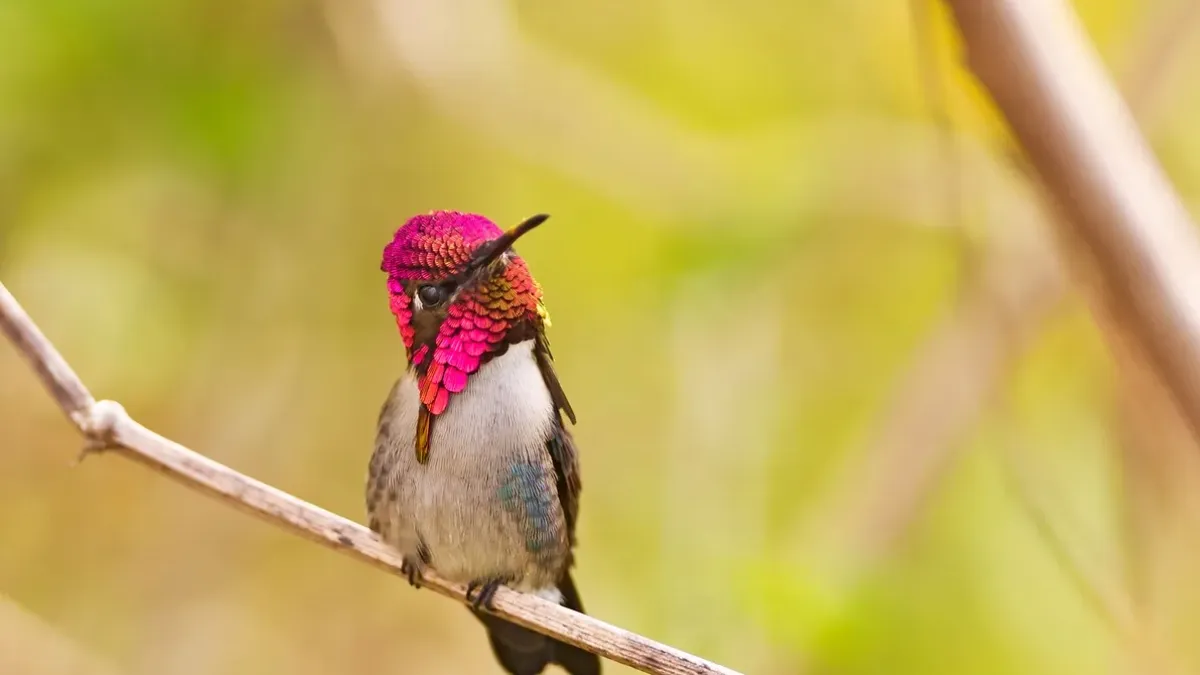
The Bee Hummingbird (Mellisuga helenae) is the smallest bird in the world by both length and weight, measuring only 5.5 cm (2.2 inches) in length and mass, equal to less than a dime, males being 1.95 grams (1.95 g) in weight.
It is found solely in the woods and thickets of the coast of Cuba and far exceeds such competitors as the Vervain Hummingbird by a very small margin.
Recent ornithological confirmations, including Guinness World Records, affirm its status amid debates over precise metrics
Size Comparison with Other Small Birds
| Bird | Length (cm) | Weight (g) | Location |
| Bee Hummingbird | 5.5 (♂) | 1.95 | Cuba |
| Vervain Hummingbird | 6.0 | 2.5 | Caribbean |
| Goldcrest | 9.0 | 5.0 | Eurasia |
| Pardalote | 8.0 | 6.0 | Australia |
Bee Hummingbird's edge stems from verified measurements by BirdLife International.
Physical Characteristics of the Smallest Bird in the World
Surprisingly small even among 360+ species of hummingbird:
-
Size: Males 5.5 cm; females a little bigger, 6.1 cm, 2.6 grams.
-
Picture: Males brilliantly adorned with iridescent red crown/gorget, royal blue behind, and white belly; females duller, having white throats.
-
Nest/Eggs: Small nests (2.5 cm diameter); coffee bean-sized eggs (12.5 x 8.5 mm), the smallest ever.
-
Flight: 80 strokes of the wings in a second, which makes a sound what we term in local Cuban tongue, ‘zun-zun--zzunzuncito’.
The bee-like hover usually causes it to be mistaken.
Read more: Which Mountain Is Known as the Sacred Mountain of India?
Habitat and Distribution
Native to Cuba (main island and Isola de la Juventud), successful in:
-
Mangroves, mangroves, coastal scrub.
-
Altitudes of up to 1, 200 m; flower nectar, insects through hawking.
-
Stable population that is susceptible to habitat loss; IUCN Least Concern (2024).
Bee Hummingbird’s Behavior and Ecology
-
Food: Nectar (tube bill), spiders, gnats; the metabolism is great, and necessitates constant feeding.
-
Breeding: The female constructs lichen-colored nests; 2 eggs are incubated 18-22 days; hatching in 20 days.
-
Adaptations: Rapidest wingbeat rate of any vertebrate; at night, torpor helps save energy.
In reserves such as the Zapata Swamp and Sierra del Rosario; ecotourism at places such as Playa Larga provide views at feeders. There is a threat of climate change and deforestation; nature tours focus on low impact observation.
Read more: Which Mountain Is Known as the Third Pole of the Earth?






Comments
All Comments (0)
Join the conversation