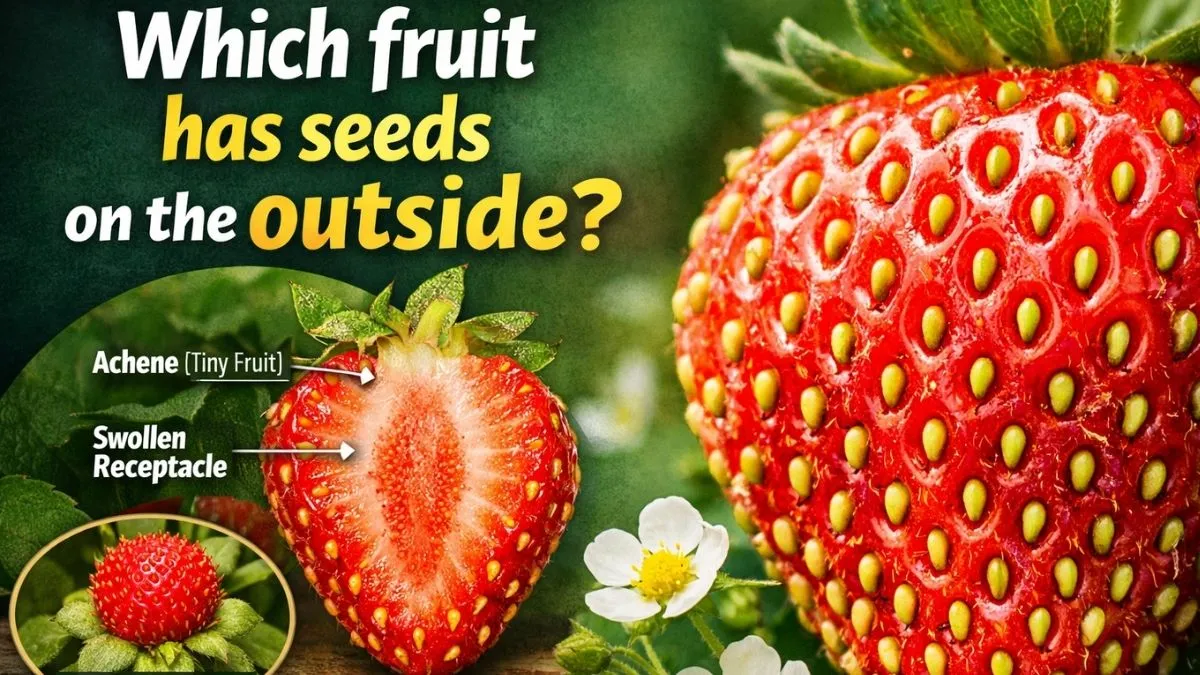
When it comes to fruit, most people picture something with seeds hidden neatly inside apples, grapes, or oranges, for instance. But there is one fruit that defies this natural pattern.
But, do you know which fruit has seeds on the outside?
What comes to your mind? Outside it, not its seeds, anything. Yet there is an interesting fruit such like none other.
It is a botanical marvel with its seeds lying on the outside and a nutritive treasure.
So, let’s understand and know about that fruit, which has seed on the outside.
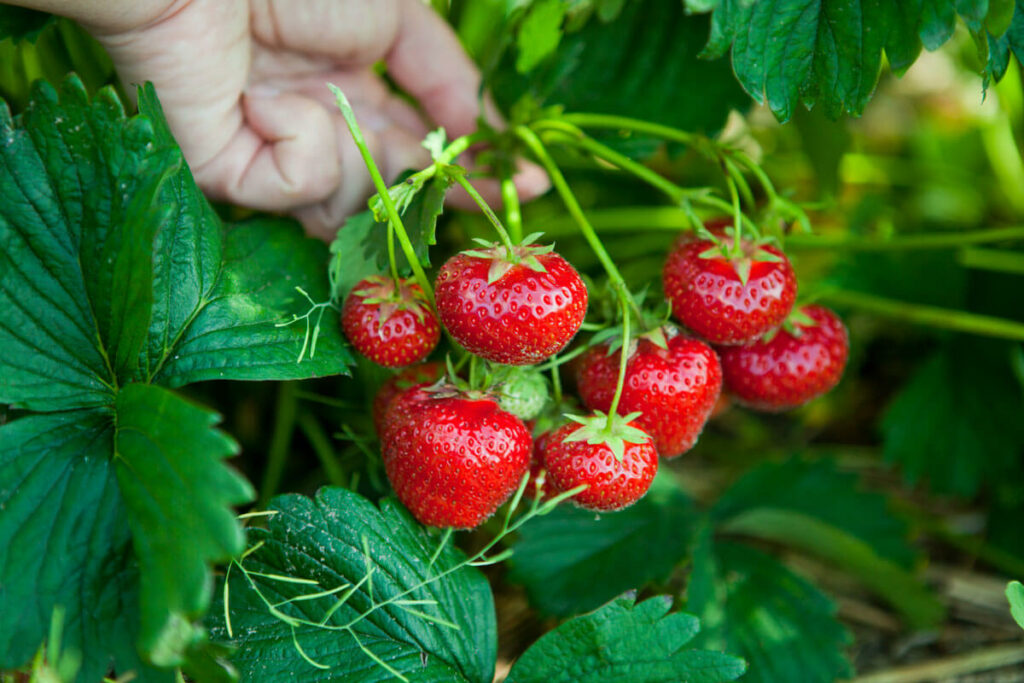
Source: melissaknorris
Which fruit has seeds on the outside?
Most people think that strawberries are simply fruits covered in seeds. However, it is a scientific misunderstanding of this familiar concept.
And to really know what fruit bears seeds without any covering on it, and why, we must look very carefully at the growth of strawberries, and what botanists understand fruits to be.
Which Fruit is Famous for Having Seeds on the Outside?
The strawberry is the most famous fruit which is seen to have its seeds as an outside mark.
However, this is a plant biological ruse. What appear to be the seeds upon the surface, are really minute fruits.
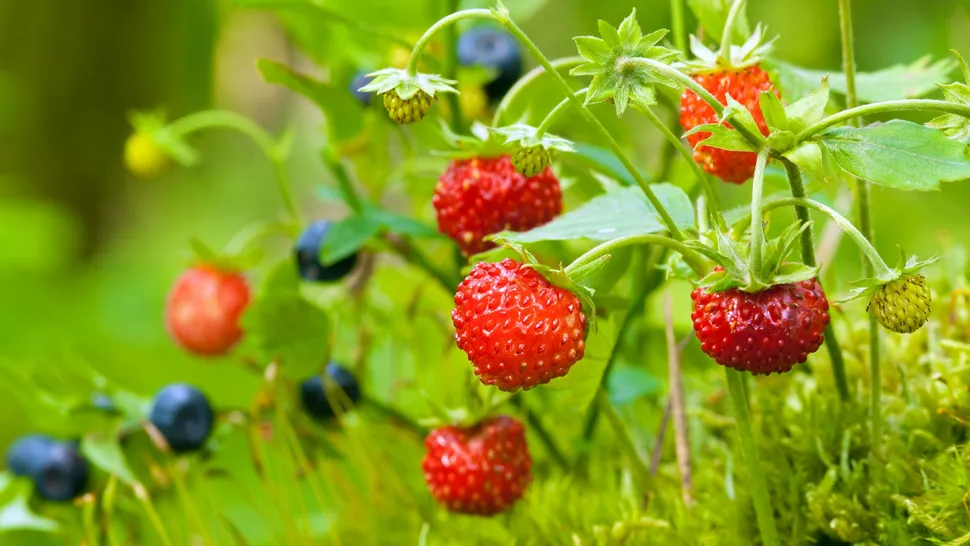
Source: getty image
What are the “Seeds” on a Strawberry Really Called?
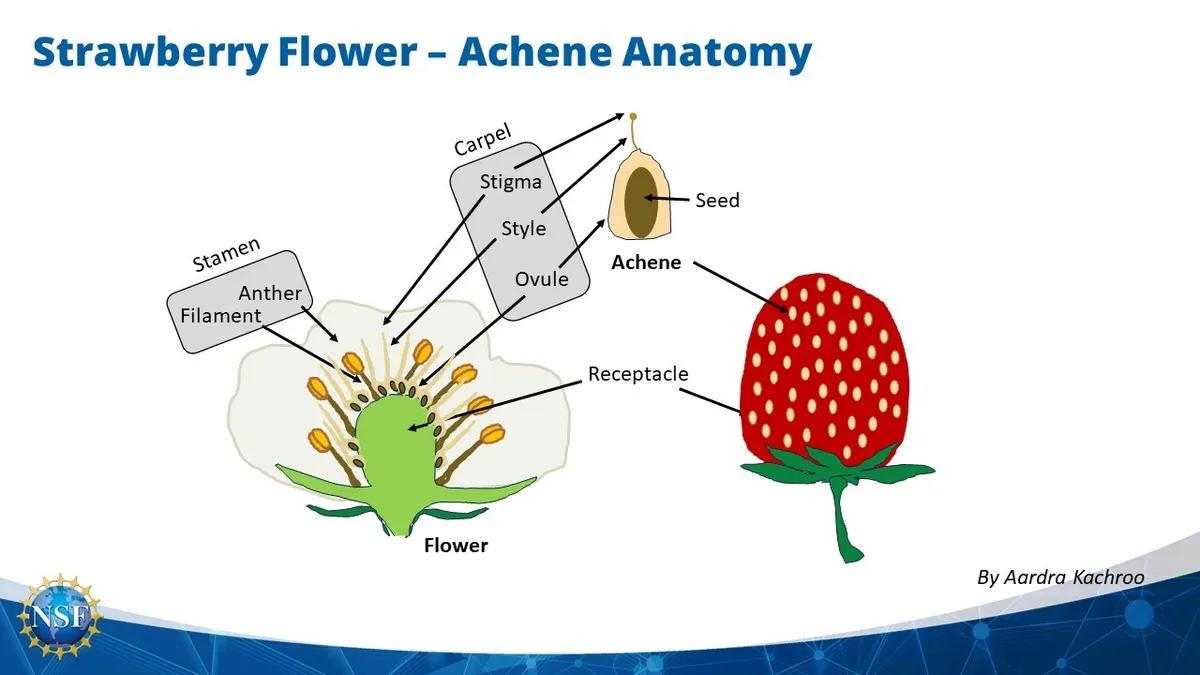
Achenes are the small dots that appear on a strawberry, which are yellow or brown.
-
Every achene is a full figured fruit.
-
Each of the aches has one real seed.
-
Each strawberry fruit has an average of 200 achenes.
Note: This means when you eat one strawberry, you’re technically eating hundreds of fruits at once.
Source: livescience/Aardra Kachroo
If Achenes Are the Fruit, What Is the Rest of the Strawberry?
Surprisingly, this red and juicy part of a strawberry is not a fruit.
It is a swollen receptacle, which is the base of the flower where all floral parts attach.
In simple terms:
-
The achenes = true fruits
-
The fleshy red portion = swell of the base of the flower.
It is due to this strange form that strawberries are not considered the true berries but the aggregate accessory fruits.
Why do Strawberries Have Seeds (Achenes) on the Outside?
This constituted an efficient survival mechanism that strawberries developed because of these reasons, which are:
-
The plant diverts the genes of sugar production to the receptacle rendering it sweet and appealing.
-
Animals consume the fleshy bit and are involved in spreading the achenes.
-
Achenes are loosely fixed and therefore can be spread easily.
This is a very clever design that enables the strawberries to grow in various environments across the world.
How is a Strawberry Different from Other Fruits?
| Feature | Strawberry | Apple | Mango |
| Seed position | Outside (achenes) | Inside | Inside |
| Edible part | Flower receptacle | Fruit tissue | Fruit tissue |
| True fruit | Achenes | Core | Flesh |
| Botanical berry | No | No | No |
Source: getty image
Is Strawberry a True Berry?
No. A strawberry is not really a berry although its name suggests otherwise.
The true berries (such as grapes and blueberries) are formed when an ovary is single and contains seeds. Strawberries violate the two rules.
Are there any other fruits like strawberries?
Yes, but they are rare.
-
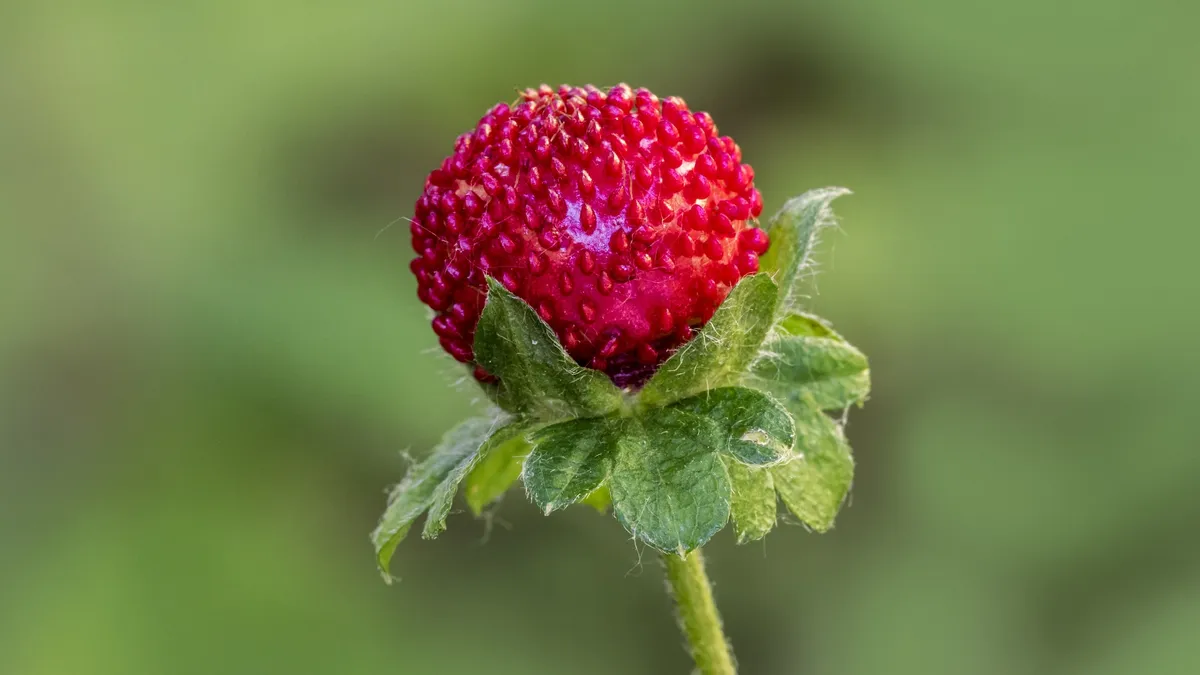
Mock strawberries are very similar to a genuine strawberry.
-
It is simulated with the receptacle fleshy and surface fruits.
-
It is not sweet or that tasty but attractive.
This similarity developed through convergent evolution, where unrelated plants evolve similar traits independently.
How Do Strawberries Reproduce Besides Seeds?
Strawberries don’t rely only on achenes to reproduce.
They also spread using runners:
-
Stems which grow horizontally on the ground.
-
At the ends of the runners, new plants are created.
-
This makes it fast when propagating in unfavourable conditions.
So,finally, which fruit has seeds on the outside?
The strawberry is the fruit which seems to bear seeds; but strictly speaking the seeds are, nevertheless, tiny fruits, containing fruit seeds within each.
It is an ideal illustration of how nature may appear simple, and nevertheless, it is complex on the inside






Comments
All Comments (0)
Join the conversation