Which is the Farthest Man-Made Object from the Earth?
NASA's Voyager 1, launched in 1977, is the farthest man-made object, venturing into interstellar space. It continues to send valuable scientific data, offering glimpses into the universe and showcasing human ingenuity. Carrying a "Golden Record," it symbolizes exploration, curiosity, and humanity's enduring desire to understand what lies beyond our solar system.
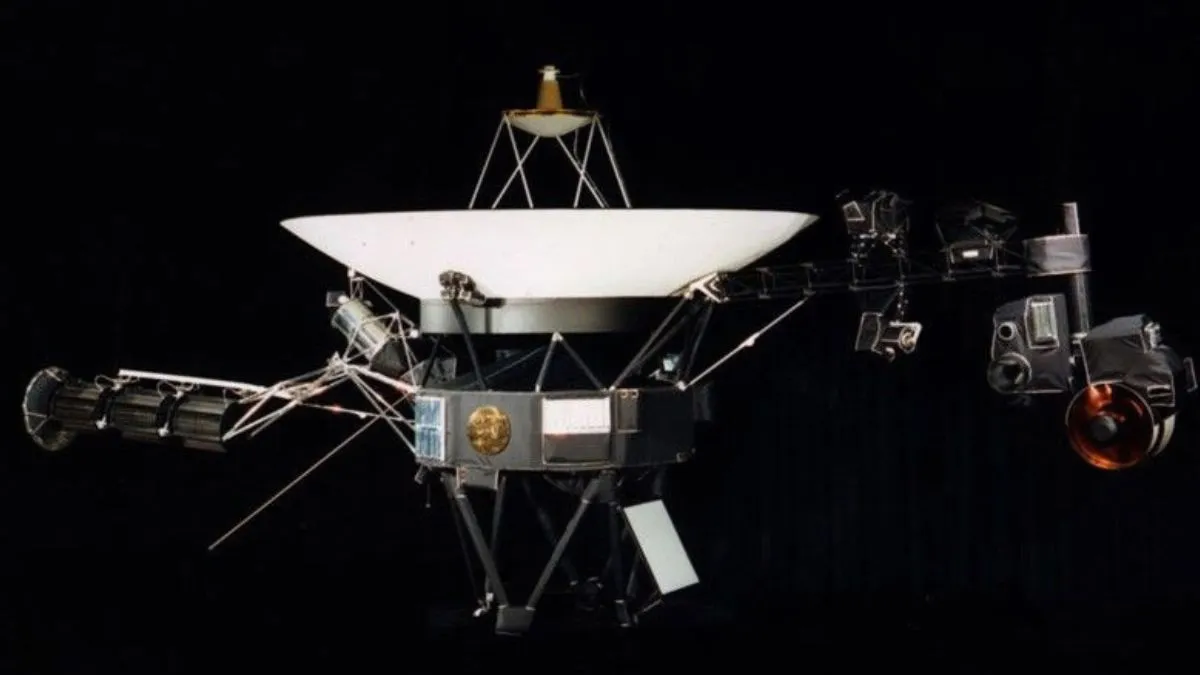
The farthest man-made object from Earth is NASA’s Voyager 1, a spacecraft launched on September 5, 1977, to explore the outer planets and beyond. Over the decades, it has traveled farther than any other human-made creation, venturing into interstellar space, a region beyond the influence of our Sun. Voyager 1 continues to send valuable scientific data back to Earth, despite being more than 24 billion kilometers (15 billion miles) away.
This extraordinary mission has given humanity a glimpse of the vastness of our universe and proven the incredible reach of human ingenuity. Even after nearly five decades, Voyager 1 remains a symbol of exploration, curiosity, and our desire to understand what lies beyond the boundaries of our solar system.
What is NASA’s Voyager 1?
NASA's Voyager 1 is an unmanned spacecraft which was launched on September 5, 1977, as part of NASA's Voyager program to explore the outer planets of our solar system and the surrounding environment. After the successful completion of its five-year objectives, it continued to travel and venture further into interstellar space.
Voyager 1 is equipped with scientific instruments designed to measure magnetic fields, cosmic rays, and plasma waves. It is also carrying the famous “Golden Record”, a time capsule of sounds and images representing life and culture on Earth, intended for any intelligent extraterrestrial life that may come across it. Voyager 1 is, to this day, humanity's most distant messenger, sending back invaluable data from billions of miles away, continually enhancing our understanding of deep space.
1. Mission Launch and Purpose
NASA launched Voyager 1 on September 5, 1977, to study the worlds of Jupiter and Saturn. The mission's purpose was to take detailed images and gather information about the largest planetary bodies, their moons, and their rings, culminating in the scientific community's first foray into the outer solar system for humanity.
2. The Trek Through the Solar System
Voyager 1 shared beautiful and captivating images of Jupiter's dynamic clouds and Saturn's glorious rings. After it completed its encounters with each planet, it continued to travel outward and sent back critical scientific data that enriched our knowledge of the magnetic fields, radiation, and cosmic particles present in the deep space between stars.
3. Transiting into Interstellar Space
In 2012, Voyager 1 became the first human-made object to enter into interstellar space. This event signified Voyager 1 transcending the solar heliosphere sphere of influence of the Sun and allowed scientists to study the conditions and particles that exist in that region of space.
4. Its Legacy and Importance
Voyager 1 represents the human desire for questions and exploration. Voyager 1 carried a Golden Record in the event of encountering or deciphering extraterrestrial life to introduce them to Earth. Even though it launched decades ago and travelled hundreds of millions or possibly billions of miles, it continues to impact scientists and dreamers from around the world as a machine that continues to journey through stars.
Conclusion
Voyager 1 represents the enduring spirit of human curiosity, ingenuity, and ambition to explore the unknown. After nearly 50 years on a voyage into the unknown, Voyager 1 still transmits valuable scientific measurements from the depths of the solar system and beyond, yielding new insights into our universe.

Harshita Singh is an education and general knowledge journalist with over 5 years of experience in educational writing. Specializing in US affairs and GK, Harshita has a track record of breaking down intricate geopolitical and historical subjects into clear, digestible insights for learners. Her strong background in text analysis, coupled with a Bachelor of Arts (Hons) in English from the University of Delhi, helps her produce authoritative, thoroughly researched content that empowers readers to engage confidently with global current affairs. For inquiries or academic insights, you can reach out to her directly at harshita.singh@jagrannewmedia.com.