
Scientific name of tomato: Even though tomatoes are a common ingredient in almost every type of food, their scientific name is hard to remember for both casual gardeners and food lovers.
Did you know that recent FAO data shows that the humble tomato is a major source of nutrition around the world, with production exceeding 189 million metric tons each year.
Knowing the scientific name for tomato plants is more than just an academic exercise; it shows how the plant has changed over time, from a wild, pea-sized berry in the Andes to the many different types we see today.
Above all, the scientific name of the tomato plant tells us where it fits in the Solanaceae family, which has both life-giving foods and deadly poisons.
What is the Scientific Name of Tomato?
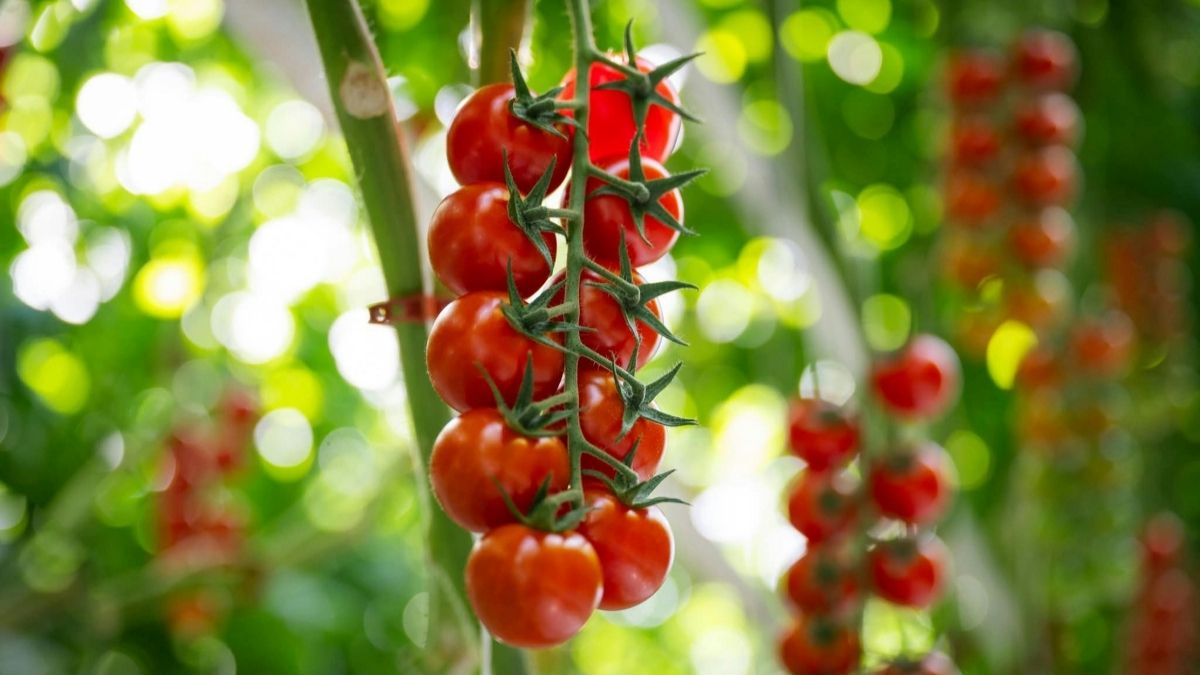
The scientific name of the tomato is Solanum lycopersicum. This name reflects its membership in the Solanum genus, which it shares with potatoes and eggplants.
The term Lycopersicum translates literally to wolf peach, a name rooted in ancient folklore suggesting that the fruit was used to conjure werewolves or was considered poisonous due to its resemblance to the deadly nightshade.
Family of Tomatoes and Their Scientific Names
The tomato belongs to the Solanaceae family, commonly known as the nightshades. This family is incredibly diverse, containing over 2,700 species. While many are edible, others are highly toxic.
The table below shows how the common tomato is related to its closest relatives.
| Common Name | Scientific Name | Primary Region |
| Garden Tomato | Solanum lycopersicum | Global (Cultivated) |
| Wild Tomato | Solanum pimpinellifolium | Peru, Ecuador |
| Solanum tuberosum | Global (Cultivated) | |
| Solanum melongena | Southeast Asia | |
| Bell Pepper | Capsicum annuum | Central & South America |
Do You Know - What is the Scientific Name for the Banana?
What is the Old Scientific Name of the Tomato?
For centuries, the tomato's identity was a subject of botanical dispute. In 1753, Carl Linnaeus originally placed it in the genus Solanum as Solanum lycopersicum.
However, just a year later, botanist Philip Miller moved it to its own genus, naming it Lycopersicon esculentum.
Miller believed the tomato was distinct enough from potatoes to warrant a separate category. This name remained the standard in many textbooks for over 200 years.
It wasn't until the late 20th century that modern DNA sequencing proved Linnaeus was right all along; the tomato is genetically nestled deep within the Solanum clade. Consequently, the botanical community officially reverted to Solanum lycopersicum.
Find Out - What is the Scientific Name of Tulsi?
Is a Tomato a Fruit or a Vegetable?
The answer to whether a tomato is a fruit or a vegetable depends entirely on your take as a scientist or a chef. The scientific name for tomato confirms its biological identity, but its kitchen role tells a different story
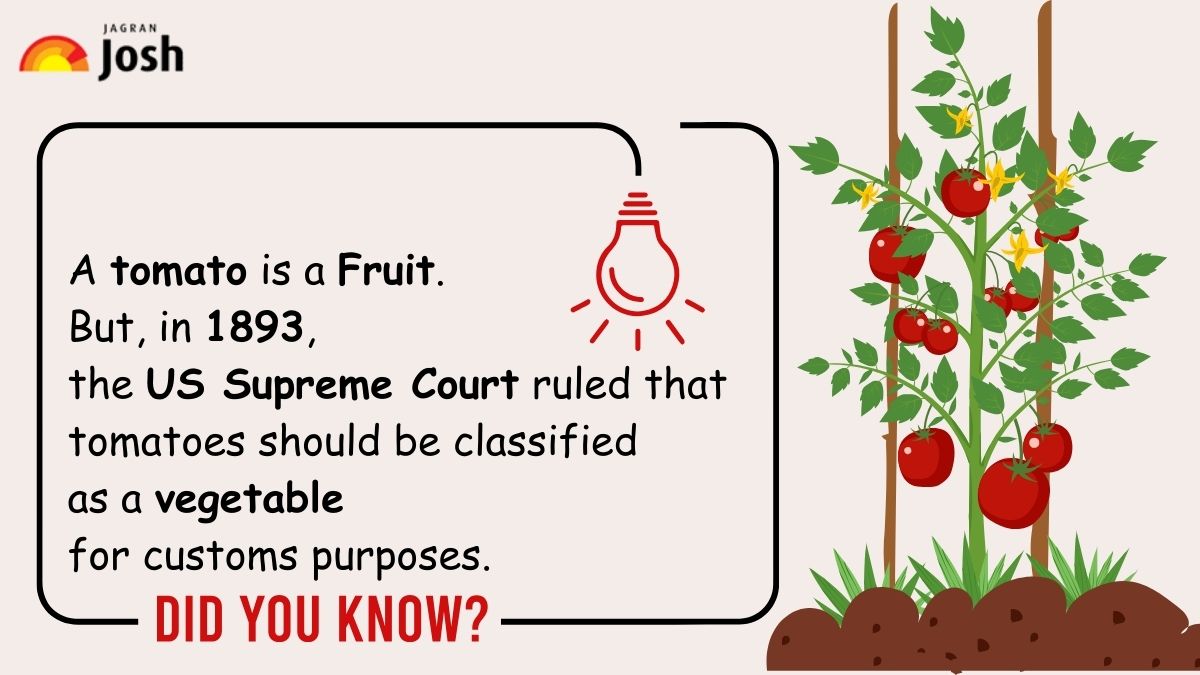
Botanically, a tomato is a fruit. Specifically, it is a berry because it forms from a single ovary and contains seeds on the inside. But, it is thought of as a vegetable in the kitchen because it tastes good and is used in main dishes instead of desserts.
In 1893, the United States Supreme Court ruled in the case Nix v. Hedden that the tomato should be classified as a vegetable for customs purposes. This allowed the government to tax it under the Tariff Act of 1883, which taxed imported vegetables but not fruit.
Also Read - What is the Scientific Name of a Wolf?
In a nutshell, knowing the scientific name of a tomato connects old plant history with modern agricultural science. This hardy plant is still important for food security, whether you call it Solanum lycopersicum or a salad staple.
Interestingly, recent research from the University of Florida is trying to bring back heirloom flavors to commercial varieties by mapping the tomato's complicated DNA and finding the specific genes that make them taste good.






Comments
All Comments (0)
Join the conversation