What Is Sensex? Here's A Simple Guide To Track The Indian Stock Market Indices
Learn what the Sensex is, how it works, its connection with the BSE, and why understanding India’s stock market can help students build financial awareness.
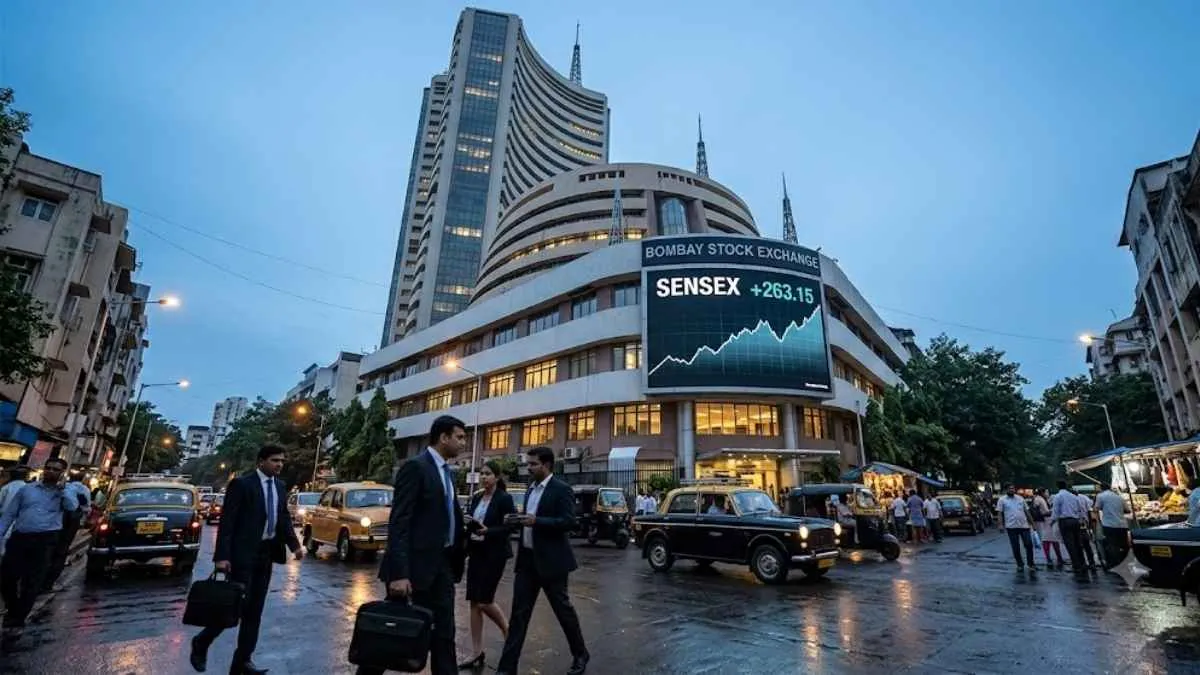
The stock market has an important role to play in a country's economy and Sensex is one of the major indicators of the Indian financial market. Sensex, i.e. Stock Exchange Sensitive Index, is made up of 30 leading companies listed on Bombay Stock Exchange (BSE). The companies belong to various sectors of the economy. Sensex is known as the barometer of the Indian stock market as it represents the market performance.
What is the BSE?
Located on Dalal Street, in Mumbai, the BSE is the oldest stock exchange in Asia. The BSE was founded in 1875 and serves as a hub for Indian financial markets. Investors can trade in the regulated market and purchase items such as shares, bonds and other financial instruments on the BSE. Thousands of companies are listed on the BSE. However, the Sensex tracks 30 of the biggest companies in the BSE. These companies are deemed to be financially well-established and their performance helps to signify the performance of the Indian stock market.
Which are the BSE Sensex listed companies?
The SENSEX 30 represents major Indian companies across banking, finance, technology, energy, automobiles, pharmaceuticals, consumer goods, metals, infrastructure, telecommunications, and other important sectors of the Indian economy.
These are well-established, financially strong, large-cap companies covering diverse industries and contributing significantly to India’s economy through the BSE.
The Companies are:
- Adani Ports & SEZ
- Asian Paints
- Axis Bank
- Bajaj Finance
- Bajaj Finserv
- Bharti Airtel
- HCL Technologies
- HDFC Bank
- Hindustan Unilever
- ICICI Bank
- IndusInd Bank
- Infosys
- ITC
- Kotak Mahindra Bank
- Larsen & Toubro (L&T)
- Mahindra & Mahindra (M&M)
- Maruti Suzuki
- Nestle India
- NTPC
- Power Grid Corporation
- Reliance Industries
- State Bank of India (SBI)
- Sun Pharma
- Tata Motors
- Tata Steel
- Tata Consultancy Services (TCS)
- Tech Mahindra
- Titan Company
- UltraTech Cement
- Eternal Ltd
Key features of the Sensex
-1787127245242.webp)
How does the Sensex work for Stock Market?
The Sensex will give investors an insight into the overall market performance. Instead of following all thousands of companies, people can look at the Sensex and know whether the market is on the rise or on a decline. It also tells investors about the performance of the biggest companies at the top of the pyramid in India.
- Sensex follows the performance of 30 major companies listed at the Bombay Stock Exchange (BSE).
- It serves as a barometer of the market performance, if the market is going up or down.
- The Sensex follows the free-float market capitalisation method.
- Only freely tradable shares are considered for the calculation of the Sensex.
- Shares held by company promoters, governments and other restricted classes are not considered in the calculation.
- The performance of large companies has a greater impact on the movement of the Sensex than that of the smaller ones.
- As a result, a large company’s share price that goes up sharply will contribute to the rise of the sensex value.
- The company list of 30 stocks is reviewed twice a year to provide an accurate picture of the market.
What happens when the Sensex fluctuates in the Stock Market
-1787127410583.webp)
Should Students be taught about the Sensex?
Students should be taught about the Sensex, nifty and stock market in school as it provides them with an understanding of the link between money, business and the economy. For students this is a great tool to learn key economic, finance and current affairs concepts.
The stock market affects jobs, investing and business growth thereby becomes an integral part of everyday life. Learning about the Sensex encourages financial awareness and better decision making down the line.
Disclaimer: This Jagran Josh article is for educational purposes only and not financial advice. Investments involve risks; students should research independently and consult qualified professionals before investing.

Aishwarya Samant is a journalist with over 4 years of experience navigating the fast-paced corporate media landscape. She specializes in decoding business news, world economy, personal finance, and stock market trends, often adding a subtle touch of political perspective to keep things interesting.
Having worked with reputed organizations like ZEE, TV9, News24, and NewsX, she is no stranger to the newsroom hustle and the demands of real-time storytelling. Her writing style is fast-paced, engaging, and crafted to connect seamlessly with diverse audiences across platforms. She approaches every story from the reader’s point of view, breaking down complex topics into clear, relatable narratives backed by solid facts and credible sources. While she’s confident in expressing strong viewpoints, she ensures balance with insights. Sharp, fact-driven content that informs, engages, and keeps readers coming back for more.


![[OUT] AFCAT 2 Result 2026 Live: Download Scorecard PDF at afcat.edcil.co.in- Link Active](https://img.jagranjosh.com/images/2026/September/992026/AFCAT-2-Result-2026.jpg)