5 Unique Rare Botanical Species Every Science Student in Kolkata Must Study
The Acharya Jagadish Chandra Bose Indian Botanic Garden houses over 12,000 plant specimens. From the Great Banyan Tree to the Double Coconut, discover rare botanical species in Kolkata that offer incredible real-world research opportunities for science students.
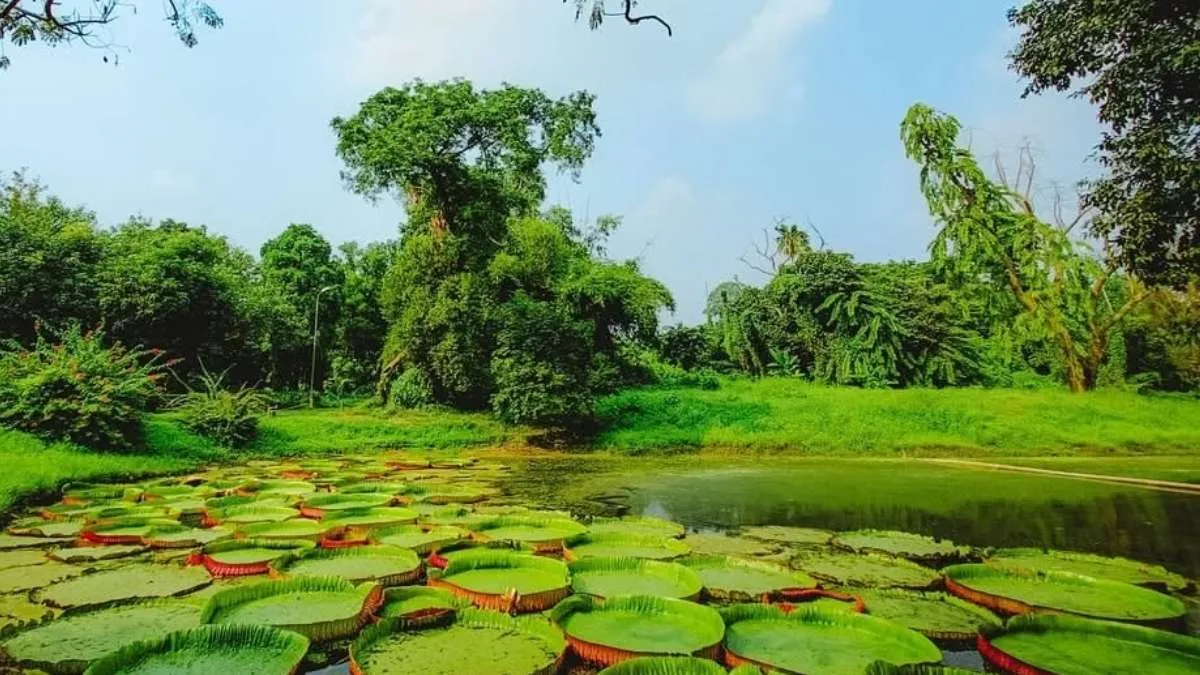
Textbooks can only teach you so much about plant biology. For actual learning real world observation remains unmatched. Local students in Kolkata luckily have access to an incredible outdoor classroom right across the Hooghly River.
The classroom at present is spread across 109 hectares and is known as the Acharya Jagadish Chandra Bose Indian Botanic Garden. This botanical garden in Shibpur holds over 12000 rare and exotic live plant specimens managed by the Botanical Survey of India.
If you are looking to study rare botanical species in Kolkata this garden gives you a direct look at how plants adapt, grow, and survive. Hereinward we have listed some of the most unusual yet exotic botanical species every biology student should see in person.
History of Acharya Jagadish Chandra Bose Indian Botanic Garden
Colonel Robert Kyd started the Acharya Jagadish Chandra Bose Indian Botanic Garden back in 1787. He built the garden originally to grow commercial crops like teak and spices for the East India Company.
Its purpose with time shifted to plant conservation and research. And today it stands as India's oldest botanical reserve under the management of BSI. It not just protects all the local biodiversity but also preserves highly vulnerable exotic plants brought from different continents.
5 Rare Botanical Species in Kolkata for Students to Observe
Let’s take a look at the following list of rare botanical species currently preserved in the Acharya Jagadish Chandra Bose Garden which serves as a primary reference point for modern ecological studies.
| S. No. | Botanical Species Name | Scientific Name | Notable Fact or Feature |
| 1 | The Great Banyan Tree | Ficus benghalensis | 2800 aerial roots and no main trunk |
| 2 | Double Coconut | Lodoicea maldivica | largest and heaviest seed in the world |
| 3 | Giant Water Lily | Victoria amazonica | 3 meters wide leaves that float on water |
| 4 | Krishnabot | Ficus benghalensis var. krishnae | Leaves fold at the stem to form small natural cups |
| 5 | The Mad Tree | Pterygota alata var. irregularis | Every leaf grows in a different shape |
1. The Great Banyan Tree
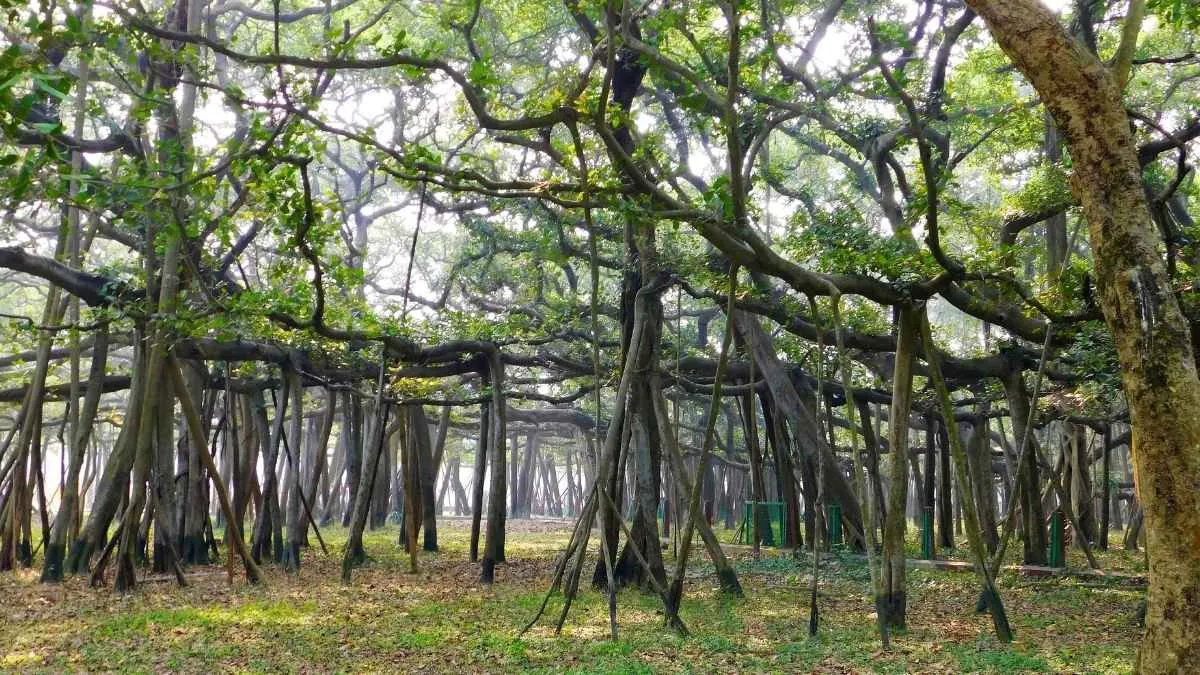
250 years old banyan tree with 3616 prop roots (Image Credit: Wikimedia)
The Great Banyan Tree is the most famous plant in the garden. It covers more area than a standard football field.
What makes it even more unique and useful for science students is its root structure. Fungal infections forced gardeners to cut away its main trunk in the 1920s. But the tree still survived.
Today it stays alive purely through a network of more than 2800 prop roots that act like individual trunks for the Great Banyan Tree in Kolkata.
2. Double Coconut
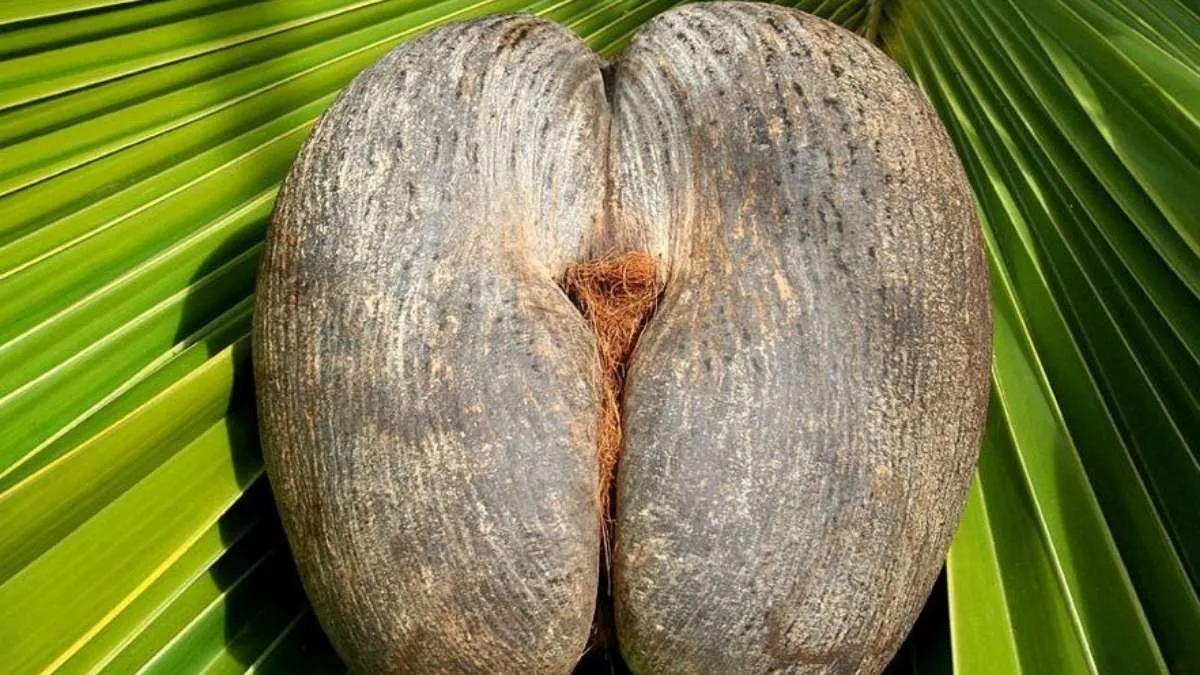
Giant seed from the Double Coconut tree (Photo Credit: www.indianmedicinalplants)
The Double Coconut tree is native to only a few small islands in the Seychelles. This palm produces a seed that can weigh up to 30 kilograms.
Botanists planted the Double Coconut in Howrah over a century ago but it grows very slowly and often takes years just to flower.
It would be interesting to take this species as a clear example for studying island plant evolution and seed development.
3. Giant Water Lily
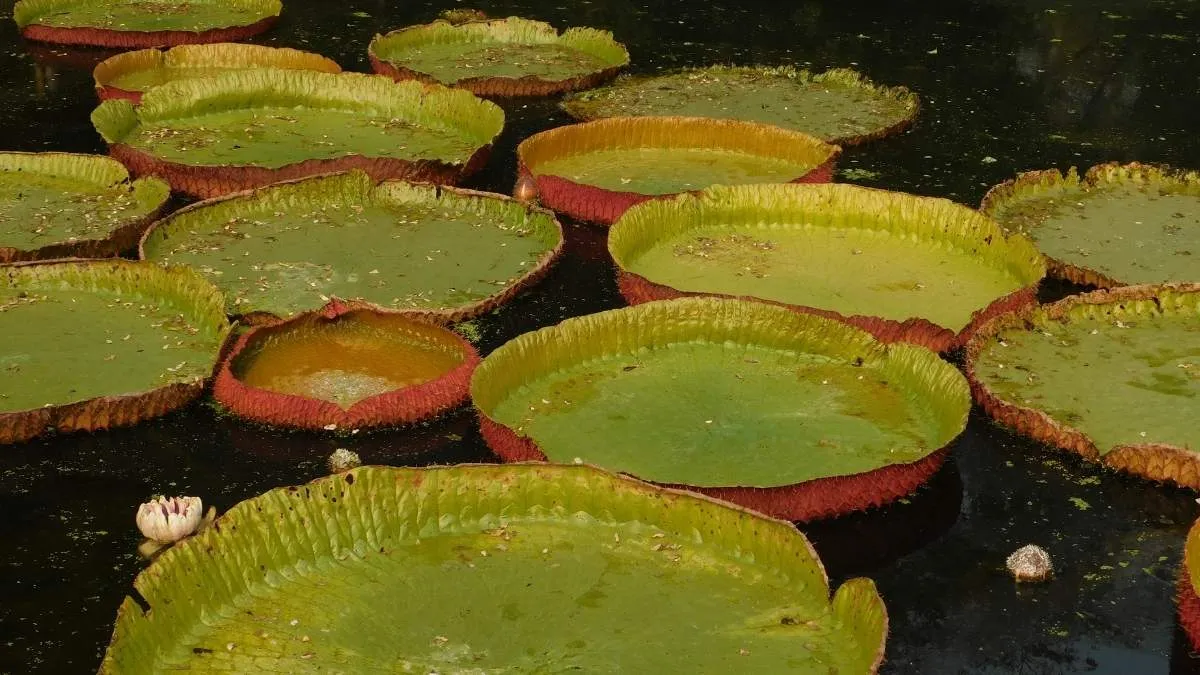
The Great Water Lily (Photo Credit: Wikimedia)
Giant Water Lily was brought in India from South America. These water lilies sit in the garden's ponds with large circular leaves.
The underside of each leaf has sharp spines to protect it from fish along with a rib structure that traps air. This air structure allows the leaf to float easily and hold a light load without sinking.
4. Krishnabot
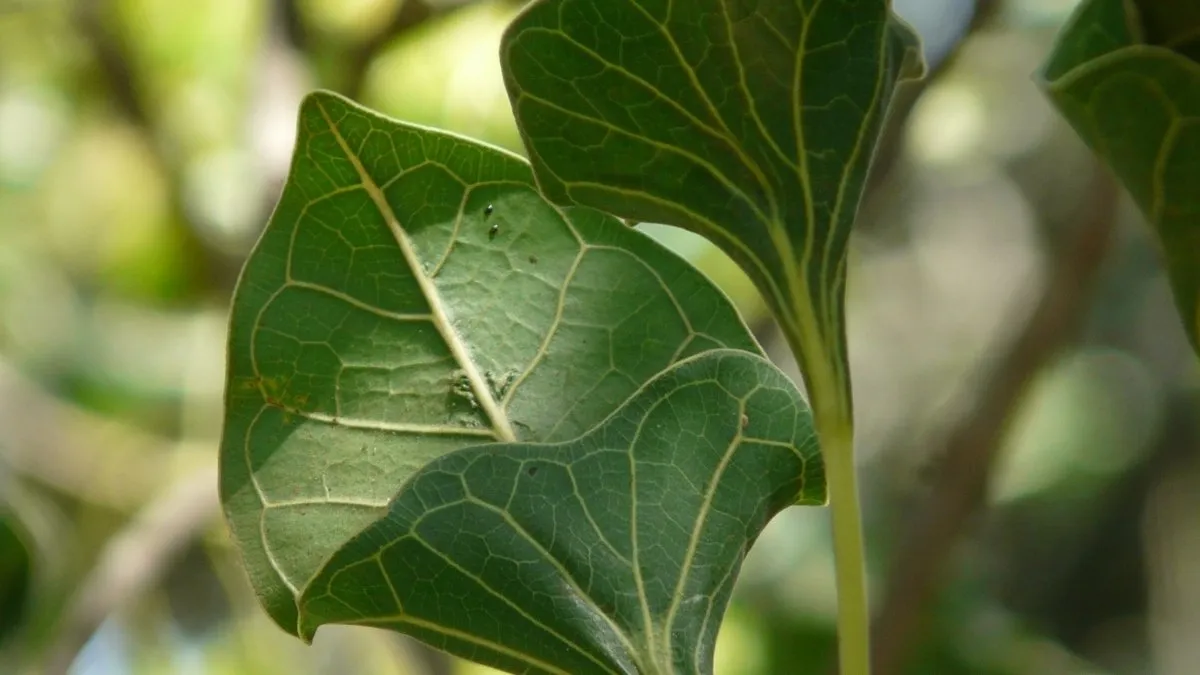
Leaves of a Krishnabot tree (Photo Credit: Wikimedia)
Krishnabot at first glance looks like a typical banyan tree. But its leaves tell a different story. The base of every leaf rolls back and joins together to form a cup like shape.
It is an ideal case study for genetics students who want to look at how single gene mutations alter leaf growth.
5. The Mad Tree
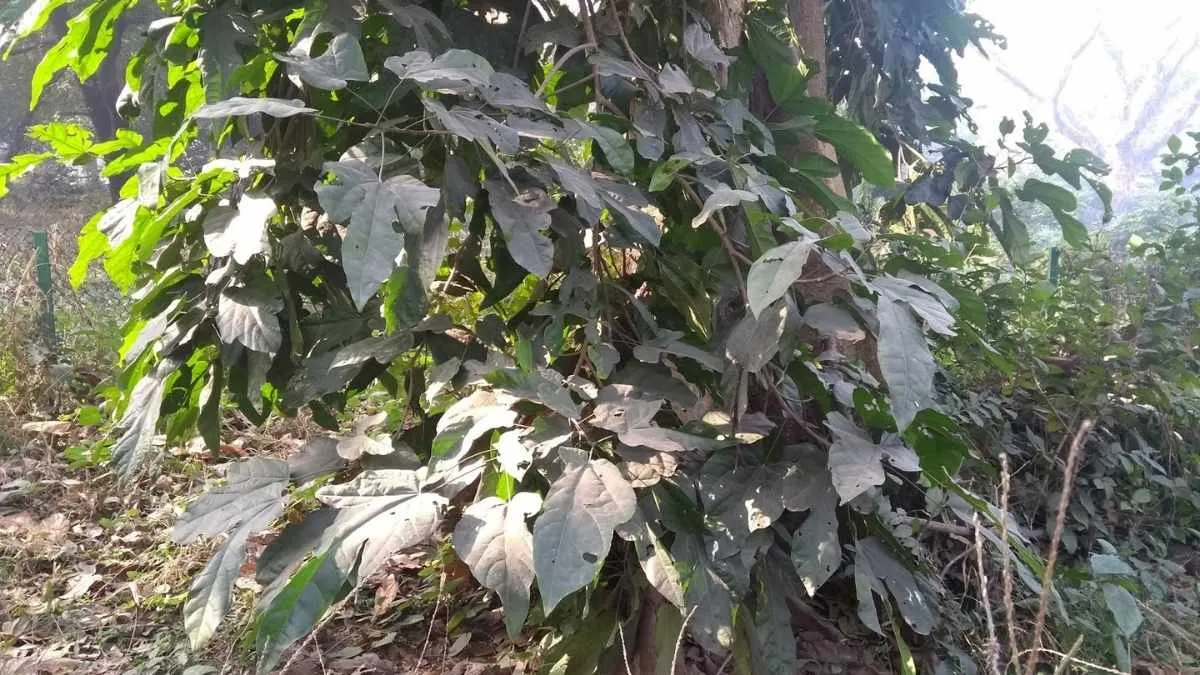
Mad Tree Leaves (Photo Credit: yenforblue.blogspot.com)
Most trees follow a consistent pattern where leaves on the same branch look similar. The Mad Tree breaks that rule entirely.
You might find one leaf that is long and narrow on a single branch and another that is round then a third with jagged edges. It gives botany students a practical look at irregular leaf morphology.
Why Practical Botany Matters for Modern Researchers
Walking through the garden helps students connect classroom theory with real life. It helps them see how a large lily floats or how a banyan supports itself without a trunk. All this out of a classroom experience gives you context that a diagram of any botanical species on a page simply cannot match.

Harshita Singh is an education and general knowledge journalist with over 5 years of experience in educational writing. Specializing in US affairs and GK, Harshita has a track record of breaking down intricate geopolitical and historical subjects into clear, digestible insights for learners. Her strong background in text analysis, coupled with a Bachelor of Arts (Hons) in English from the University of Delhi, helps her produce authoritative, thoroughly researched content that empowers readers to engage confidently with global current affairs. For inquiries or academic insights, you can reach out to her directly at harshita.singh@jagrannewmedia.com.

-(1)-1786096512934_t.webp)



![[लाइव] UPTET Result 2026: इंतजार खत्म! यूपी टेट रिजल्ट upessc.up.gov.in पर होगा घोषित, कैंडिडेट्स ऐसे कर सकेंगे चेक](https://img.jagranjosh.com/images/2026/August/782026/up-tet-result.jpg)