The purpose of personality tests is to help us understand our patterns of thought, feeling and behaviour by avoiding the overanalysis of answers, using instead the use of intuitive choices like which chair or colour to select, as these may indicate to us our nonconscious/instinctive preferences.
These intuitive choices also provide insight into deeper personality characteristics, the way that we relate to others, how we deal with stress, and how we make decisions in uncertain circumstances.
While personality testing is not a scientific verifiability measure, it reflects our inner dispositions & tendencies through an engaging personal manner, enabling personalized discovery of our unknown self.
Therefore, it is not about being wrong or being right, but rather about enabling us to become more mindful of ourselves.
Check Out: Personality Test: Pick a Tree to Reveal Your Natural Talent
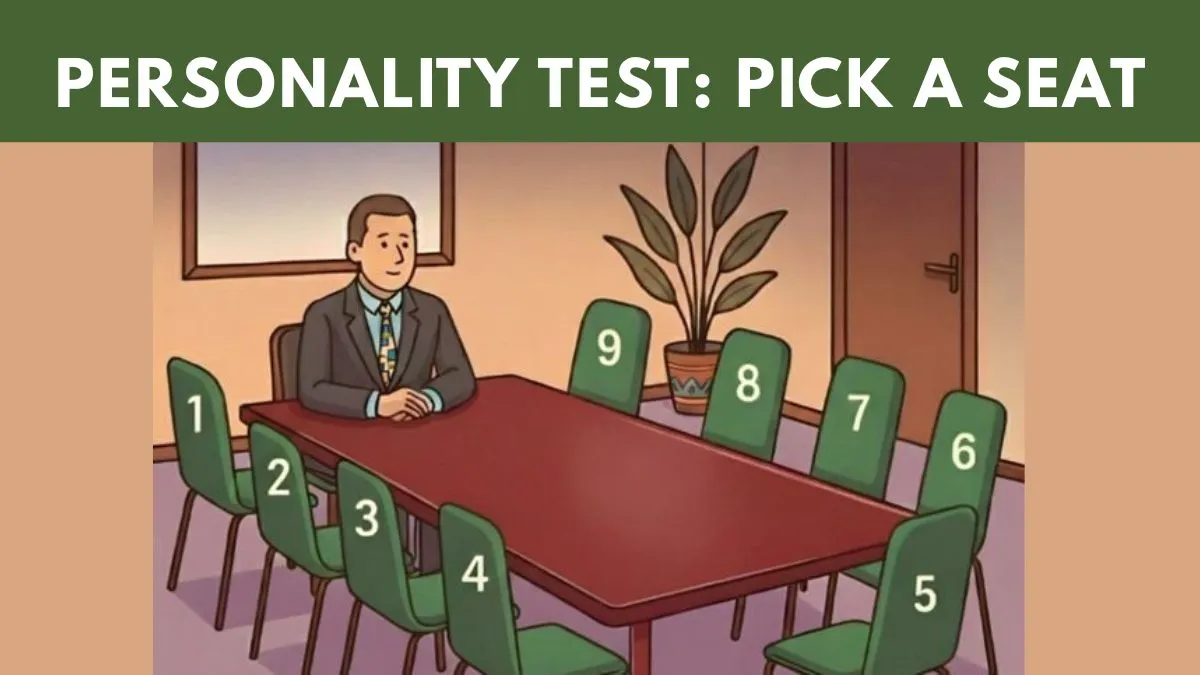
Pick a Seat to Find Out Your Social Instincts
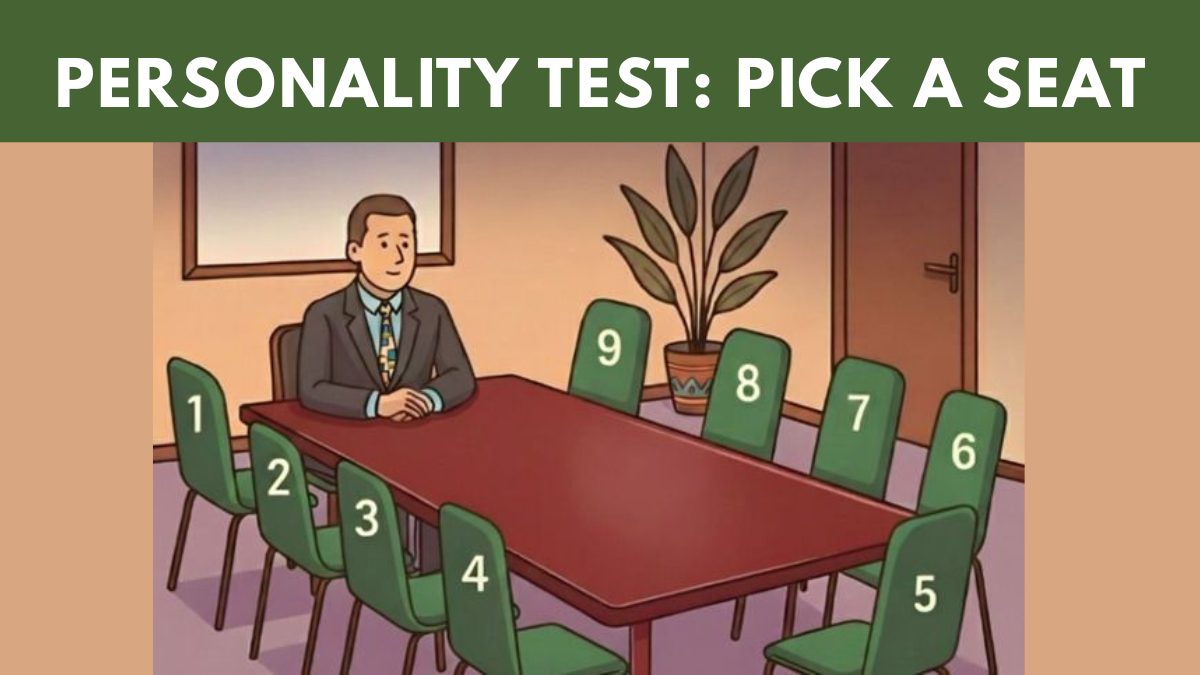
You find yourself in a meeting room with the top tier of management sitting around the meeting room at a very large rectangular table. The general atmosphere seems formal, serious in demeanour and somewhat tense.
There are nine seats along the rectangular table, each varying in its position relative to the centre of authority as well as varying by angle and distance from the centre of authority.
Therefore, spend a moment to consider your instinct and your initial feeling with respect to which seat you would choose.
Personality Test: Pick a Seat to Find Out Your Social Instincts
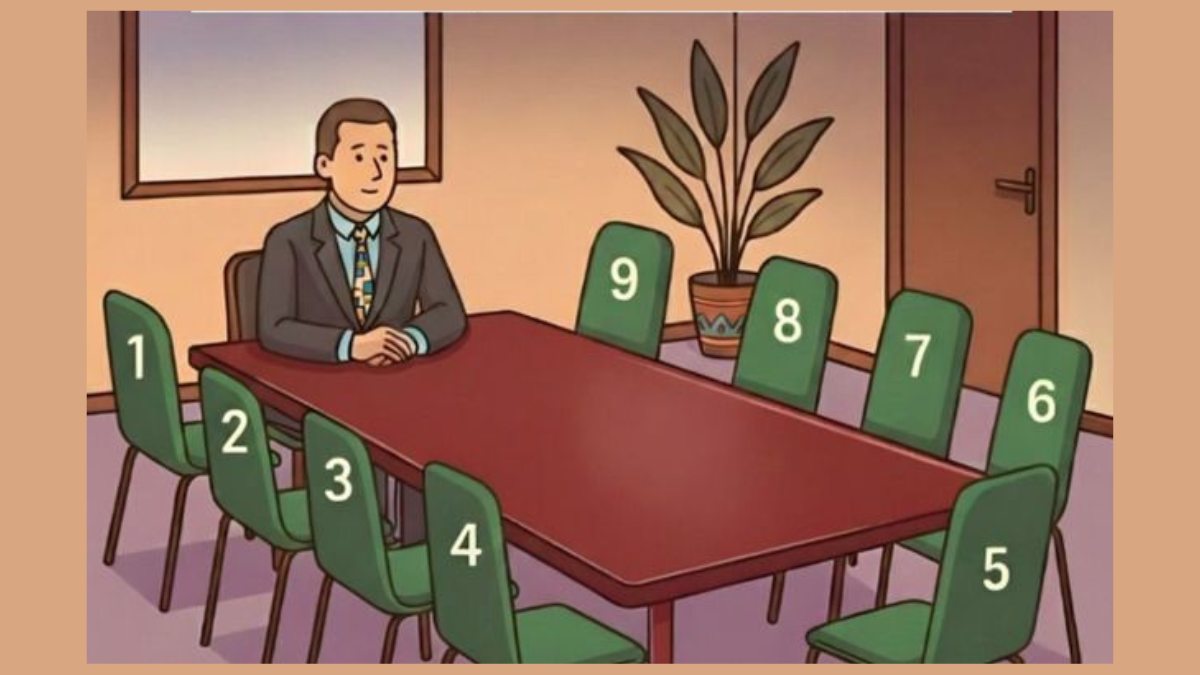
Chair 1
Inner voice: "I am present to take charge should there be any issues."
The primary focus is closeness to authority, including being an ally and a "right hand" of the leader.
You are a team player who believes in hierarchy and will assist the leader without question.
Chair 2
Inner voice: "I am here, but I will not rush into anything."
You are positioned close to the action with just enough distance from it.
You are a typical peace broker who knows how to listen, appreciates harmony, does not rush to the front line, but still maintains a connection.
Chair 3
Inner voice: "You can always hurry; sometimes silence is smarter."
Caution describes your selection because you think before you speak.
You examine and think things through and avoid impulsively acting on your instincts.
Chair 4
Inner voice: "I'm participating, but I'm not going to just agree with you because everyone else does."
You are analytical in thought, but slightly cynical in belief.
You do participate, but usually ask questions that may not be comfortable for others to hear. You have a high regard for critical thinking and, therefore, doubt much of what others believe.
Chair 5
Your inner voice: "I will tell it like it is and will not back down."
This is a direct challenge to authority, demonstrating a desire to be strong, speak up with confidence, and hold strong opinions, with an intention to argue them.
Chair 6
Your inner voice: "I stay silent, but I see everything."
As an external observer, you generally like to analyse both people and the situation beyond simply seeing what is in front of you.
You do not usually intervene, but when you do, your words carry weight.
Chair 7
Your inner voice: "I will engage if I see the value."
A non-performing vice member, you are mainly looking for substantial involvement, and you will engage only in significant ways.
You are calm, thoughtful, and will only engage if you feel that your engagement is significant.
Chair 8
Your inner voice: "I am here for peace and ease, so I will create interaction that is human."
You are representing a group of people who place value in the environment and the feeling of unity. You can help create a feeling of peace, support conversations, and help create a sense of ease.
Chair 9
Your inner voice: "I need to be close to understand and follow."
This is a preference for being very close to the source of power and remaining connected with the leader to receive their support, direction, and confidence from a powerful figure.



-1775391588129_t.webp)

Comments
All Comments (0)
Join the conversation