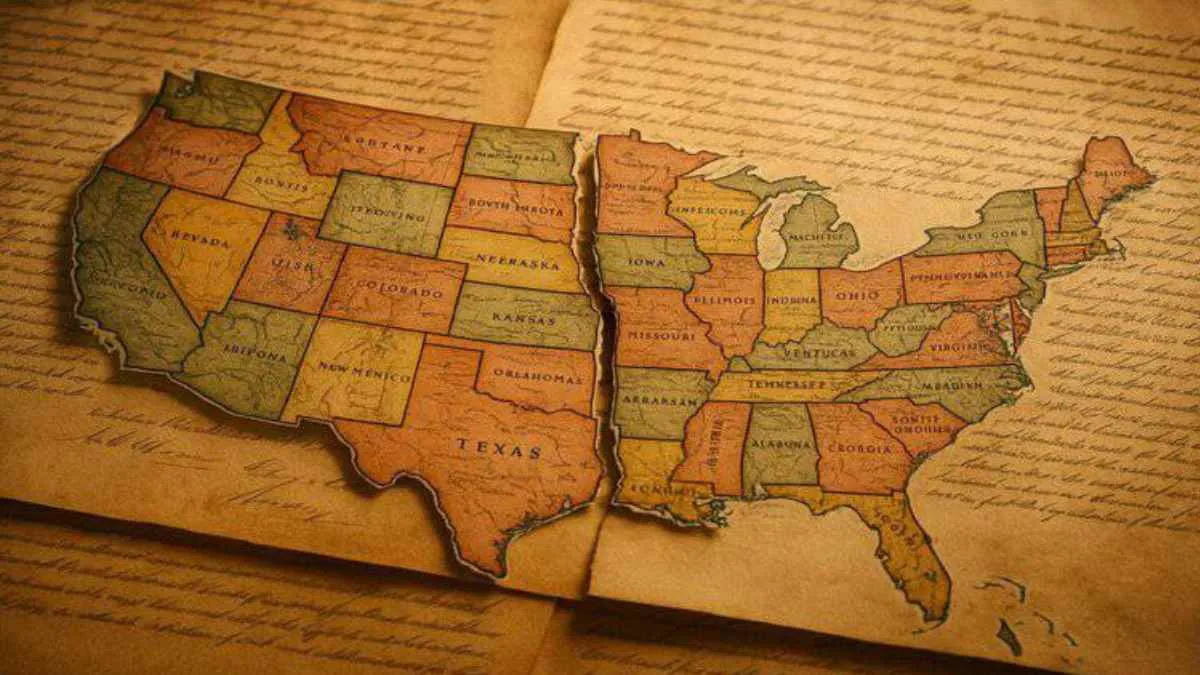
Throughout its history, the United States has evolved from being an independent colony to becoming one of the world’s leading powers today.
It is a unique country because it was not formed out of the legacy of an earlier nation or civilization.
Instead, it started as a series of British colonies and eventually came together to form what is now referred to as "The United States of America."
To truly understand the “old name” of the United States, you must examine the nation’s early days as a British colony and how it ultimately achieved independence from Britain.
Check Out: What Was the Old Name of Iran?
Old Name of the United States
The United States is widely recognized today as one of the world's foremost powers; however, prior to gaining its autonomy, the country was referred to by many different names over the decades.
Some of the most widely accepted "previous" names of the United States include the 13 Colonies and The United Colonies. These two names reflect its early history and development.
The Thirteen Colonies
Prior to gaining their federal independence, those areas that now comprise what we know today as the United States of America were made up of 13 individually governed colonies, all of which were defined as part of the British Empire and were ruled by the British Monarch.
The United Colonies
As resistance to British rule began to grow, the colonies began uniting into groups during the early days of the American Revolutionary War. During this time, the colonies referred to themselves as The United Colonies as a symbol of their unity and purpose in working toward independence from Britain.
Transition to the United States
In 1776, with the signing of the Declaration of Independence, the colonies were officially no longer part of Britain and thus became the United States of America. This was a new nation.
The Thirteen Colonies or United Colonies were the names most often used prior to being called the United States. They refer to the time period when the country was still ruled by the British and becoming a unified country.



Comments
All Comments (0)
Join the conversation