India’s GDP Q1 FY27: What Does 7.8% Growth Actually Mean? Let’s Decode
India’s GDP grew 7.8% in Q1 FY27, beating the RBI forecast. Know what the growth means, which sectors contributed, key growth drivers and challenges ahead for India.
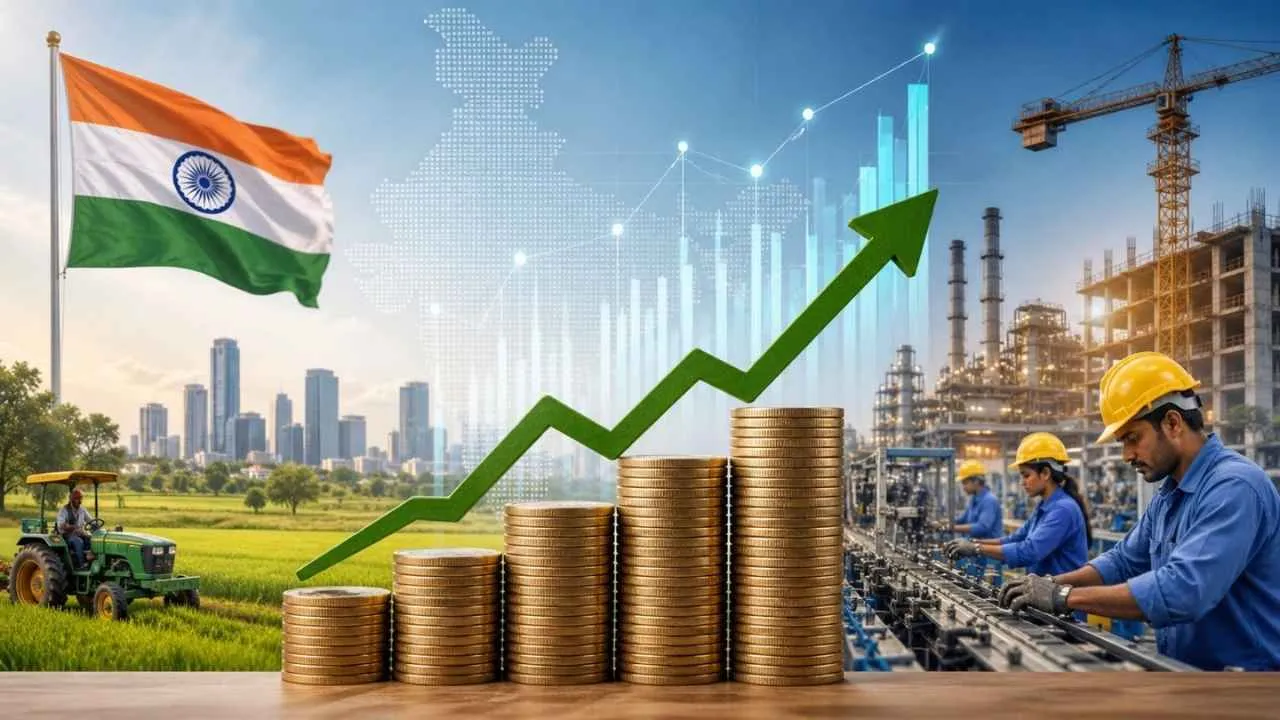
The big financial updates are making headlines, and it is the Indian GDP that is in the spotlight. The financial world is right caught by surprise; it is hard to believe for them that the Indian GDP has bypassed the US-Iran war impact.
India’s GDP was quick to recover and show results in Q1. The economy is up by 7.8% for the April-June quarter of 2026-27 (Q1 FY27). The government data also adds a statement saying that this growth is higher than the estimated forecast made by the Reserve Bank of India (RBI).
Now, the most important question arises: what does this growth actually mean for India? For basics, GDP actually means the total amount of goods and services any country produces. On that note, a growing or high GDP directly indicates that the economy of the nation is healthy and the economic activities within the country have increased.
Now, segregating further, the growth of the nation has got strong support from manufacturing, services, construction and other sectors. Although, unlike every time, the agriculture sector had slow growth this quarter.
Let us understand what the latest GDP numbers mean for India’s economy.
What is GDP and What Does 7.8% Growth Mean?
The most important measurement unit for any economy is its GDP. It gives a fair idea about how the country is functioning. It shows the data of production in the nation from factories, farms, business and services. As told earlier a rise in GDP shows positive activities happening in the economy.
- GDP: Gross Domestic Product is the total value of goods and services produced in a country during a specific period.
- 7.8% growth: India's real GDP was 7.8% higher in Q1 FY27 than in the same quarter a year earlier.
- Real GDP: It measures economic growth after removing the effect of price changes.
- Real GDP in Q1 FY27: India's real GDP stood at around ₹81.36 lakh crore at constant prices.
- Comparison: Real GDP was ₹75.46 lakh crore in Q1 FY26.
- Why it matters: The 7.8% growth shows that economic activity remained strong despite global uncertainty and geopolitical tensions.
How Did India's GDP Perform?
The Indian economy has grown despite many obstacles. This growth was a little slower than the previous year, but the GDP is shining at 7.8% today. The basic reason for the slower growth is big geopolitical mishaps that happened last quarter.
| Economic Indicator | Q1 FY27 |
| Real GDP Growth | 7.8% |
| Real GDP | ₹81.36 lakh crore |
| Nominal GDP Growth | 10.3% |
| Real GVA Growth | 8.2% |
| RBI GDP Forecast | 7.0% |
| Q1 FY26 GDP Growth | 6.9% |
| Q4 FY26 GDP Growth | 8.6% |
The growth rate was higher than the 6.9% recorded in Q1 FY26, but lower than the revised 8.6% growth in Q4 FY26.
Which Sectors Helped India Grow?
-1788238361671.webp)
Key Sector-Wise Growth
- Financial, real estate and professional services: 12.1%
- Manufacturing: 9.2%
- Electricity and utilities: 8.9%
- Construction: 7.7%
- Agriculture: 3.6%
- Mining and quarrying: -2.4%
Why Did GDP Growth Remain Strong?
While almost all the financial enthusiasts are strongly supportive and cheerful about GDP growing, this one question remains the highlight. What kept the country going even after all the trade war with the US and geopolitical conflict in the world?
When we look at it with a deep, detailed eye, people of India did not stop even after the war and conflict. They kept investing, buying and selling products and services, irrespective of the risk involved.
One of the biggest reasons was strong domestic demand. Personal consumption grew by 7.1% in Q1 FY27, compared with 6.8% a year earlier. People continued to spend money on goods and services, helping businesses stay active.
Amid all the geopolitical chaos, the country and the people of the country kept investing as well. One out of many major reasons was domestic investment by the country, gold hedging for stability by the government. Not just that, the government kept it simple and easy without getting deeply involved in the war.
Private investment grew by nearly 12%, while gross fixed capital formation also increased strongly. This means more money was being invested in areas such as infrastructure, power and data centres.
- People continued spending, supporting consumer demand.
- Businesses increased investment, especially in key areas.
- Infrastructure and power received more investment.
- Data centres also became an important area of investment.
- Factories and service businesses remained active.
Together, these factors helped India maintain strong economic growth of 7.8% in Q1 FY27.
What Are the Risks Ahead for India?
Despite the strong Q1 performance, economists have pointed to some challenges for the coming quarters.
- A weak or uneven monsoon could affect agriculture and rural demand.
- High crude oil prices can increase India's import costs.
- Geopolitical tensions may affect global trade and supply chains.
- Mining activity remains a concern after contracting in Q1.
- Growth could slow because of unfavourable base effects in later quarters.
The 7.8% growth rate is a positive sign, but it does not mean all economic challenges have disappeared.
Students should keep in mind that a deeper understanding of GDP will help them understand the country’s actual growth. GDP growth only shows how quickly a country is growing and healing from economic tragedies. India’s latest GDP figure indicates strong economic activity, but challenges such as oil prices, agriculture and global uncertainty remain important.
Disclaimer: This article uses information from Reuters and official government sources, including MoSPI. It is intended for educational purposes, and economic figures may be revised by authorities.

Aishwarya Samant is a journalist with over 4 years of experience navigating the fast-paced corporate media landscape. She specializes in decoding business news, world economy, personal finance, and stock market trends, often adding a subtle touch of political perspective to keep things interesting.
Having worked with reputed organizations like ZEE, TV9, News24, and NewsX, she is no stranger to the newsroom hustle and the demands of real-time storytelling. Her writing style is fast-paced, engaging, and crafted to connect seamlessly with diverse audiences across platforms. She approaches every story from the reader’s point of view, breaking down complex topics into clear, relatable narratives backed by solid facts and credible sources. While she’s confident in expressing strong viewpoints, she ensures balance with insights. Sharp, fact-driven content that informs, engages, and keeps readers coming back for more.





![[Out] UGC NET June 2026 Result Live: यूजीसी नेट रिजल्ट ugcnet.nta.nic.in जारी, डायरेक्ट लिंक से करें चेक](https://img.jagranjosh.com/images/2026/August/2782026/UGC-NET-Result-2026-Marksheet-link-pdf.jpg)