Key Points
- India & US finalized a trade deal, reducing Indian goods tariff from 50% to 18%.
- India will purchase $500B of US goods, including energy, tech, & agriculture.
- In 2024-25, India-US trade reached $131.8B; deal boosts India's export competitiveness.
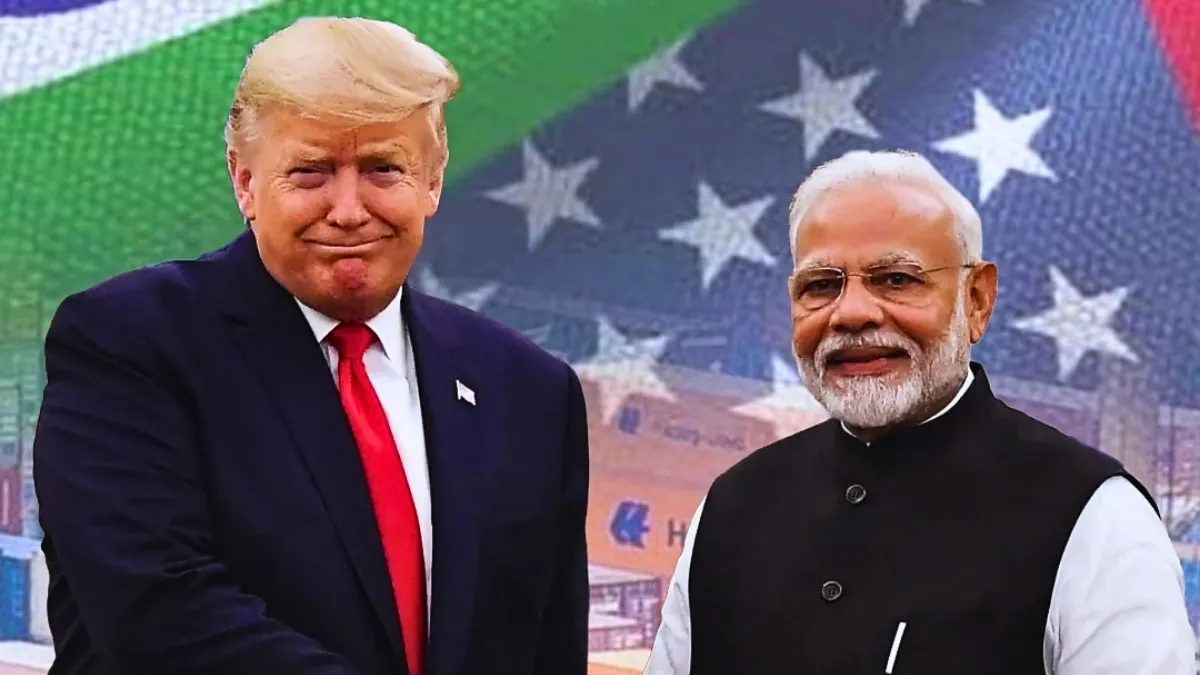
India-US officially reached a significant trade deal. Both countries agreed on a trade deal to reduce Indian goods from 50% to 18% to boost India's export competitiveness. The India-US trade deal has been called the ‘’Father of all Deals’’ and ‘Grant Reset’ in bilateral trade between two largest democracies of the world, comes after a year of intense negotiations.
Why Is It in The News?
Indian Prime Minister Narendra Modi and the US President Donoald Trump finalized a Trade deal over a phone call. Both countries agreed on a trade deal to reduce Indian goods from 50% to 18% to boost India's export competitiveness.The India-US trade deal that has been called the ‘’Father of all Deals’’. The announcement has sent ripples through global markets, particularly as it involves a significant shift in India's energy policy and market access.
Key Highlights of the India-US Deal:
-
Tariff Reduction: The U.S. has reduced the "reciprocal tariff" from 25% to 18%.
-
Removal of Penalties: A secondary 25% "penalty" tariff, previously imposed due to India’s purchase of Russian oil, has been completely scrapped.
-
Energy: India has agreed to stop the purchase of Russian crude oil, opting instead to increase imports from the U.S. and potentially Venezuela.
-
Purchase Commitments: Reports suggest India has committed to buying over $500 billion worth of American goods (energy, technology, and agriculture) over the coming years.
The India-US Trade deal arrives at a critical juncture where India is competing with other Asian manufacturing hubs by securing an 18% US traffic. India now holds a competitive advantage over several regional rivals such as Pakistan with 19% US traffic Rate, Indonesia (19%), Vietnam(20%) Bangladesh(20%) and China( around34%).
Also Read: What is UGC Bill in India? Check New Rules, Major Changes and How it is Different?
Composition of India-US Trade: Exports and Imports
The bilateral trade relationship between India and the U.S. is not just about volume; it is about the strategic nature of the goods exchanged. In the 2024-25 fiscal year leading up to this deal, total trade reached a record $131.8 billion. While India typically enjoys a trade surplus with the U.S., the new deal includes a commitment from India to purchase $500 billion in American goods over the coming years to balance the scales. Below is a breakdown of the primary goods traded and their estimated share in the bilateral basket.
Major Goods Exchanged Share B/W India & US
| Category | Primary Goods Traded |
| Top Indian Exports to US | Electronics (Smartphones/Parts), Pharmaceuticals, Gems & Jewelry, Textiles/Apparel, and Engineering Goods. |
| Top US Imports to India | Mineral Fuels (Crude Oil/LNG), Machinery, Aircraft/Aerospace parts, Optical/Medical instruments, and Raw Cotton. |
To understand where the 18% tariff relief will be felt most to specific commodity groups that dominate the trade flow
| Trade Flow | Key Commodity Groups | Share of Trade Segment in approx |
| Exports (India to US) | Electronics & Electricals | 15.8% |
| Pharmaceutical Products | 14.0% | |
| Gems, Pearls & Precious Stones | 13.0% | |
| Textiles & Readymade Garments | 8.8% | |
| Machinery & Boilers | 7.8% | |
| Imports (US to India) | Mineral Fuels & Oils | 31.5% |
| Industrial Machinery | 14.8% | |
| Optical & Medical Apparatus | 6.0% | |
| Precious Stones & Metals | 5.8% | |
| Aircraft & Spacecraft Parts | 2.0% |
The "Electronics" sector has seen the fastest growth in Indian exports to the US which is largely driven by the "Make in India" initiative and smartphone manufacturing. Conversely, the "Mineral Fuels" segment on the import side is expected to rise sharply as India pivots from Russian oil to American energy sources under the new agreement.
Also Read: Budget 2026: Check New Tax Slabs, Income Tax Rates and What is New Tax Act
What is the Significance of a Deal?
The deal holds multi-layered significance for the Indian economy and its global share as
-
Boost Export: Labor-intensive industries like textiles, leather, gems and jewelry, and seafood are the primary beneficiaries. With the 50% tariff wall gone, Indian products will become significantly cheaper for American consumers, likely leading to a surge in order volumes and better profit margins for Indian MSMEs.
-
Market Stability and Investor Confidence: The removal of the "tariff overhang" provides the predictability that global investors crave. Stock markets in India responded immediately, with sectors like specialty chemicals and auto ancillaries seeing sharp rallies as the deal reduces the risk of future sudden sanctions.
-
Energy Security: By pivoting away from Russian oil to American and Venezuelan sources, India is aligning its energy security with its strategic trade interests.
-
Supply Chain Resilience: As the "China Plus One" strategy continues to evolve, this deal makes India a more attractive destination for American companies looking to diversify their manufacturing bases away from China.
-
Geopolitics: The deal helps India stabilize relations with Washington while positioning India as a key partner in the US led global economic transition counter to China and stopping purchases of discounted Russian oil, which had been a major diplomatic friction point.
What are the Challenges?
-
One of the most criticised points of the of deal is India’s commitment to reducing barriers for US Agriculture products like dairy and soy products which has sparked domestic political debate, as opening these markets could impact the livelihoods of millions of Indian farmers.
-
President Trump has indicated that India will move toward Zero-Tariffs on American goods. Implementing this without hurting local "Make in India" manufacturing will be a delicate balancing act for India.
-
Indian opposition leaders have raised the issue of transparency regarding the "quid pro quo" elements of the deal, particularly the $500 billion purchase commitment and how it affects India's fiscal discipline.
-
Sustainability of the deal,historically, trade agreements under the current U.S. administration have been subject to rapid changes based on evolving geopolitical conditions, leading to concerns about the long-term stability of the 18% rate.


-1770119936323.jpg)


Comments
All Comments (0)
Join the conversation