Word Of The Day: Minimalist
Word of the Day: 'Minimalist' is the featured word of the day. Comprehending the definition of 'minimalist' is crucial for acquiring advanced English vocabulary commonly encountered in international news and competitive examinations.
Imagine walking into a room that only has a bed, a simple lamp, and a single painting on the wall. There are no messy piles of clothes, no extra toys, and no bright, confusing patterns. Everything feels calm, clean, and organised because the owner only keeps what they truly need. This style of keeping things simple is called minimalism. It describes focusing only on the essential parts of something and removing all the extra clutter. In this article, we'll take a look at the meaning, history, and usage of this clean and modern word.
What is Minimalist? Meaning, Definition and Examples
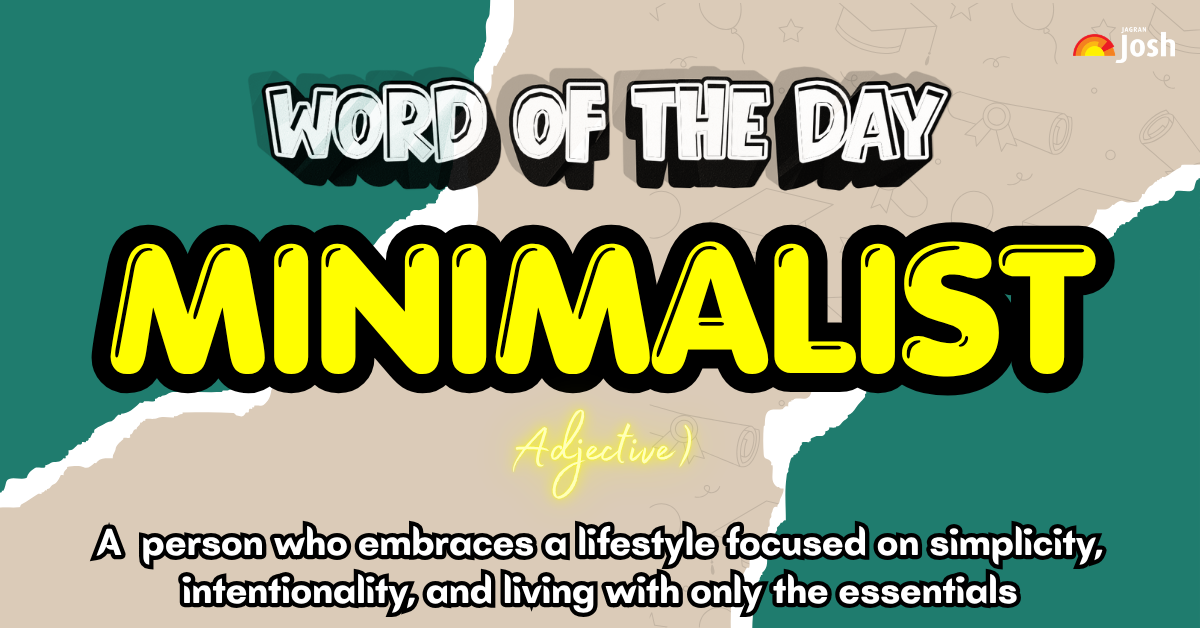
'Minimalist' can be a noun or an adjective. As an adjective, it describes a style or way of living that uses as few elements as possible.
As a noun (minimalism), it means someone who chooses to live with fewer things or makes art with simple shapes and colours. In art and design, a minimalist drawing might show a face with just one black line on white paper.
Feature Details
| Feature | Details |
| Type | Noun and Adjective |
| Pronunciation | MIH-nuh-muh-list |
| Root | Latin 'minimus' (smallest or least) |
Minimalist Origin and Etymology
The history of the word "minimalist" begins with the ancient Latin word "minimus", meaning "the smallest" or "the least." This is the very same root that gives us words like minimum, minus, and minute.
However, the specific word "minimalist" is actually quite modern. It became popular in New York City in the 1960s. At that time, a group of artists got tired of loud, chaotic, and messy art. They decided to create paintings and sculptures using only basic geometric shapes, such as squares and lines.
People labelled this movement "Minimal Art," and the creators became known as "minimalists". Soon, architects and fashion designers started using the same ideas. Today, the word has moved out of art studios and into daily life, describing a peaceful, simple lifestyle.
Use of Minimalist in a Sentence
Using the word "minimalist" is a wonderful way to describe a clean design, a simple lifestyle, or a modern look.
- Examples: She prefers a minimalist bedroom with white walls and very little furniture.
- The company logo has a clean, minimalist design that is easy to recognise.
- As a minimalist, he donated all the clothes he no longer wore.
- The artist created a minimalist sculpture using only three metal bars.
- I downloaded a minimalist app that only displays the time and weather.
- A minimalist lifestyle can help people save money and reduce stress.
- The book cover was very minimalist, featuring just a single golden star.
- Our teacher likes a minimalist classroom layout so we can focus better.
- This website uses a minimalist style with ample white space.
- He took a minimalist approach to packing for the trip, bringing only one bag.
What Are The Synonyms and Antonyms of Minimalist?
These words help you understand the difference between keeping things basic and filling a space completely.
Synonyms (Similar Words):
- Simple: Plain, basic, or uncomplicated in form or nature.
- Unadorned: Not decorated; plain and natural.
- Spartan: Showing a lack of comfort or luxury (very basic).
- Stark: Severe or bare in appearance.
Antonyms (Opposite Words):
- Maximalist: A style characterised by a desire to use the maximum amount of detail or decoration.
- Extravagant: Lacking restraint in spending money or using resources.
- Cluttered: Crowded, untidy, or full of scattered objects.
- Ornate: Made in an intricate shape or decorated with complex patterns.
Did You Know?
The opposite of a minimalist lifestyle is known as a maximalist lifestyle. Maximalists enjoy spaces filled with bright colours, large art collections, and plenty of unique decorations. Both styles are well-known in the design world, but research shows that minimalist spaces can help your mind feel more relaxed and less distracted.

Kriti Barua is a skilled content writer with 4+ years of experience in creating clear, engaging, and informative content. She began her writing journey as a Creative Writer Intern at Wordloom Ventures. She holds a BA degree from Delhi University and has completed a one-year diploma in TV Production and Journalism, which adds depth to her research and reporting style.
Kriti has worked across brand writing, marketing content, and digital media, building strong expertise in articles that connect with readers and perform well online. At Jagran New Media, she writes for the GK section, covering national news, international stories, and query-based articles that answer what people actively search for. Her work focuses on easy language, reliable information, strong keywords, and reader-friendly storytelling, making her content both helpful and search-friendly.


-1779088212405_t.webp)
-1779082947763_t.webp)