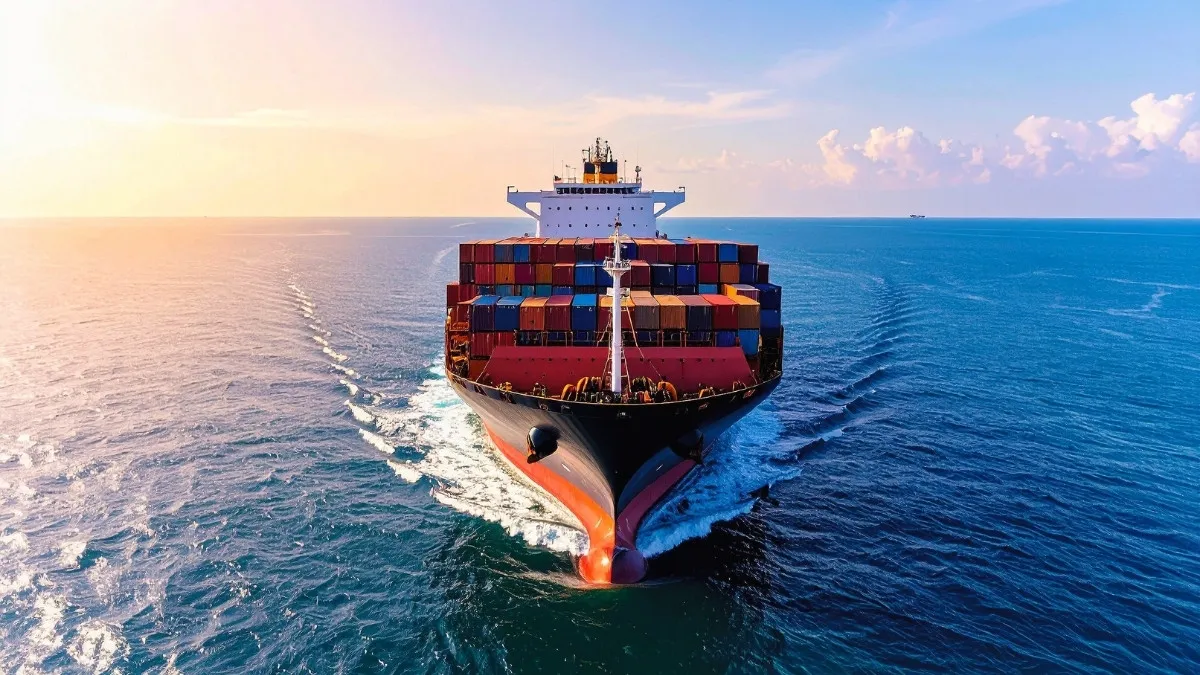
International Waters (otherwise referred to as High Seas) constitute those portions of the sea that fall outside the jurisdiction of any one nation.
In other words, the international waters commence roughly 12 nautical miles off the shore of any one nation, although this may vary in certain instances.
According to UN estimates, the high seas occupy an estimated 64% of the total area and 95% of the total volume of the world's oceans, making them one of the biggest shared resources in the world today.
Ownership of these bodies of water does not belong to any nation, hence the issue of “who governs the international waters?” is best resolved through international laws and treaties.
Who Governs the International Waters?
The high seas are not regulated by the United Nations directly, but the organization takes an active part in developing regulations which are then signed by participating countries.
In this regard, the main instrument of law used for this purpose is the United Nations Convention on the Law of the Sea (UNCLOS), signed by more than 160 states and defining the rights and obligations of all states regarding oceans around the world.
In accordance with this convention, no state owns the high seas; however, each state has a right to freely navigate them, which is known as the right of freedom of the high seas. It is also granted in regards to fishing and scientific research.
What Law Applies in the International Waters?
The UN Convention on the Law of the Sea is the main law that applies in the international waters.
It divides the world’s seas into several zones, from territorial waters (controlled by coastal states) to exclusive economic zones (EEZs) and finally to the high seas, where the rules are more general and shared.
The convention says that ships on the high seas must fly a “flag” of a country, called the flag state, and must follow the laws of that country, while also respecting international rules.
The flag state is responsible for the ship’s safety, crew conditions, and compliance with environmental rules. If a ship breaks the law, the flag state can investigate and punish it, even when it is far from land.
-
UNCLOS was adopted in 1982 and is known as the “Constitution for the Oceans.”
-
The convention supports free navigation, but also environmental protection and peaceful behavior.
-
Rules apply to all states, including coastal states and those with no coastline at all.
Why Do the Rules Matter International Waters?
The governance of the international waters affects trade, security, the environment, and even climate change.
About 90% of the world’s trade travels by sea, which means ships depend on safe, legal routes across the open ocean.
The rules also help protect marine life and ocean resources, by limiting overfishing, pollution, and damage to deep‑sea ecosystems.
In recent years, the UN has been working on a new high seas treaty to strengthen protections for biodiversity in the open ocean, showing how the governance of the international waters continues to evolve.
Without these rules, powerful countries might try to claim parts of the high seas, commercial companies might damage the sea without limits, and the world’s oceans would become more dangerous and more polluted.
Challenges in the International Waters
Even with clear rules, the international waters face serious challenges. Illegal fishing, smuggling, piracy, and pollution are hard to stop because the ocean is so vast and hard to patrol.
Sometimes, different countries disagree about how the rules should be applied, or they simply ignore them when they think they will not face consequences.
The large size of the ocean, and the difficulty of enforcing laws far from land, mean that the governance of the international waters must rely on cooperation, technology, and trust among nations.
International organizations like the International Maritime Organization (IMO) and the International Tribunal for the Law of the Sea help resolve disputes and encourage countries to follow the rules.
Conclusion
Unlike other geographical features of Earth such as land, which is controlled by one ruler, the international waters are run by all states collectively via international laws and agreements, particularly the UN Convention on the Law of the Sea.
The doctrine of the freedom of the high seas ensures that all nations have the right to make use of the vast oceans under certain conditions relating to safety, environmental protection, and conduct of peace.
Knowledge about the governance of international waters can help answer questions related to shipping, fisheries, and maritime safety.