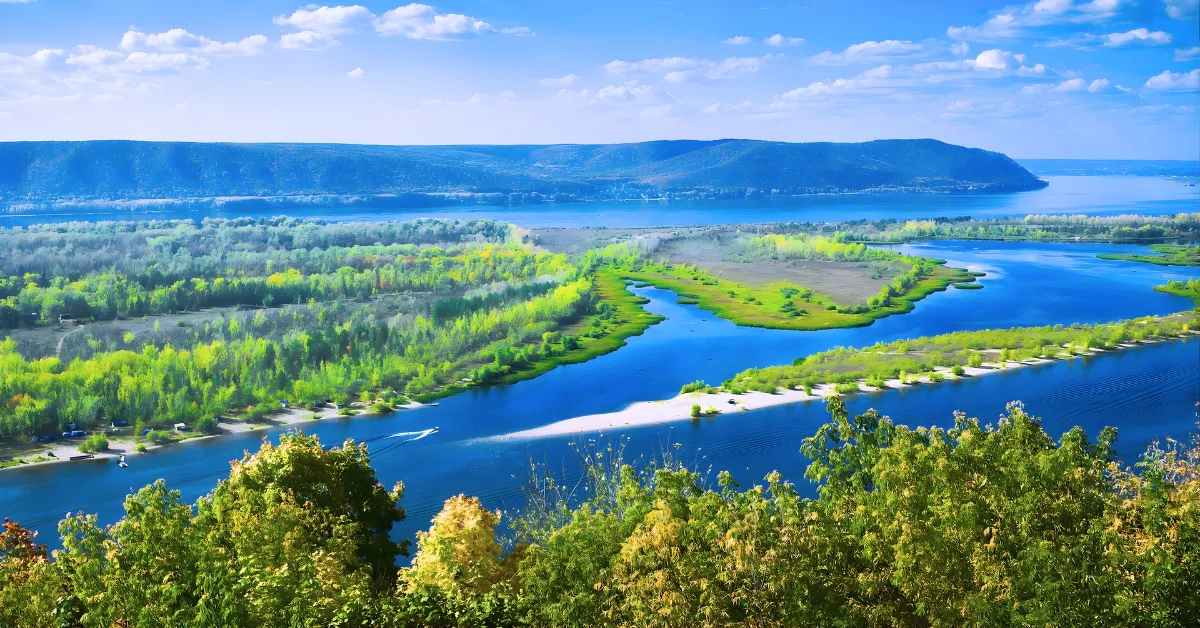
Key Points
- The Volga River, Europe's longest, is known as "Mother Volga."
- It flows 3,500 km from Valdai Hills to the Caspian Sea.
- Nearly 40% of Russia's population lives near the Volga basin.
Russia is a land of vast waters. It has over 100,000 rivers flowing across its territory. These rivers belong to several major river basins, including the Arctic, Pacific, and Atlantic.
While the Amazon is the world's largest river by volume and the Nile is the longest, Russia holds its own records.
It is home to some of the mightiest waterways on Earth. Some rivers are called "The Pearl of Siberia", while others are known as "The Gateway to the East".
But do you know which river is famously known as the Lifeline of Russia? In this article, we will explore this legendary river and its importance.
ALSO READ| Which River Is Known As The Lifeline Of India?
Which River Is The Lifeline Of Russia? (WITH MAP)
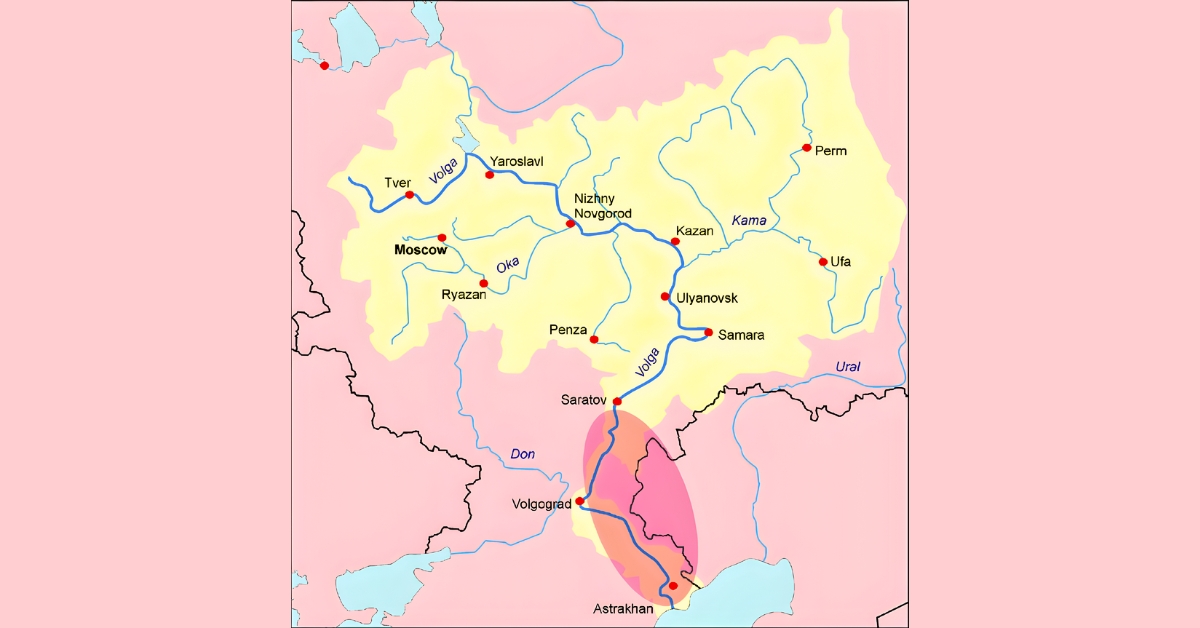
The Volga River is often called the Lifeline of Russia. It is the longest river in Europe and is known as "Mother Volga" because of its importance to the country.
The river starts in the Valdai Hills, northwest of Moscow, and then flows across the wide plains of Western Russia.
The Volga passes through key regions like Tver, Yaroslavl, Nizhny Novgorod, and Samara. It links important industrial centres and historic cities along the way.
After travelling more than 3,500 kilometres, the river flows into the Caspian Sea. The Volga is essential for water, food, and transport for millions of people, making it Russia's most important waterway.
Do You Know?
- Nearly 40% of the entire Russian population lives near the Volga River basin.
- During the winter months, most of the river freezes solid for several months at a time.
- The river is home to some of the world's largest dams and hydroelectric stations that power Russian cities.
- Yuri Gagarin, the first human in space, landed near the banks of the Volga after his historic flight.
- The river is famous for the Beluga sturgeon, the fish that produces some of the world's finest caviar.
FOR YOU| Which River Is Known As The ‘River Of Five Colours’?
Quick Facts: The Volga at a Glance
| Feature | Details |
| Official Name | Volga River (often called "Mother Volga") |
| Title | The Lifeline of Russia |
| Total Length | Approximately 3,530 kilometers (Longest in Europe) |
| Source | Valdai Hills (Northwest of Moscow) |
| Mouth | Caspian Sea |
| Major Cities | Tver, Yaroslavl, Nizhny Novgorod, Kazan, Samara, Volgograd, Astrakhan |
| Population | Over 60 million people (approx. 40% of Russia) live in its basin |
| Key Industries | Hydroelectric power, shipping, agriculture, and fishing (Sturgeon) |
| Natural Feature | Home to the largest river delta in Europe |
What is the Economic Importance of the Volga River?
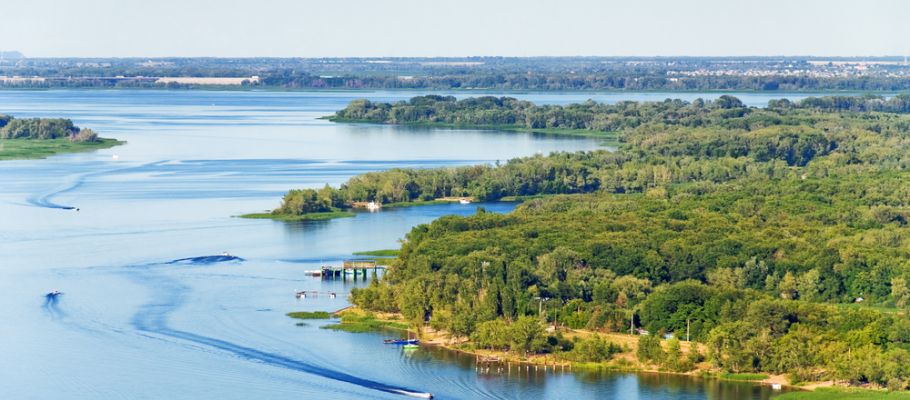
Source: Seven Wonders
The Volga River is the longest waterway in Europe and flows through central and southern Russia. The basin of this river covers about one-third of Russia's European part.
It is also known as the 'National River' of Russia because it supports approximately 40% of its population and 45% of its industrial/agricultural production within its basin.
It plays a central role in Russia’s daily life and economy. If the river stopped flowing, the country would quickly face a serious economic crisis.
Economic Importance
People often call the Volga Russia’s "Main Street" because it supports so much industry and trade.
- Shipping and Logistics: The river acts as a major water highway. It connects to the Baltic, White, Azov, and Black Seas through a network of canals. This lets Russia move heavy cargo such as oil, timber, and grain from the center of the country to international waters.
- Hydroelectric Power: The Volga is controlled by a large series of dams. These power stations produce billions of kilowatt-hours of electricity, supplying energy to the big industrial cities along the river.
- Agriculture: The river basin has some of Russia's richest soil. Water from the Volga is used for large-scale irrigation, making it the main source of food production in the country.
Environmental Importance
Besides its economic role, the Volga is also an important natural ecosystem.
- Biodiversity: The Volga Delta, where the river meets the Caspian Sea, is one of the largest and most important wetlands in the world. It provides a home for hundreds of bird species and rare plants, such as the Caspian lotus.
- Fisheries: In the past, the river was the world’s main source of sturgeon. Although overfishing and dams have reduced their numbers, the Volga is still an important habitat for freshwater fish that support the local diet.
- Water Supply: The Volga provides the primary drinking water source for roughly 60 million people. It sustains life in dozens of major urban centres, including Moscow (via the Moscow Canal).
Conclusion
To sum up, the Volga River is more than just a river; it is often called the soul of Russia. Stretching from the Valdai Hills to the Caspian Sea, it links the country’s history with its future.
The river provides power, food, and trade routes, supporting millions of people every day. Even though it faces problems like pollution, people still see it as the “Lifeline of Russia."
WHAT'S NEXT| Which River Is Known As The River Of A Thousand Temples?



Comments
All Comments (0)
Join the conversation