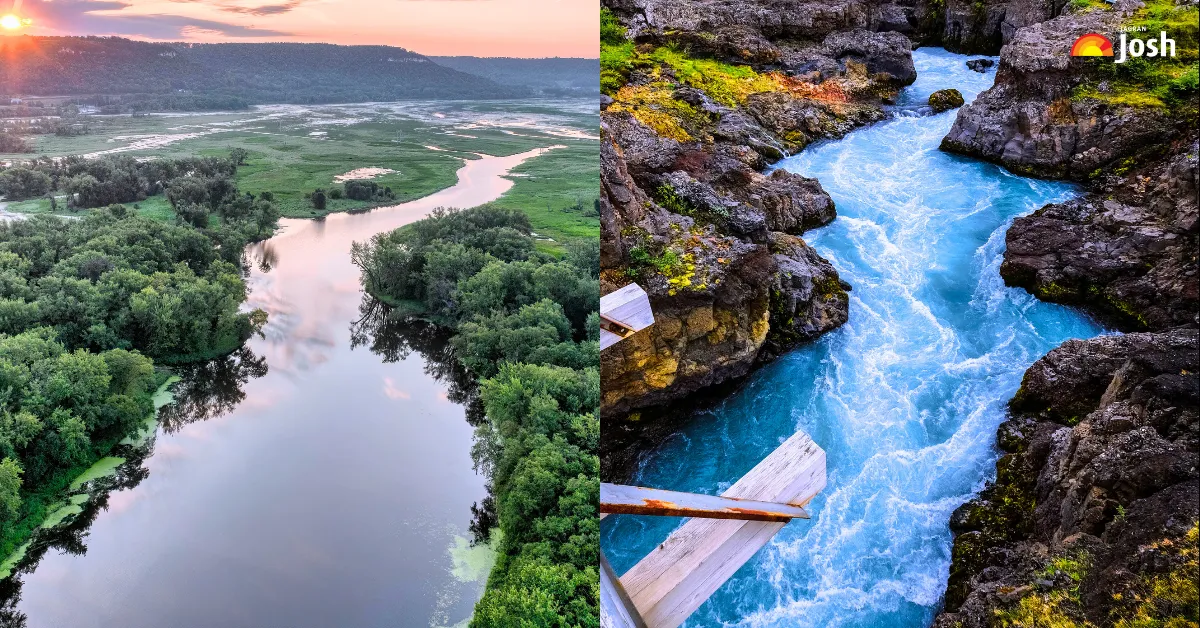
The Nile is the world's longest river and runs through northeastern Africa. It flows through eleven countries, including Egypt and Ethiopia, before reaching the Mediterranean Sea.
For thousands of years, the Nile has supported civilisation by providing water for farming, transportation, and power. Ancient empires depended on their fertile banks to survive.
Did you know there is another river in South Asia with a similar reputation? This famous Indian river is the country's longest. Millions of people consider it sacred and believe its waters have the power to purify the soul.
In this article, we'll explore the "Nile of India", learn about its rich history, and see why it is still so important to the country today.
ALSO READ: Which River is Known as the Ruhr of India?
Which River is known as the Nile of India?
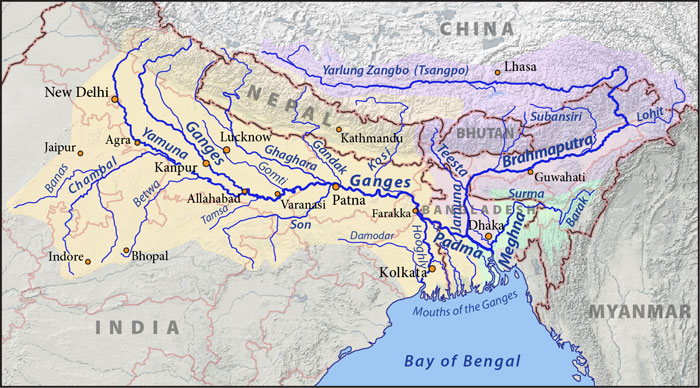
The Ganges River, or Ganga, is often called the "Nile of India". Like the Nile in Africa, the Ganga is the most sacred and important river for people in India. It provides millions of people with water and food and supports their daily lives.
The Journey of the Ganga
The Ganga starts high up in the Himalayan Mountains at the Gangotri Glacier in Uttarakhand. At first, it is called the Bhagirathi. The river is known as the Ganga after it joins the Alaknanda at Devprayag.
After leaving the mountains, the river flows into the flat northern plains of India and passes through several states.
- Uttarakhand (where it starts)
- Uttar Pradesh
- Bihar
- West Bengal
As it moves east, the river splits into different branches. One main branch enters Bangladesh. Finally, after travelling about 2,525 kilometres, the Ganga empties into the Bay of Bengal. This is where it forms the Sundarbans, the world's largest river delta.
5 Lesser-Known Facts About the Ganga
- Scientific studies show the Ganga contains high levels of "bacteriophages", which are natural viruses that kill harmful bacteria and keep the water cleaner.
- The river has the unusual ability to retain more dissolved oxygen than most other rivers in the world, helping it support unique aquatic life.
- It is one of the few places on Earth where you can find the Ganges River Dolphin, a mammal that is nearly blind and uses sound to "see" underwater.
- The sediment carried by the Ganga and Brahmaputra creates a delta so large it can be seen clearly from outer space.
- In the lower parts of the river, the silt is so fertile that plants can grow on floating mats of vegetation during the monsoon season.
IN CASE YOU MISSED: Which River is Known as the Chocolate River?
Why is Ganga called the Nile of India?
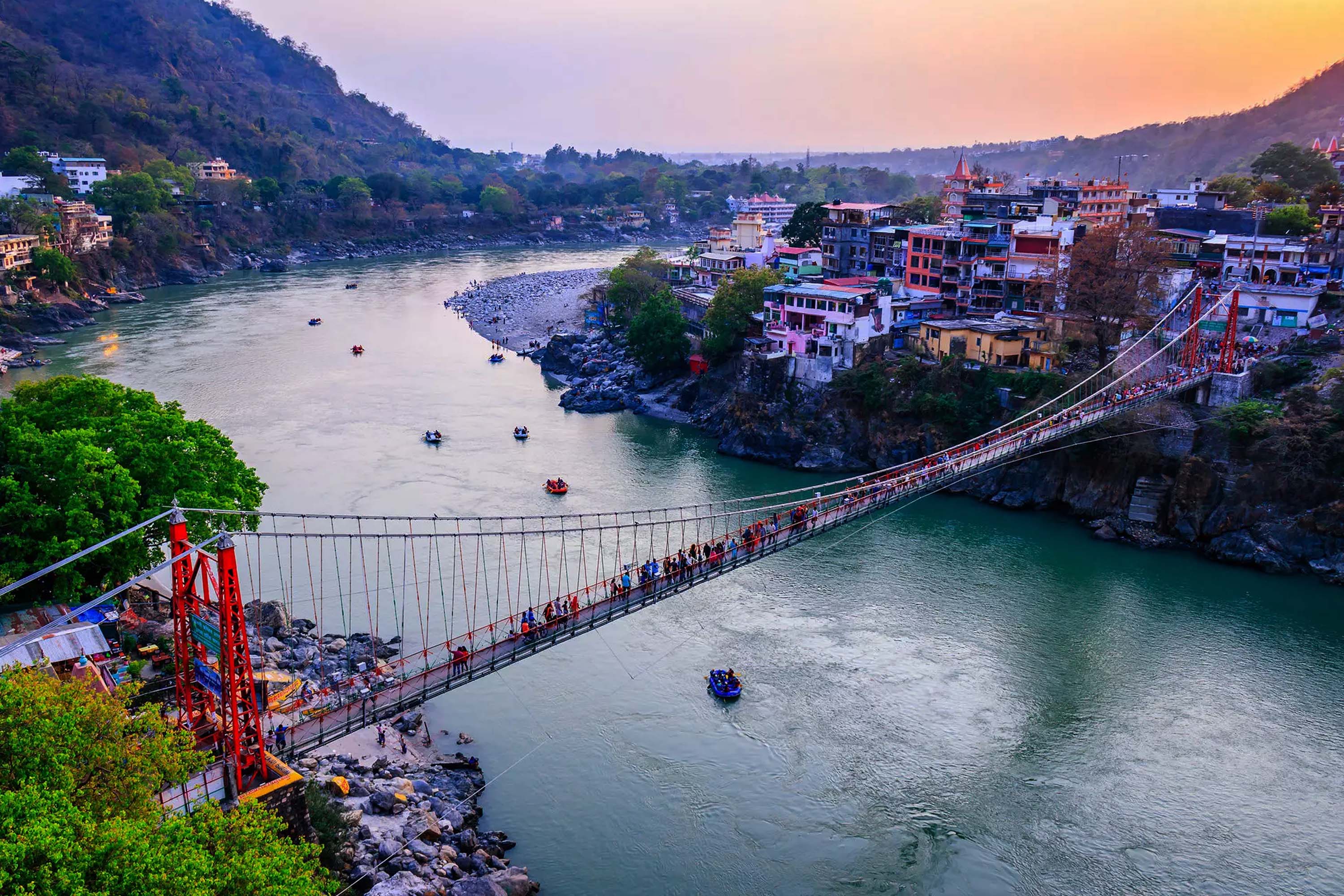
The Nile and the Ganga are often compared because both are considered the "lifeblood" of their regions. In the past, ancient Egyptian and Indian civilisations depended on these rivers to survive in challenging environments.
Ganga: The "Nile of India"
These two rivers have a lot in common. They both played a big role in shaping human history and still help people thrive today.
- Cradle of Civilisation: The Nile supported the Pharaohs, while the Ganga basin was at the centre of ancient Indian kingdoms and the Vedic civilisation.
- Agricultural Powerhouses: Both rivers carry large amounts of nutrient-rich silt from the mountains to the plains, making the land along their banks among the most fertile in the world.
- Spiritual Hubs: In ancient Egypt, people saw the Nile as a gift from the gods. In India, the Ganga is honoured as a goddess, known as Maa Ganga.
- Reliable Flow: Both rivers flow all year. The Nile gets its water from African lakes and rains, while the Ganga is fed by glaciers in the Himalayas.
In a Nutshell: Nile vs. Ganga
| Feature | The Nile (Africa) | The Ganga (India) |
| Length | ~6,853 km (Longest in the world) | ~2,525 km (1,569 miles) (Longest in India) |
| Source | Lake Victoria / Blue Nile (Ethiopia) | Gangotri Glacier (Himalayas) |
| Outflow | Mediterranean Sea | Bay of Bengal |
| Key Gift | Fertile Silt (The "Black Land") | Alluvial Soil (Indo-Gangetic Plain) |
| Major Delta | Nile Delta (Triangle-shaped) | Sundarbans (World's largest delta) |
| Status | National Symbol of Egypt | National River of India |
Conclusion
In conclusion, calling the Ganga the “Nile of India” highlights its importance as a lifeline. Like the Nile shaped ancient Egypt, the Ganga has supported India’s spiritual, cultural, and economic life for thousands of years.
Both rivers turn large regions into fertile land and help millions through farming and trade. Even though they are on different continents, their impact is similar: they are more than just rivers; they are the heartbeat of their countries.
[Disclaimer: The Indus is often compared to the Nile because it was the birthplace of one of the world's oldest civilisations, much like the Nile in Egypt. The Godavari, stretching approximately 1,465 km, is termed the "Dakshina Ganga" (Southern Nile) for being the largest river system in Peninsular India. It is often compared to the Nile due to its fertile basin, similar to the Nile River of Egypt.
The Bharathappuzha, though only 209 km long, is known as the "Nile of Kerala" because it has supported the region's ancient civilisations and traditions. These rivers are given these names because of their important roles in irrigation, the economy, and cultural heritage.]
WHAT'S NEXT: Which River is Known as the Milk River of India?



Comments
All Comments (0)
Join the conversation