Show Key Points
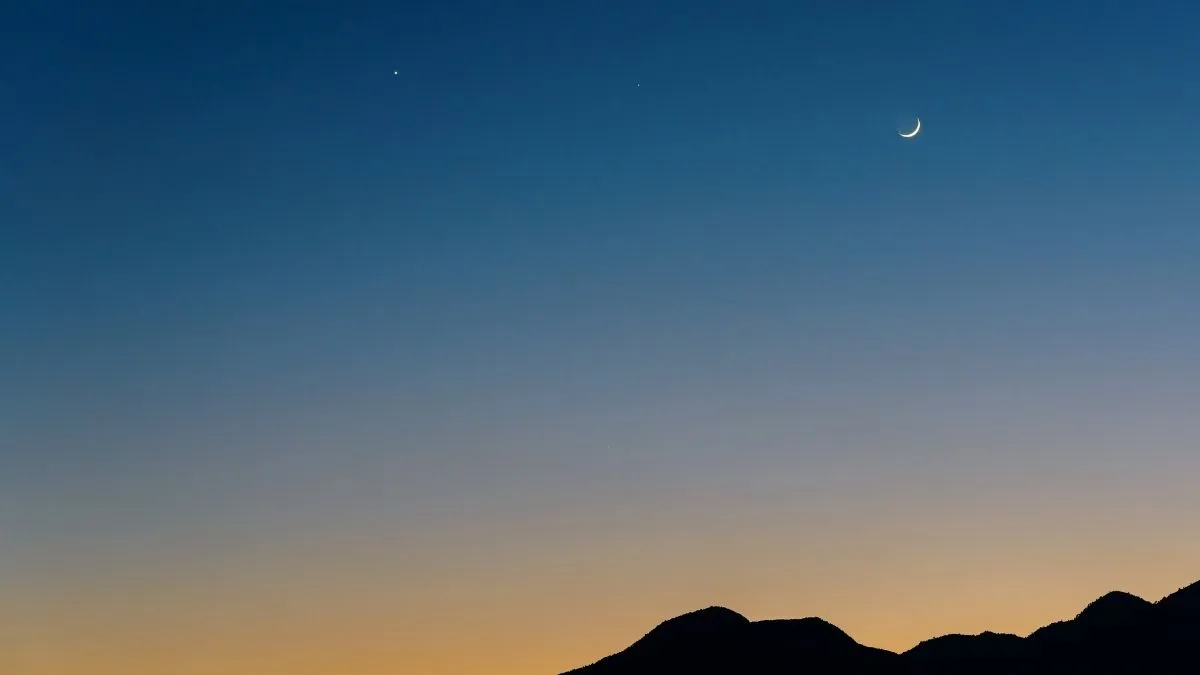
Stargazers across the United States are in for a celestial treat this weekend as the much-anticipated Venus and Saturn encounter illuminates the evening sky. Following on the heels of the rare six-planet planetary parade and the recent Blood Moon eclipse, the planetary conjunction of 2026 offers a visually striking meeting of two iconic worlds.
According to NASA’s Jet Propulsion Laboratory, these planets will appear just one degree apart, roughly the width of a single finger held at arm's length. While they seem to be hugging from our perspective on Earth, they remain separated by a staggering distance of nearly a billion miles in deep space.
What is the Best Time to see the Venus and Saturn Conjunction?
Timing is the most critical factor for this event, as both planets sit very low on the western horizon. To catch the peak of the conjunction, you must head outside shortly after the sun disappears.
| Event Detail | Best Viewing Window | Direction to Look |
| Peak Date | Sunday, March 8, 2026 | Due West |
| Observation Time | 30–45 minutes after sunset | Low Horizon |
| Duration | Visible for approx. 45 minutes | Sets by ~8:00 PM local time |
For the best experience, find a location with a high vantage point or a clear horizon free of buildings and trees. Venus will be the first to pop out of the twilight, shining with a brilliant, steady white light (magnitude -3.9). Saturn, which is significantly dimmer (magnitude 1.0), will appear as a soft golden point just to the lower left of Venus.
Also Read - Total Lunar Eclipse Blood Moon 2026: When, How, and Where to Watch from the U.S.
Viewing Tips for the March Planetary Conjunction 2026
While the duo is technically visible to the naked eye, the bright evening twilight can make spotting Saturn a bit of a challenge. Experts from the Royal Observatory Greenwich suggest using a pair of standard binoculars to help pull Saturn out of the sunset's glare.
-
Look for the UFO: Venus is so bright right now that it is often mistaken for a moving aircraft. Use it as your primary beacon to find its dimmer neighbor.
-
The Finger Rule: Hold your hand at arm's length; the gap between the two planets will be less than the width of one finger.
-
Weather Check: Because the planets are so low, even thin clouds near the horizon can obscure the view. Check your local forecast for clear skies during the twilight hour.
As the month progresses, Venus will continue to climb higher and grow more prominent in its Evening Star phase, while Saturn will slowly sink into the sun's glare, eventually vanishing from sight by the spring equinox on March 20.
Check Out - Daylight Saving Time 2026: Why Most of the U.S. Still Springs Forward This Sunday
This rare alignment serves as a beautiful reminder of our place in the moving clockwork of the solar system. Whether you are a seasoned astronomer or just someone looking up during an evening walk, the sight of these two worlds meeting on the horizon is a moment of cosmic peace. Make sure to catch the view on March 8, as this specific pairing won't return to our evening sky with such clarity for another cycle.



-1772806798986_t.webp)
Comments
All Comments (0)
Join the conversation