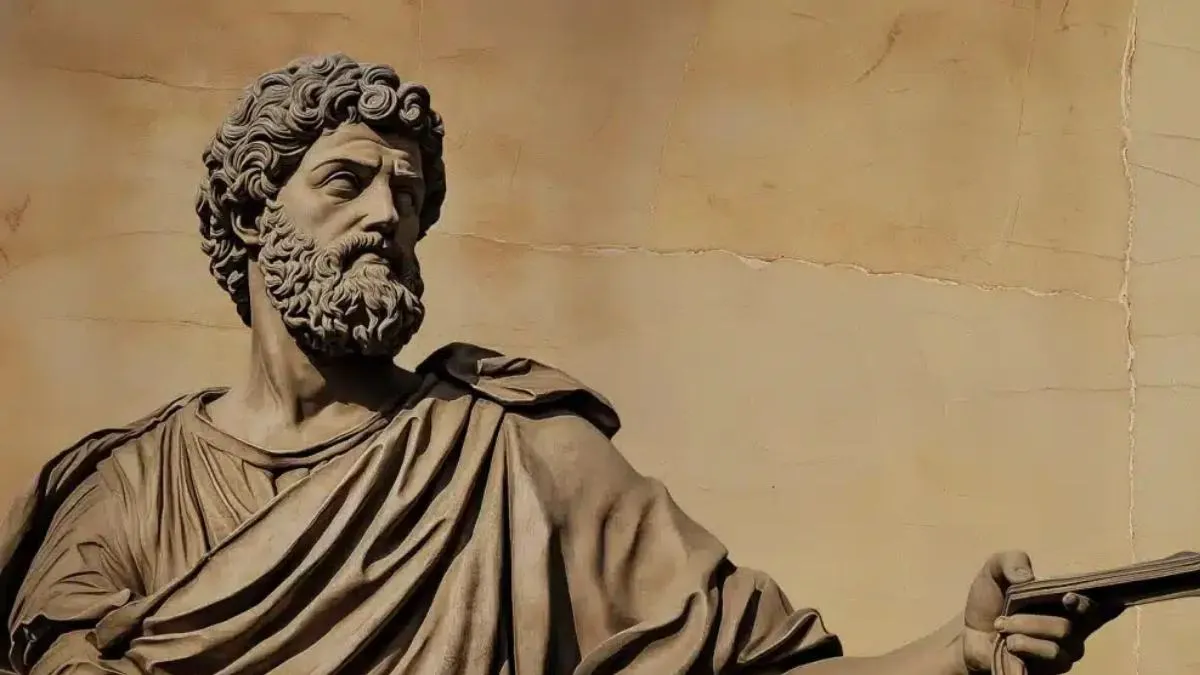
Although many notable historical leaders succeeded either through battle or politics and gained honour for doing so, some rulers also made an impressive contribution to humanity's knowledge base; this includes both philosophical and ethical concepts; as well as education; thus they were highly regarded in philosophical ways, ethical ways, educational methods and their ability to provide enlightened leadership based on Reasoned Governance.
A majority of these ancient leaders viewed Reason and Wisdom as both equal in the role of Leader; this led many to conclude that a Leader should lead not through Ambition but instead through Reason and Wisdom.
The philosophical debate which followed served to develop the notion of the Philosopher King and as such, this concept is commonly used to describe a Sovereign who leads based on Wisdom, Ethics and has an Obligation to Serve his Subjects.
Check Out: Which King Was Called the Sun King?
Which King Was Known as the Philosopher King?

Source: History.com
Marcus Aurelius, an emperor of Rome from 161 to 180 CE, has often been referred to as a philosopher king due to his commitment to stoicism.
His guiding principle as an absolutely sovereign leader was that self-discipline should prevail over all other virtues, including duty to oneself and others.
Unlike most others in positions of power at his time, Marcus Aurelius demonstrated that he was willing to reflect deeply and earnestly while practicing his position of authority, and this is why his reign represents a remarkable combination of great leadership with profound thought.
Why Was Marcus Aurelius Called the Philosopher King?
Deep Commitment to Stoic Philosophy
Marcus Aurelius had a strong commitment to Stoic thought, an ethical philosophy that emphasizes logical reasoning and self-control of emotions.
He believed that a true ruler must remain calm in difficult situations and act with a clear head rather than allow emotions to cloud their judgment.
This was the foundation for his view of what true rulers should be like and how they should conduct themselves.
Author of Meditations
Meditations is a collection of notes that Marcus Aurelius kept throughout his lifetime, which express his reflections on morality, self-improvement, and life in general.
It was not written as a public document; however, over time, it has become one of the most influential works of philosophy in Western civilization.
It also gives insight into the difficulties he encountered in maintaining a virtuous lifestyle while being in power.
Ruled with Reason and Justice
Emperor Marcus Aurelius was primarily concerned about ensuring a fair and just government, with the focus of his emperorship around improving laws and governing responsibly.
He believed that all decisions made by an emperor should be based upon logic and justice, rather than self-interest.
His reign was characterized by responsible and stable leadership, legal improvements for the Roman people, and the protection of their rights and welfare.
Believed in Moral Responsibility
Marcus Aurelius believed the ruler's moral responsibility included serving the people. To be a good ruler, Aurelius emphasized humility, duty, and ethical behavior.
He regularly contemplated how rulers should utilize their power for the common good, rather than for their own interests, and was an example of the responsible and ethical way to govern.
Practiced Philosophy in Daily Life
Marcus Aurelius did not just teach the ideas he studied, but he experienced the ideas he taught through his actions.
Unlike others who were philosophers by textbook only, Aurelius applied Stoic Principles throughout his life: during wars, when he faced political and social challenges, and while dealing with personal struggles.
Conclusion
Combining power with wisdom helped Marcus Aurelius achieve the title of "Philosopher King." By adhering to Stoic philosophy, he exemplified his values through ethical leadership, rational governance, and a commitment to serving humankind. As such, he has left behind a great legacy of being a reflective and morally sound emperor compared to other leaders.





Comments
All Comments (0)
Join the conversation