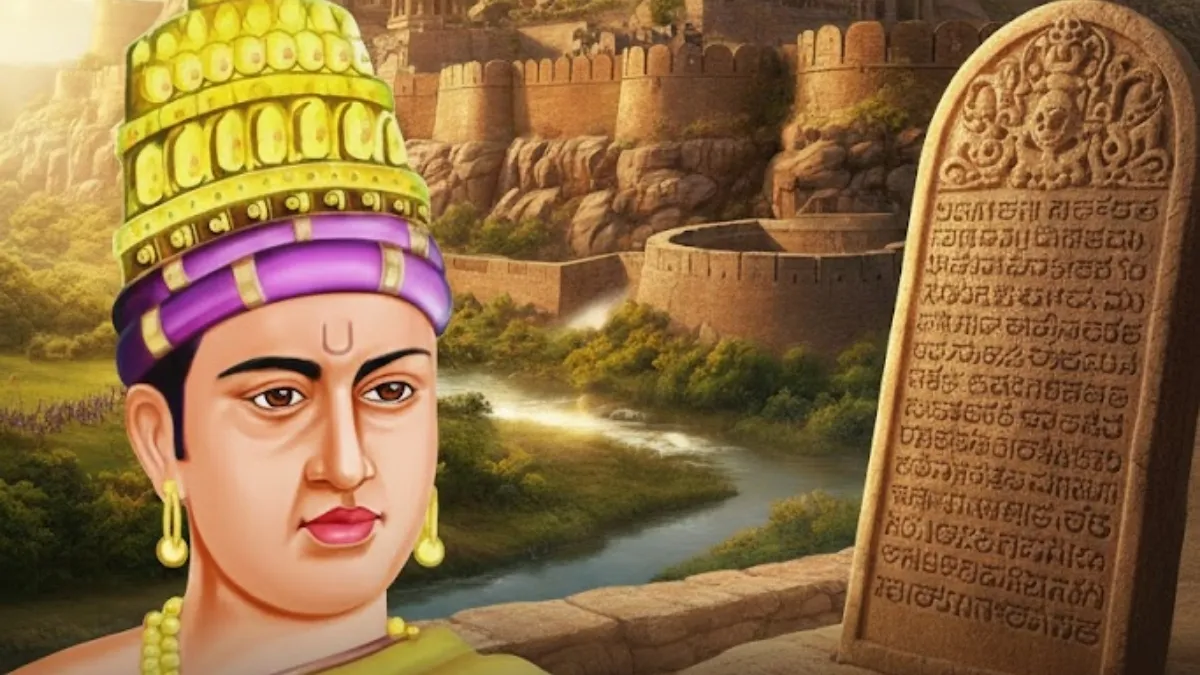
Key Points
- Pulakeshin II (610-642 CE) was the most iconic Chalukya ruler, known for military genius.
- He defeated Harshavardhana, preventing northern expansion into the Deccan region.
- In 642 CE, Pulakeshin II was defeated by Pallava King Narasimhavarman I.
The Chalukya Dynasty was a powerhouse of the Deccan, bridge-building between Northern and Southern Indian cultures. While the lineage produced many great leaders, Pulakeshin II remains the most iconic figure. Known for his military genius, he expanded the empire to its furthest reaches and successfully repelled the invasion of Emperor Harshavardhana. His reign marked a peak in diplomatic relations and the beginning of the "Vesara" style of architecture. Despite his ultimate defeat at the hands of the Pallavas, his influence laid the groundwork for centuries of Deccan supremacy.
The Chalukya Dynasty stands as a golden chapter in the history of Southern and Central India. Ruling large swaths of the Deccan plateau between the 6th and 12th centuries, they were responsible for a cultural and architectural renaissance that still echoes in the stone temples of Aihole and Badami.
When discussing the zenith of South Indian royalty, one name resonates louder than the rest: Pulakeshin II. While the dynasty produced several formidable warriors and patrons of the arts, Pulakeshin II’s reign (610–642 CE) defined the Chalukyas as an imperial power capable of humbling the greatest empires of the north.
Who Was the Most Famous Chalukya King?
Pulakeshin II also known as Immadi Pulikeshin is widely regarded as the greatest ruler of the Badami Chalukyas. He was a master strategist and a bold conqueror who expanded the kingdom into an empire that stretched across most of the Deccan.
His fame is largely cemented by two major achievements:
-
Consolidating the Deccan: He brought various local feuding powers under a single central authority.
-
Defeating Harshavardhana: He successfully defended the South against the "Lord of the North," Emperor Harshavardhana, at the banks of the Narmada River—a feat that earned him the title Parameshwara.
The Chalukya Dynasty:
The Chalukyas were not a single continuous line but are generally categorized into three distinct eras:
-
Badami Chalukyas: The early rulers who established the capital at Vatapi (modern-day Badami).
-
Eastern Chalukyas: A branch established at Vengi after Pulakeshin II conquered the region.
-
Western Chalukyas: A later lineage that revived the glory of the dynasty from Kalyani.
List of Important Rulers of the Chalukya Dynasty
The dynasty's strength was built on the shoulders of several key monarchs:
| Ruler | Significance |
| Jayasimha | The first recorded ancestor/founder of the line. |
| Pulakeshin I | The first sovereign ruler; he fortified the hill at Badami. |
| Kirtivarman I | Expanded the kingdom by defeating the Mauryas of Konkan. |
| Pulakeshin II | The greatest emperor; defeated Harshavardhana and the Pallavas. |
| Vikramaditya II | Famous for capturing Kanchipuram and his benevolence toward the defeated city. |
Who Defeated Pulakeshin II?
While Pulakeshin II was nearly invincible for decades, his rivalry with the Pallavas eventually led to his downfall. In 642 CE, the Pallava King Narasimhavarman I (also known as Mamalla) launched a retaliatory invasion.
Narasimhavarman I defeated Pulakeshin II in the Battle of Vatapi. The Chalukya capital was captured and sacked, and Pulakeshin II is believed to have died during this conflict. To commemorate this victory, Narasimhavarman I assumed the title Vatapikonda (Conqueror of Vatapi)
Also Read: Junagarh Rock Inscription: Ruler, History, and Significance of Sudarshan Lake


-1770216077682.jpg)


Comments
All Comments (0)
Join the conversation