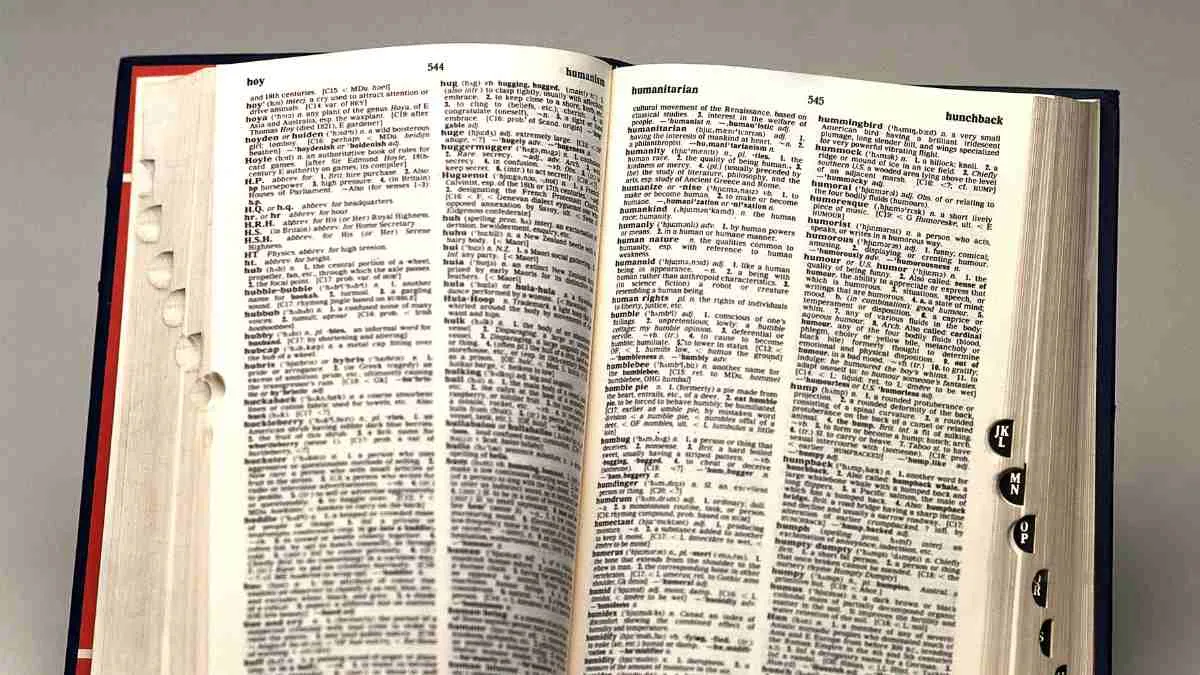
From the dawn of humanity, we have been captivated by language, by the meanings and roots of words, and how they determine the way we communicate. Collecting all of the words used to communicate into one place with an explanation of their meanings and how they are used is an incredible feat in the narrative of humanity.
Dictionaries are not only used as a reference source; they demonstrate a culture's history, a culture's body of knowledge, and how the language of that culture has evolved over time.
Have you ever thought about when the very first dictionary was written? Who made the decision on which words to include in that first dictionary?
How did people who lived long ago organize their vocabulary before the development of printing and other modern technology? The story of the first dictionary is not about words; it is about the continuing search of people to understand and uphold the use of language.
Check Out: List of Top 10 Oldest Languages in the World (Still Spoken)
Which Is the Oldest Dictionary in the World?

Source: Wikipedia
An ancient Chinese definition book called the "Erya" was written between 3-200 BC, the Third Century BC. This book consists of definitions and examples of Chinese terms and how they should be used in speech and writing.
The definitions of terms in the Erya are arranged according to the meaning of the term. This system helped scholars use and comprehend Chinese used throughout history.
Even though the Erya has been used for thousands of years, it is regarded by many to be the initial source for all of China's reference books and dictionaries.
Why Was the Erya Created?
Creating the Erya was crucial at that time in order to create an Alphabet and be able to define that as well. This is also why the Meaning of the word definition is so critical to understanding and writing Chinese and why it is used in all academic and governmental institutions in China today.
1. Organization by Meaning, Not Alphabet
Rather than being listed in alphabetical order, words in Erya were grouped according to their meaning and what type of object they were; therefore, when you read Erya, you can quickly find out what objects are like or connected with each other, unlike other reference materials available.
2. Focus on Conceptual Understanding
Erya did not focus on spelling/pronunciation as much as it did on the understanding of the meaning of each word.
For example, it was important to explain how/what the word means when used and how the various words relate to each other to better understand language rather than just know the definition.
3. Designed for Scholars
Erya was designed specifically for use by scholars studying classical works. Its purpose was to be a reference tool to accurately interpret and read ancient writings.
Therefore, it is not designed to be a dictionary for general use.
4. Limited Word Entries
In contrast with contemporary dictionaries containing a tremendous array of words, the Erya only provided a few specific words selected from amongst all known words.
The Erya was intended to assist the reader with an increased level of clarity and precision when attempting to comprehend literary works; thus, the purpose of the Erya was not to provide an exhaustive list of all English words known at that time.
5. Cultural and Historical Context
The Erya contains unique examples of the language spoken, knowledge possessed, people, and society of ancient China.
The Erya provides an interesting historical perspective regarding some aspects of everyday living, literature, and opinions at the time of the writing of the Erya from 323 BC to 220 AD.





Comments
All Comments (0)
Join the conversation