Show Key Points
Glaciers are massive rivers of ice that have helped to shape the Earth. They form slowly, as layers of heavy snow become solid ice over many years.
Some of the oldest glaciers in the world are hidden deep under South Africa and are almost 2.9 billion years old.
Today, the largest glacier is the Lambert Glacier in Antarctica, which stretches more than 250 miles. Among all these glaciers, one is especially famous for its stunning beauty and remote location.
Do you know which glacier is often called the Eighth Wonder of the World? In this article, we will look at the history, unique features, and amazing sights of this remarkable glacier.
ALSO READ| Which Glacier Is Called the Crown of the Himalayas?
Which Glacier is known as the Eighth Wonder of the World?

Source: Perito Moreno Glacier
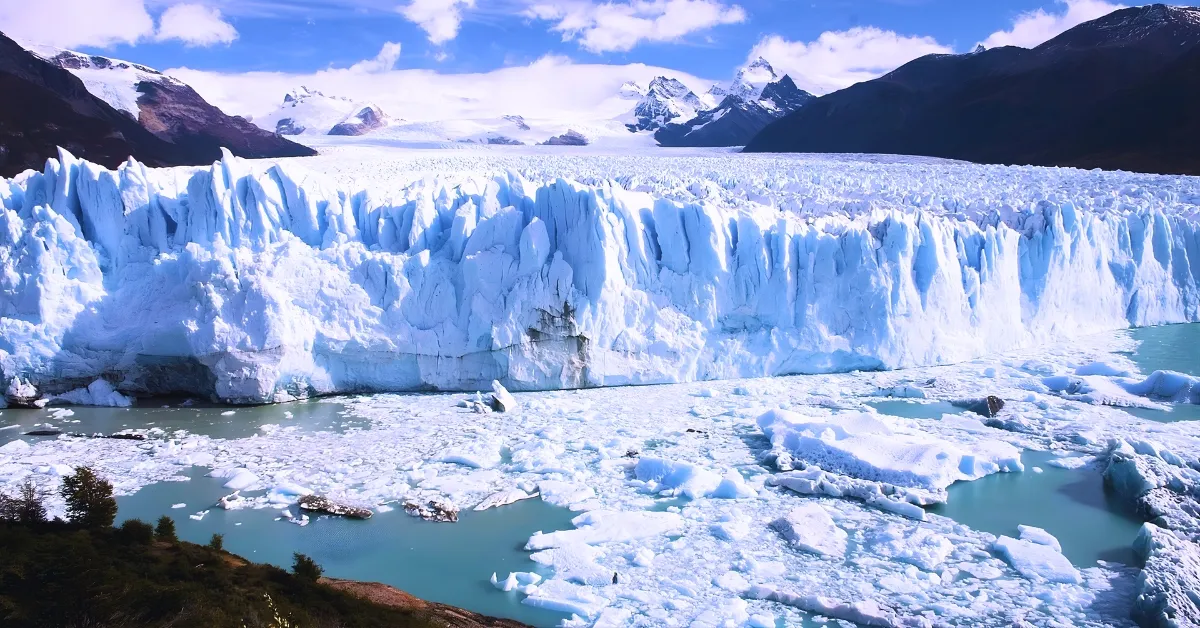
The Perito Moreno Glacier is a stunning natural wonder. It sits in Los Glaciares National Park in southwest Argentina and is often called the "Eighth Wonder of the World" or the "Ice Colossus".
Perito Moreno stands out because it is still growing, even though most glaciers around the world are shrinking.
The glacier is about 19 miles long and rises almost 240 feet above the water. Its deep blue colour and the loud cracks of ice falling into Lake Argentino make it famous worldwide.
Perito Moreno is important because it holds the world’s third-largest reserve of fresh water, making it a key environmental resource for the future.
7+ Mind-Blowing Facts About the Ice Colossus
- It is well known for the "rupture", when ice creates a natural dam along the shore. As water builds up, the pressure eventually causes the dam to collapse in a dramatic and powerful event.
- While most glaciers worldwide are retreating, Perito Moreno is among the few that remain in equilibrium.
- It is part of the Patagonian Ice Field, the largest ice mass outside the Earth's polar regions.
- When ice chunks fall (calving), the sound is so loud it can be heard from miles away, earning it the nickname "The White Giant".
- While 240 feet are visible above water, the ice reaches depths of up to 2,300 feet in some areas.
- This glacier moves forward at a speed of about 6.5 feet per day in the centre.
- It is one of the most accessible glaciers on Earth; you can walk on its surface with special spikes called crampons.
- It was declared a World Heritage site in 1981 to protect its unique geological beauty.
IN CASE YOU MISSED| Which Is the Largest Glacier in the World?
Why is the Perito Moreno Glacier Growing When the Others are Melting?

Source: Perito Moreno Glacier
Most glaciers around the world are shrinking, but the Perito Moreno Glacier is different. It stays stable and even grows, which makes scientists especially interested in studying it.
The Secret Behind Its Growth
Many people think all glaciers are shrinking because of rising temperatures, but the Perito Moreno Glacier keeps a special balance of ice.
- High in the Andes Mountains, the glacier gets a lot of snow each year.
- The snow quickly turns into ice, which helps move the glacier forward.
- The glacier gains as much ice at the top as it loses at the bottom, so it stays about the same size.
The Famous "Rupture" Event
- One of the most exciting things about this glacier is an event called the Rupture.
- As the glacier moves, it eventually reaches land and splits Lake Argentino into two parts.
- Water builds up on one side of the glacier, creating a lot of pressure against the ice.
- Every few years, the ice bridge breaks apart with a loud crash, sending white and blue ice into the water.
IN CASE YOU MISSED| Which Mountain Is Called the Savage Mountain?
What Makes the "Blue Ice" of the Glacier So Special?

Source: Freepik
If you look at the Perito Moreno Glacier, you’ll see it's not just white. It shines in a deep sapphire blue. This isn't paint or a reflection from the sky; it's pure physics.
The Science of the Colour
- Compressed Ice: The glacier’s ice is very dense. Over hundreds of years, the weight of snow pushes out all the air bubbles.
- Light Absorption: When sunlight hits this dense ice, it absorbs the red and yellow wavelengths.
- The Blue Reflection: Only blue light is strong enough to pass through and bounce back to our eyes.
Quick At a Glance
It is one of the most vital glaciers in the world because it stores a large share of the world's drinkable water. Additionally, the vast ice field acts like a giant air conditioner, helping keep the local area cool. This glacier is more than just beautiful. It has a big impact on our environment.
| Feature | Official Data |
| Status | UNESCO World Heritage Site (since 1981) |
| Height | Average of 74 meters (240 ft) above water |
| Total Depth | Up to 700 meters (2,300 ft) |
| Length | Approximately 30 kilometres (19 miles) |
| Fresh Water | Part of the 3rd largest reserve in the world |
WHAT'S NEXT| Which Mountain Is Called the Third Pole?



-1771598712303_t.webp)

Comments
All Comments (0)
Join the conversation