What is Sapta Dhara? PM Modi Announces 7 Pillars to Achieve Viksit Bharat by 2047
What is Sapta Dhara? Prime Minister Narendra Modi unveiled the 7-pillar Sapta Dhara framework during his Independence Day speech in 2026, a roadmap to achieve the vision of Viksit Bharat by 2047.
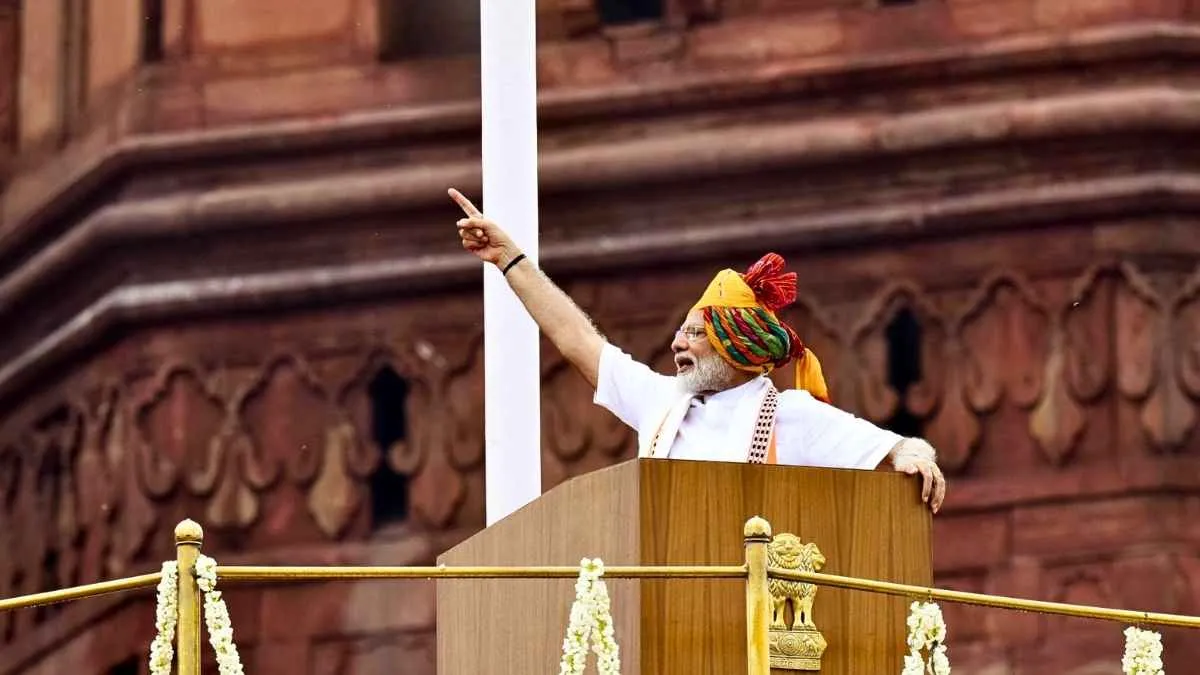
The Prime Minister Narendra Modi revealed the Sapta Dhara framework during his speech on Independence Day 2026 at the Red Fort. It consists of seven components that will help India become a Viksit Bharat (developed country) by the year 2047. This initiative aims to prompt economic progress, enact reforms in governance, stimulate new innovations, provide more social security and establish the country as a major player in the world economy.
The framework was presented as the country celebrates a huge milestone on its way to development and looks towards the Independence Day celebrations in 2047.
Sapta Dhara: 7 Pillars for Viksit Bharat by 2047
The objective of the Sapta Dhara initiative is to mobilize resources and implement projects in seven identified areas to boost inclusive, sustainable and future-oriented growth.
1. Manufacturing Sector
The first area involves promoting India as a leading provider of global supply chain solutions. PM Modi has put forward three essentials for Indian industry and MSMEs: affordability, quality, and scale.
The objective is to achieve end-to-end value chains from concept to zero-defect manufacturing, establishing world-class brand recognition for Indian-made products.
2. Agriculture Sector
The second area seeks to transform Indian agriculture into an international business by capitalizing on recently completed Free Trade Agreements (FTAs). Food processing, value addition, and exports will be brought to scale in line with international demand.
3. Technology and Innovation
The third component focuses on a technology and industry base ready for the future. It focuses on advancing domestic technology and industry in areas such as semiconductor manufacturing, AI (with a definite plan to train 1 crore individuals in AI), robotics, quantum technology, outer space and advanced telecommunication systems.
4. Gati Shakti (Infrastructure & Logistics)
The fourth component is built upon the integrated logistics plan of India. The primary objective is an integrated transport system with efficient connectivity of major urban centers using high-speed trains and port-based growth.
5. Defence Power (Raksha Shakti)
The fifth component aims for self-sufficiency in defence equipment manufacturing. PM Modi underlined that India should transition from the biggest defence import country to a leading global defence exporter, taking a leadership position in advanced technologies like hypersonic technology.
6. Green and Blue Economy
The sixth pillar is all about combining environmental sustainability and coastal development. The vision is to become a leader in green hydrogen and renewable energy storage and have a total of 100 GW of nuclear power capacity by 2047. At the same time, the blue economy utilizes India’s vast coastline for sustainable fisheries, ocean technology, and coastal tourism.
7. Soft Power
The last stream aims to enhance India’s cultural presence around the world. This involves promoting Yoga, Ayurveda, and holistic medicine under the "Heal in India" initiative and its creative industries, such as handicrafts, cinema, VFX, gaming, and digital content creation.
Why Sapta Dhara Matters for India’s Future?
It is necessary to dismantle traditional bureaucratic silos to achieve the status of a developed country by 2047. By organizing our progress into seven interrelated streams, decisions made in one area, for example in technology or green energy, will always boost our performance in manufacturing, agriculture, and defense industries.
PM Modi stated that the implementation of all seven streams in the next five to seven years will give the necessary momentum to a process that otherwise requires decades. Thus speeding up the movement of India to Viksit Bharat.

Manisha Waldia is a distinguished content strategist with 5 years of experience crafting premium educational content for UPSC and State PCS, with a focus on deep conceptual analysis across Polity, Geography, History, and Environment. She currently brings this expertise to Jagran Josh, where she covers major national and international events, current affairs, and static general knowledge. Over her career, Manisha's specialized insights have led her to curate high-impact materials and serve as a UPSC Mains answer-evaluator for India’s top institutes—including Drishti IAS, Shubhra Ranjan IAS, Study IQ, GS Score, and PWonlyIAS. She has also worked alongside leading NGOs like Oxfam India and Avani Kumaon.
Contact: manisha.waldia@jagrannewmedia.com

-1786784197070_t.webp)

-1786780276408_t.webp)


![[लिंक एक्टिव] Rajasthan Computer Instructor Exam City 2026 LIVE: कंप्यूटर अनुदेशक सिटी स्लिप recruitment.rajasthan.gov.in पर जारी, तुरंत SSO ID से करें चेक](https://img.jagranjosh.com/images/2026/August/1482026/Rajasthan-Computer-Instructor-Exam-City-2026.jpg)
![[OUT] RSSB Basic Computer Instructor City Slip 2026 Live: Download City Intimation Slip at rssb.rajasthan.gov.in- Link Active](https://img.jagranjosh.com/images/2026/August/1482026/RSSB-Basic-Computer-Instructor-City-Slip.jpg)