Key Points
- Coral reefs are vital ecosystems threatened by climate change and pollution.
- Coral bleaching occurs when stressed corals expel algae, turning them white.
- Great Barrier Reef had 5 mass bleaching events since 2016; sixth in 2025.
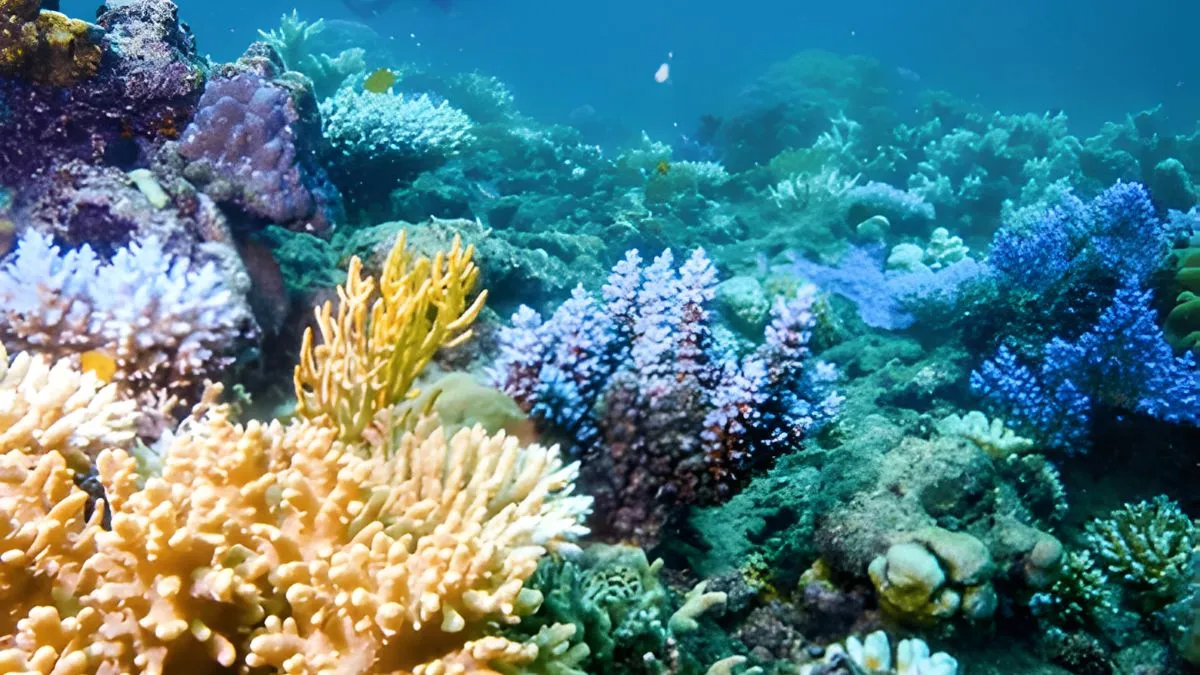
Coral reefs are vital ecosystems that support a vast diversity of marine life, provide coastal protection, and contribute to local economies and livelihoods through tourism, fishing, and coastal protection.
Over one quarter of marine life relies on coral reefs. Corals are the building blocks of reef ecosystems and are vital to life on Earth. Climate change is the greatest threat to coral reefs, making marine heatwaves hotter, longer and more frequent.
Despite their beauty and importance, coral reefs around the world are disappearing fast. Water pollution, overfishing and coastal development are taking their toll on coral reefs at the local level, while carbon pollution threatens reefs worldwide and remains their biggest threat.
The increasing frequency and severity of coral bleaching events in recent decades threaten the future of these ecosystems and the biodiversity they sustain.
So, let’s understand in detail about coral reefs and coral bleaching, their causes, and other facts.
What is Coral Reefs?
A coral reef is a term used to describe the collective structure of hard corals that help shape a coral reef ecosystem.
As per NASA, Torres-Pérez said, “A coral reef is a reef whose main structure is made by living organisms, in this case, corals.” “A coral reef will always be a reef, but not all reefs are coral reefs.”
The world's largest coral reef is Australia’s Great Barrier Reef, which covers approximately 133,000 square miles which is stretched around 1,429 miles.
Source: Marshall P.A and Schuttenberg
What is Coral Bleaching?
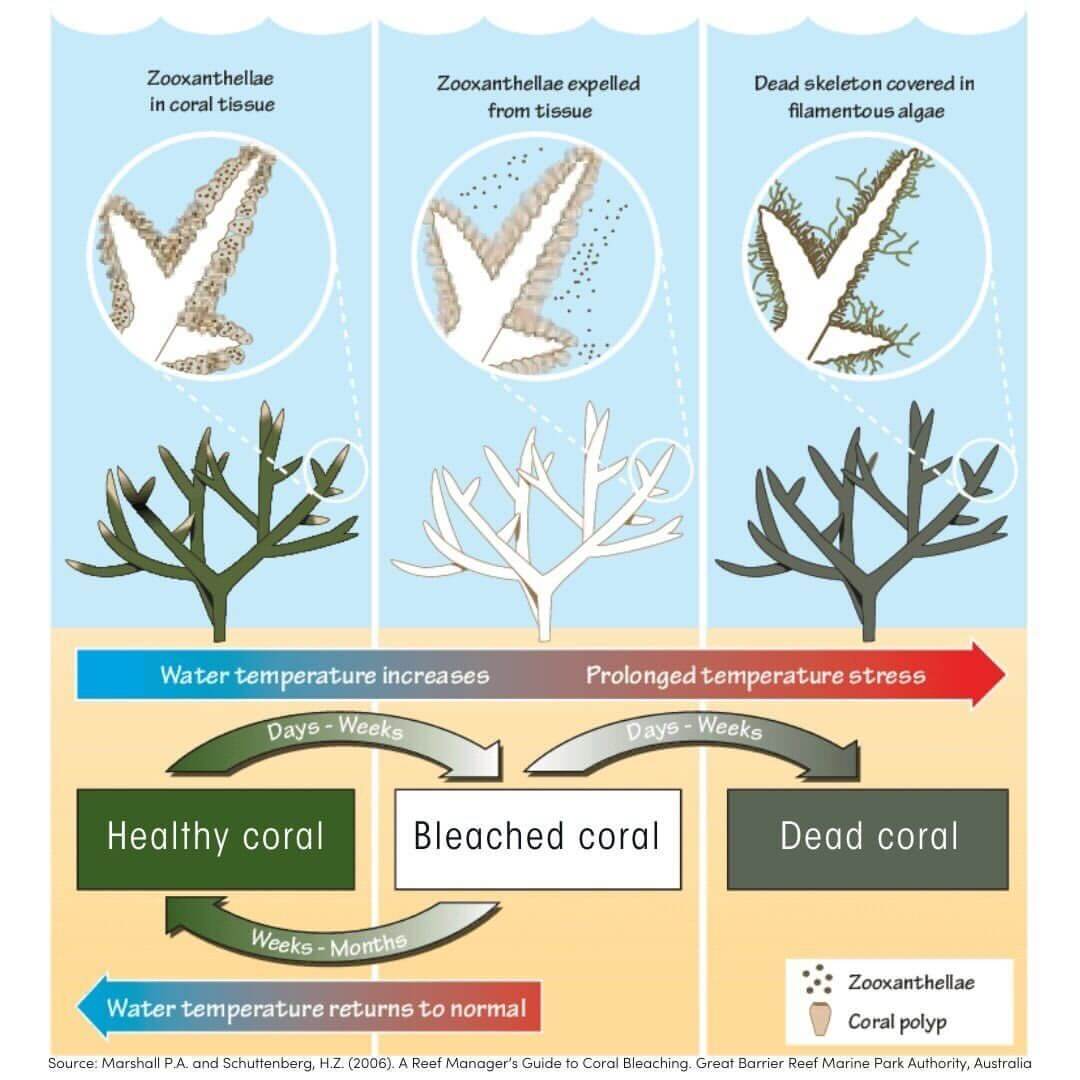
When the ocean surrounding reefs stays too hot for too long, the coral becomes stressed and expels the marine algae living inside their tissues, called zooxanthellae.
Zooxanthellae provide the coral with food and energy from the sun (due to a process called photosynthesis), allowing them to grow and reproduce.
When corals get stressed, from things such as heat or pollution, they react by expelling this algae, leaving a white skeleton behind. This is known as ‘coral bleaching’.
Some corals can feed themselves, but without the zooxanthellae, most corals starve. A healthy Reef can recover from coral bleaching, but it needs time and the right conditions. Coral reefs take around a decade to fully recover.
Source: NOAA
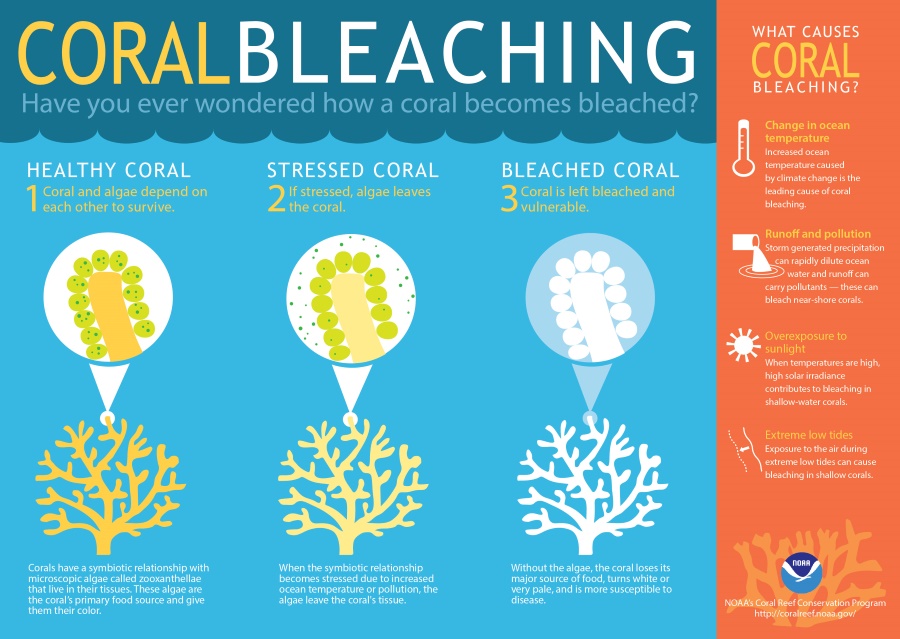
Have you ever wondered how a coral becomes bleached?
1. HEALTHY CORAL
Coral and algae depend on each other to survive. In the above infographic, a magnified view shows yellow coral tissue with numerous green, round algae cells (zooxanthellae) inside. The larger coral structure below is yellow.]
Corals have a symbiotic relationship with microscopic algae called zooxanthellae that live in their tissues. These algae are the coral’s primary food source and give them their colour.
2. STRESSED CORAL
If stressed, algae leave the coral. You can see a yellow coral tissue with many green algae cells moving away from and outside the coral structure. The larger coral structure below is still yellow but with less vibrant green specks.]
When the symbiotic relationship is stressed by increased ocean temperature or pollution, the algae leave the coral’s tissue.
3. BLEACHED CORAL
Coral is left bleached and vulnerable. Here, you can see a white, pale coral tissue with no green algae cells remaining. The larger coral structure below is entirely white.]
Without algae, the coral loses its primary food source, turns white or very pale, and becomes more susceptible to disease.
WHAT CAUSES CORAL BLEACHING?
Coral bleaching is usually triggered by heat stress caused by increased water temperatures and UV radiation, but can occur due to other factors such as changes in water quality.
1. Change in ocean temperature: Increased ocean temperature caused by climate change is the leading cause of coral bleaching.
2. Runoff and pollution: Storm-generated precipitation can rapidly dilute ocean water, and runoff can carry pollutants — these can bleach near-shore corals.
3. Overexposure to sunlight: When temperatures are high, high solar irradiance contributes to bleaching in shallow-water corals.
4. Extreme low tides: Exposure to the air during extreme low tides can cause bleaching in shallow corals.
What is the scientific outlook?
Scientists tell us that once we hit 1.5°C of warming, coral reefs will struggle to survive. If we don’t keep 1.5°C of global warming within reach this decade, the harsh reality is we will see more mass bleaching events and the rapid decline of our global icon.
In just seven years, our Reef has suffered four severe mass coral bleaching events, faster and more severe than scientists predicted. If we don’t act to halt this pollution, we risk the future of our precious Reef.
Timeline of Mass Coral Bleaching Events on the Great Barrier Reef
The past two decades have seen several widespread coral bleaching events on our Great Barrier Reef, with five mass bleaching events in the last eight years.
| Year | Event Severity & Scope | Key Details & Impact |
| 2025 | Sixth mass bleaching since 2016; consecutive event (following 2024). | • Less severe than 2024. • First time both the Great Barrier Reef and Ningaloo Reef bleached simultaneously. |
| 2024 | Fifth mass bleaching event since 2016. | • Confirmed in March 2024. • Part of the 4th global bleaching event (started in 2023). • Occurred during an El Niño year following the hottest year on record. |
| 2022 | Bleaching along the length of the Reef (Extreme in North/Central; Minor in South). | • Notable anomaly: Occurred during a La Niña summer (usually cooler/wetter). |
| 2020 | Widespread severe bleaching across many regions. | • 60% of 1,036 surveyed reefs suffered moderate/severe bleaching. • Data on mortality were limited due to Covid-19 restrictions. |
| 2017 | Unprecedented back-to-back bleaching (2016 & 2017). | • Affected the central third severely due to warm sea surface temperatures and heat stress. • The southern sector was spared. |
| 2016 | Record widespread bleaching; severe in the Far Northern area. | • Caused by record ocean temperatures. • Overall coral mortality reached 22%. • Southern parts were less severe. |
| 2006 | Confined largely to the southern part (Keppel Islands). | • Up to 98% of corals were bleached on some reefs. • Worse degree of bleaching than previous years in that specific area. |
| 2002 | 54% of 641 observed reefs bleached. | • Slightly more severe than the 1998 event. • Recovery was generally good; fewer than 5% of reefs suffered high mortality. |
| 1998 | Mild to intense bleaching during one of the hottest summers of the 20th century. | • Most reefs recovered fully. • Less than 5% of inshore reefs had high mortality. • Some severe areas (Palm Island) saw up to 70% coral death. |
Data Source: Great Barrier Reef Foundation
Facts About Coral Bleaching
-
Rising ocean temperatures caused by climate change is the primary cause of coral bleaching.
-
A temperature increase of just one degree Celsius for only four weeks can trigger bleaching.
-
During bleaching, corals become transparent, revealing their white skeletons.
-
Changes in water quality, increased sun exposure and extreme low tides can also cause corals to bleach.
Conclusion
Coral bleaching is a clear warning sign of the growing impact of climate change on our oceans. Rising temperatures, pollution, and human activities are pushing reefs beyond their limits. Protecting coral reefs requires urgent global climate action, reduced pollution, and sustainable practices to ensure these vital ecosystems survive for future generations.



-1770882254984_t.webp)
Comments
All Comments (0)
Join the conversation