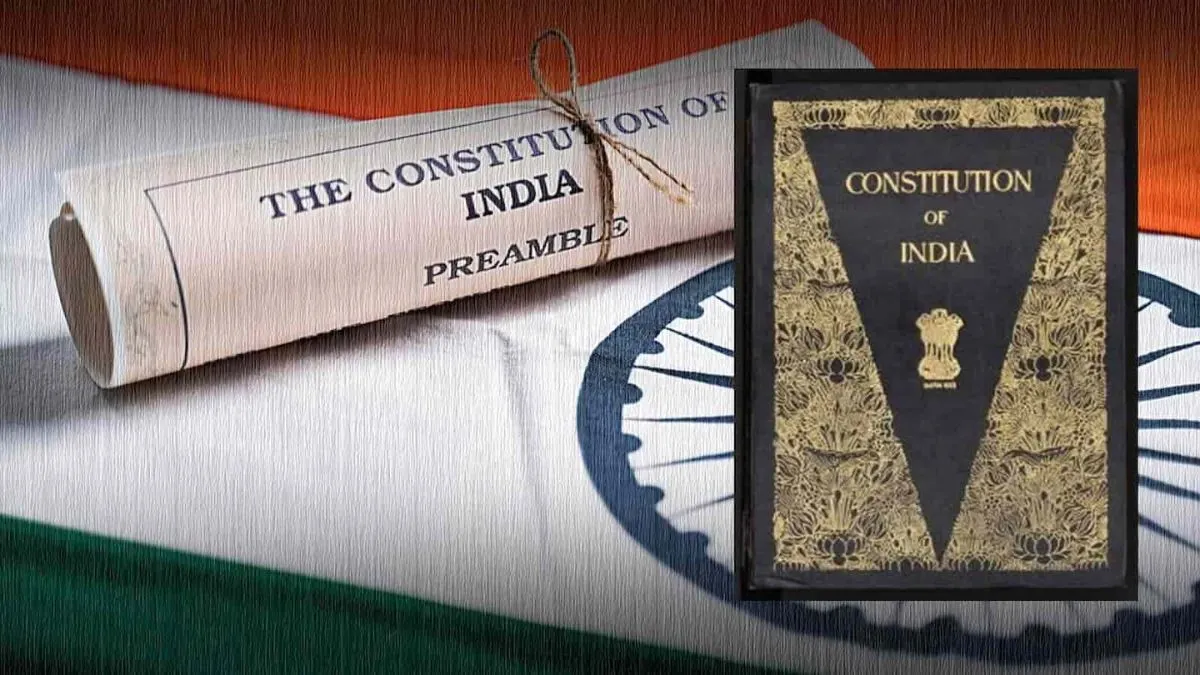
The Indian Constitution is the supreme legal document of India and the longest written national constitution in the world. It defines the structure, powers, and duties of government and the citizens. It was adopted on 26 November 1949 and came into force on 26 January 1950, establishing India as a sovereign, socialist, secular, and democratic republic.
Dr. B.R. Ambedkar was the chairman of the Drafting Committee and is considered the chief architect of the Constitution. The Constitution was framed by the Constituent Assembly, which met for 11 sessions and 167 days over a period of two years.
The Constitution is divided into several parts, including The Union and its Territory (Part I), Citizenship (Part II), Fundamental Rights (Part III), Directive Principles (Part IV), and Fundamental Duties (Part IVA).
In this article, we will learn about the fundamental rights in the Indian Constitution.
What are the fundamental rights in the Indian Constitution?
Fundamental Rights in the Indian Constitution (Part III, Articles 12-35) are essential human rights guaranteed to all citizens to ensure individual liberty, equality, and dignity. There are six main categories: Equality, Freedom, Against Exploitation, Religion, Cultural/Educational, and Constitutional Remedies.
1. Right to Equality (Article 14-18)
2. Right to Freedom (Article 19-22)
3. Right against Exploitation (Article 23-24)
4. Right to Freedom of Religion (Article 25-28)
5. Cultural and Educational Rights (Article 29-30)
6. Right to Constitutional Remedies (Article 32)
Right to Equality (Article 14-18)
(a) Article 14: Equality before the law or the equal protection of the laws within the territory of India.
(b) Article 15: Prohibition of discrimination on grounds of religion, race, caste, sex or place of birth.
(c) Article 16: Equality of opportunity in matters of public employment.
(d) Article 17: Abolition of untouchability and prohibition of its practice.
(e) Article 18: Abolition of titles, excluding military or academic distinctions, ensuring social equality.
Right to Freedom (Article 19-22)
(a) Article 19: Protection of certain rights regarding freedom of speech, etc.
All citizens shall have the right:
(i) to freedom of speech and expression
(ii) to assemble peaceably and without arms
(iii) to form associations or unions
(iv) to move freely throughout the territory of India
(v) to reside and settle in any part of the territory of India
(vi) to practise any profession, or to carry on any occupation, trade or business.
(b) Article 20: Protection in a conviction for offences.
(c) Article 21: Protection of life and personal liberty.
(d) Article 21A: Right to elementary education.
(e) Article 22: Protection against arrest and detention in certain cases.
Right against Exploitation (Article 23-24)
(a) Article 23: Prohibition of traffic in human beings and forced labour.
(b) Article 24: Prohibition of employment of children in factories, etc
Right to Freedom of Religion (Article 25-28)
(a) Article 25: Freedom of conscience and free profession, practice and propagation of religion.
(b) Article 26: Freedom to manage religious affairs.
(c) Article 27: Freedom from payment of taxes for promotion of any religion or religious affairs.
(d) Article 28: Freedom from attending religious instruction or religious worship in certain educational institutions.
Cultural and Educational Rights (Article 29-30)
(a) Article 29: Protection of language, script and culture of minorities.
(b) Article 30: Rights of minorities to establish and administer educational institutions.
Right to Constitutional Remedies (Article 32-35)
(a) Article 32: Right to move the Supreme Court by appropriate proceedings for the enforcement of the rights, including writs in the nature of habeas corpus, mandamus, prohibition, quo warranto and certiorari.
(b) Article 33: Provides power to Parliament to modify the rights of the members of the Armed Forces, police, intelligence agencies (e.g., Intelligence Bureau, Research and Analysis Wing), and telecommunication staff associated with these forces.
(c) Article 34: Restriction of Fundamental Rights (Articles 12-35) while martial law is in force in any area.
(d) Article 35: Provides exclusive power to Parliament, and not state legislatures, to make laws to in regard to specified Fundamental Rights.