Total Solar Eclipse 2026: Why the Eclipse Is Just a Teaser for a Rare 6-Minute Event
Total Solar Eclipse 2026: Get ready for the 2026 total solar eclipse. Discover the date, path and top viewing locations in Europe, and find out why this spectacular cosmic event is actually a teaser for a rare, record-breaking 6-minute eclipse coming in 2027.
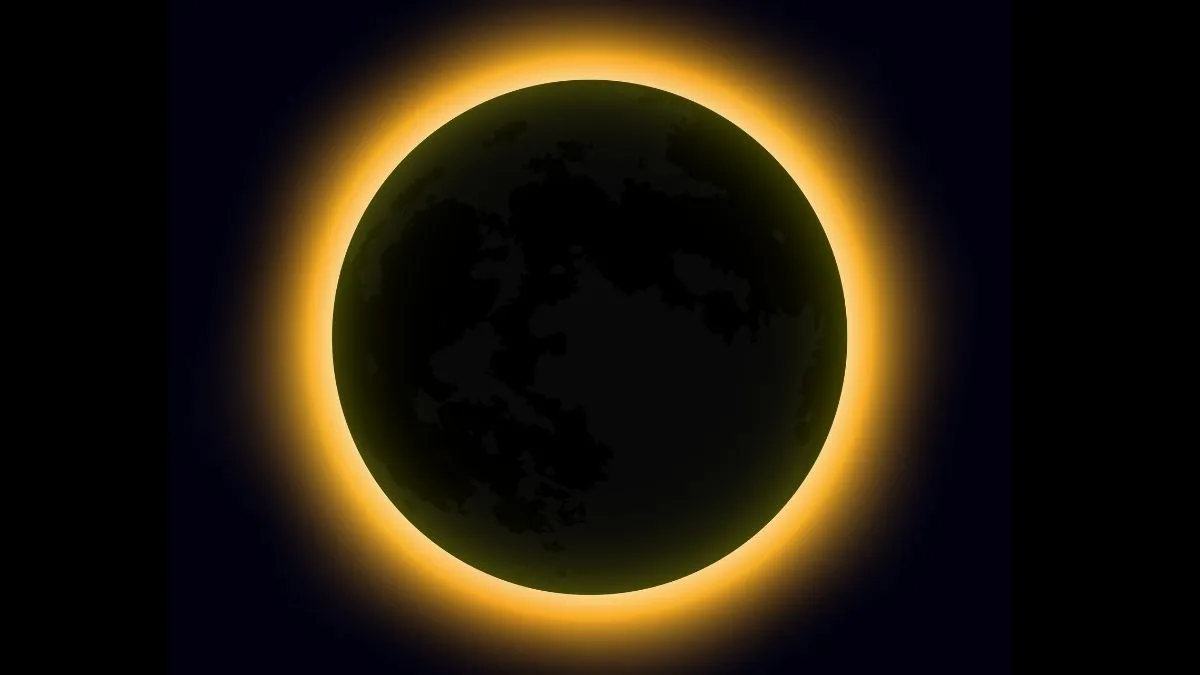
Total Solar Eclipse 2026 The universe is already gearing up for its next grand performance on August 12, 2026, a breathtaking total solar eclipse will sweep across parts of the Arctic, Greenland, Iceland, and Spain, bringing the magic of totality to Europe for the first time since 1999.
The 2026 solar eclipse is acting as an incredible, high-stakes teaser for an even rarer, monster 6-minute total solar eclipse arriving just one year later.
What Is the Total Solar Eclipse?
A total solar eclipse occurs when the Moon passes directly between the Earth and the Sun, completely blocking out the Sun's lights reaching from the earth. This is considered a surreal moment where a day turns to twilight, the temperature drops and the Sun’s elusive outer atmosphere solar corona witnesses blazes into view.
The upcoming Total Solar Eclipse is scheduled on August 12, 2026. This eclipse is a highly anticipated event because it brings totality back to continental Europe where millions of travelers and stargazers are already mapping out journeys to stand in the Moon’s shadow, known as the path of totality.
Date, Time, and Path of the 2026 Solar Eclipse
The path of totality for this eclipse is exceptionally dynamic measuring roughly 180 miles wide. It begins in northeastern Siberia which tracks directly over icy expanses of Greenland, passing through some clips the western coast of Iceland,and plunges south across the North Atlantic Ocean before making landfall in northern and eastern Spain.
The eclipse takes place late in the day for Europe viewers in Spain will experience a dramatic sunset totality where the eclipsed Sun sits very low on the western horizon right before dipping below the earth.
Date: Wednesday, August 12, 2026.
| Location | Expected Totality Duration | Local Time of Totality (Approx.) | Indian Standard Time (IST) Equivalent |
| Reykjavík, Iceland | 1 min 01 sec | 5:48 PM GMT | 11:18 PM IST (Aug 12) |
| Gijón, Spain | 1 min 45 sec | 8:26 PM CEST | 11:56 PM IST (Aug 12) |
| Burgos, Spain | 1 min 44 sec | 8:28 PM CEST | 11:58 PM IST (Aug 12) |
| Palma, Mallorca (Spain) | 1 min 36 sec | 8:31 PM CEST | 12:01 AM IST (Midnight, Aug 13) |
| India (New Delhi / Mumbai) | Not Visible | Sun will be below the horizon | 11:15 PM (Aug 12) to 12:05 AM (Aug 13) |
-1780816983120.jpg)
Countries and Regions Across the World that will witness Eclipse:
The eclipse will be visible partially across large areas of North America, Europe, and Africa where part of the sun will be obscured. If you are looking for a true majesty of this event, you cannot settle for a partial eclipse. Here are the prime geographic regions where the Moon will completely mask the Sun and total Solar Eclipse will be witness includes:
Greenland’s rugged eastern fjords and ice caps of Greenland will offer a pristine high-arctic backdrop though weather can be unpredictable.
Iceland, the capital city of Reykjavík and the western coast such as Keflavík sit right in the path of the eclipse. Iceland will see around 1 to 1.5 minutes of totality. It will be a stunning blend of fire, ice, and cosmic darkness.
Spain is considered the ultimate viewing hotspot for 2026 due to favorable summer weather. Major cities in the path include Coruña, Santander, Oviedo, Burgos, and Zaragoza, before the shadow heads out over the Balearic Islands (including Mallorca). Totality here will hover around 1 to 2 minutes.
Portugal, a tiny sliver of northeastern Portugal will also get a brief glimpse of totality right at sunset.
Why the 2026 Eclipse Is Only a Preview of a Rare 6-Minute Eclipse
The 2026 event is a dazzling preview for the Total Solar Eclipse of August 2, 2027 as magnificent as a two-minute eclipse over Northern hemisphare the celestial mechanics will be the Longest solar eclipse of the century.
The 2027 eclipse being dubbed the Eclipse of the Century because the maximum duration of 2026 eclipse tops out at around 2 minutes and 18 seconds which is expected just off the coast of Iceland, the 2027 eclipse will boast a staggering maximum totality of 6 minutes and 23 seconds near Luxor, Egypt.
A 6-minute total solar eclipse is incredibly rare. So that the 2027 event will be the longest total solar eclipse on easily accessible land in the whole 21st century. It is said that we will not see another land-based eclipse of this length until the year 2114.
The 2026 eclipse acts as a uniquew teaser because it shares a geographical overlap with the 2027 total lunar eclipse cities like Málaga and Cádiz in Spain will experience both eclipses just a year apart where 2026 will give scientists and eclipse chasers a chance to scientist to test new equipments, study atmospheric changes and build up the global hype for the historic 6-minute darkness of 2027.

Scientific Significance of the Total Solar Eclipses:
Eclipses are a significant part of solar physics and astro physics which help scientific study about the evolution of the universe and our solar systems.
During the time of totality, scientists can study Solar Flares and Coronal Mass Ejections (CMEs) by tracking how magnetic energy twists and explodes from the Sun. Understanding how solar winds interact with Earth's magnetic field, which can disrupt satellite communications and power grids. Monitoring how the sudden loss of solar radiation affects Earth's ionosphere and local animal behaviors.
Although advanced space telescopes like ESA's Solar Orbiter or NASA's Parker Solar Probe are not able to photograph the lowest regions of the Sun's corona. The intense glare of the Sun's surface blocks it out where a total solar eclipse acts as a perfect natural chronograph.
What Actually Happens During Totality?
During the total solar eclipse the Moon completely blocks the Sun's bright face and
-
The sky rapidly darkens into a deep, surreal twilight, mimicking a sudden 360-degree sunset during the day.
-
As the Sun's direct heat is cut off, you will feel a noticeable, sudden chill in the air.
-
Stars and Planets move in with the blinding sunlight gone. The brightest planets and stars suddenly blink into view in the middle of the day.
-
The Sun’s outer atmosphere will witnesse a glowing, ghostly halo of white plasma due to the rise of Solar flare in the sun’s Corona becoming visible to the naked eye.
-
Right before and after totality, sunlight streams through the Moon’s rugged valleys, creating a sparkling bead effect followed by a singular, blinding flash of light that looks exactly like a diamond ring or Baily Beads.
-1780817765686.jpg)
How to Watch the Total Solar Eclipse With Safety
If you choose to witness the 2026 total solar eclipse, your safety should be your top priority. Looking directly at the Sun, even when it is 99% covered by the Moon, can cause permanent, irreversible eye damage known as solar retinopathy. You must follow these safety rules:
Use certified eclipse glasses or solar viewing glasses that comply with the ISO 12312-2 international safety standard.
Never look at the Sun through an unfiltered camera lens, telescope, or binoculars even while wearing eclipse glasses. The concentrated solar rays will melt the plastic filter and severely damage your eyes instantly. Ensure your equipment has specialized solar filters attached to the front lens.
You can only take your eclipse glasses off during the brief window of true totality when the Moon completely blocks the Sun and the sky goes dark. The moment the first bead of sunlight breaks past the Moon's edge, your safety glasses must go back on.
Global Timeline: Total Solar Eclipses (2026–2035)
Where and when can you catch the next major eclipse? The next decade is incredibly rich for skywatchers. Here is the official roadmap of upcoming total solar eclipses worldwide:
| Year & Date | Eclipse Type | Key Visibility Regions |
| 12 Aug 2026 | Total Solar Eclipse | Europe (Spain, Iceland), Arctic, Greenland, North America (Partial) |
| 2 Aug 2027 | Total Solar Eclipse | Africa (Egypt, Morocco), Southern Europe, Middle East, South/West Asia |
| 22 Jul 2028 | Total Solar Eclipse | Australia, Southern Asia, Indian Ocean, Pacific |
| 25 Nov 2030 | Total Solar Eclipse | Australia, South/East Africa, Indian Ocean, Antarctica |
| 14 Nov 2031 | Total Solar Eclipse | North America, Northwestern South America, Pacific |
| 30 Mar 2033 | Total Solar Eclipse | North America (Alaska), Western Europe, Northern Asia, Arctic |
| 20 Mar 2034 | Total Solar Eclipse | Middle East, Africa, Europe, Asia, Atlantic Ocean |
| 1–2 Sep 2035 | Total Solar Eclipse | Eastern Europe, Asia (China, Japan), Western North America, Pacific |
The countdown to August 12, 2026, has officially begun. Whether you plan to brave the volcanic landscapes of Iceland or enjoy a late-summer evening in Spain, start making your travel arrangements early. This stunning celestial teaser is an event you absolutely do not want to miss.
Previous Year Question Asked in Competitive Exams
Q1. During a solar eclipse, the visible outer atmosphere of the Sun is called: (UPSC 1999)
A. Photosphere
B. Chromosphere
C. Corona
D. Ionosphere
Answer: Corona.
Q2. Consider the following statements: (SSC 2025)
-
A Solar eclipse- the Moon casts a shadow on Earth when it comes between the Sun and Earth.
-
A Lunar Eclipse- During the new moon phase the Moon Passes through the Earth’s shadow.
Which of the statements given above is/are correct?
-
Only 1
-
Only 2
-
Both 1 and 2
-
Neither 1 nor 2
Correct Answer: (b) Only 2
Q3. With reference to solar eclipses, consider the following statements:
-
An annular solar eclipse can occur when the Moon is near its apogee.
-
During a total solar eclipse, the solar corona can be observed from Earth.
Which of the statements given above is/are correct?
A. 1 only
B. 2 only
C. Both 1 and 2
D. Neither 1 nor 2
Answer: C) Both 1 and 2
Q4: What is/are the condition(s) for a solar eclipse to occur?
-
The Moon must be between the Earth and the Sun.
-
The Sun, Moon and Earth must lie approximately in the same plane.
Which of the statements given above is/are correct?
A. 1 only
B. 2 only
C. Both 1 and 2
D. Neither 1 nor 2
Answer: Both conditions are necessary
Q5. A solar eclipse occurs when: (SSC CGL)
A. Earth comes between the Sun and the Moon
B. Moon comes between the Sun and the Earth
C. Sun comes between the Earth and the Moon
D. None of the above
Answer: B

Manisha Waldia is an accomplished content writer with 4+ years of experience dedicated to UPSC, State PCS, and current affairs. She excels in creating expert content for core subjects like Polity, Geography, and History. Her work emphasises in-depth conceptual understanding and rigorous analysis of national and international affairs. Manisha has curated educational materials for leading institutions, including Drishti IAS, Shubhara Ranjan IAS, Study IQ, and PWonly IAS. Email ID: manisha.waldia@jagrannewmedia.com

-1780829029616_t.webp)

