-1770380735221.webp)
Key Points
- Adapted from Ashoka's Lion Capital at Sarnath in the 3rd century BCE.
- Officially adopted on January 26, 1950, symbolizing a sovereign republic.
- Motto 'Satyameva Jayate' means 'Truth Alone Triumphs,' from Mundaka Upanishad.
The National Emblem of India is one of the most important national symbols of the country. It represents India’s sovereignty, authority, unity, and cultural heritage. The emblem is derived from an ancient sculpture that dates back over two thousand years and reflects the ideals of truth, power, and moral governance.
The National Emblem of India
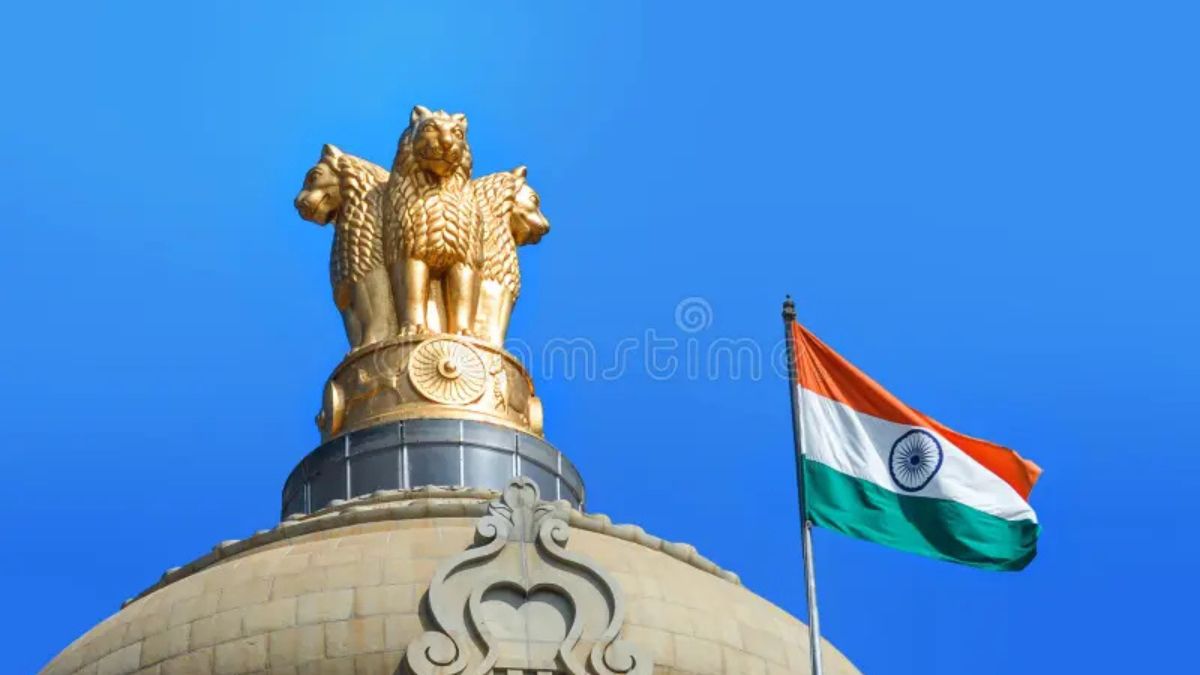
The Lion Capital of Ashoka is the National Emblem of India. It is adapted from the Lion Capital erected by Emperor Ashoka at Sarnath in the 3rd century BCE. The emblem depicts four Asiatic lions standing back to back on a circular abacus, symbolising strength, courage, pride, and confidence.
History and Origin of the National Emblem
The original Lion Capital was built during the reign of Emperor Ashoka, one of India’s greatest rulers, who promoted peace, justice, and Dharma. The sculpture was installed at Sarnath, the place where Lord Buddha delivered his first sermon. The modern Indian state adopted this ancient symbol to reflect continuity between India’s rich past and its democratic present.
Adoption of the National Emblem of India
India officially adopted the National Emblem on 26 January 1950, the day the Constitution of India came into force. Its adoption marked the birth of India as a sovereign republic. Since then, the emblem has been used by the Government of India as a symbol of authority and official power.
Description of the National Emblem
The State Emblem of India shows three visible lions facing left, right, and front, while the fourth lion remains hidden at the back. Below the lions is a circular abacus featuring sculptures of animals such as the lion, bull, horse, and lion separated by Ashoka Chakras. Beneath the emblem appears the national motto written in Devanagari script.
National Motto of India: Satyameva Jayate
The motto of the National Emblem is “Satyameva Jayate”, which means “Truth Alone Triumphs.” This phrase is taken from the ancient Indian text Mundaka Upanishad. It reflects India’s commitment to truth, justice, transparency, and moral values in governance and public life.
Symbolism of the Four Lions
The four Asiatic lions symbolise power, courage, vigilance, and pride. Their back-to-back position indicates that the nation remains alert and strong in all directions. The open mouths of the lions represent readiness to protect truth and justice.
Difference Between the Original and the State Emblem
The original Lion Capital at Sarnath has four lions visible from all sides, whereas the State Emblem shows only three lions visible in two-dimensional form. Additionally, the original sculpture does not contain the motto, which was added later to the modern emblem.

Interesting Facts About the National Emblem of India
Ancient Origin
The National Emblem is based on a sculpture that is more than 2,200 years old, making it one of the oldest national symbols in the world still in use.
Buddhist Connection
The emblem originates from Sarnath, a major Buddhist site where Lord Buddha gave his first sermon after attaining enlightenment.
Asiatic Lions
The lions depicted are Asiatic lions, which are native to India and symbolise royal authority and bravery.
Legal Protection
Improper use of the National Emblem is punishable under Indian law to preserve its respect and sanctity.
Symbol of the Republic
The emblem represents India as a republic governed by law, truth, and constitutional values rather than monarchy or colonial rule.
Read more: Which Mountain Is Called the Third Pole?
The National Emblem of India is the Lion Capital of Ashoka, a powerful symbol of India’s ancient heritage and modern democratic ideals. Keep reding for more such topics.





Comments
All Comments (0)
Join the conversation