Monsoon Quiz with Answer: 10 Rapid Questions to Test Your Climate and Weather IQ
Master the science behind the rainy season! Test your geography skills with 10 essential multiple choice questions on pressure zones, wind patterns, and rain shadows.
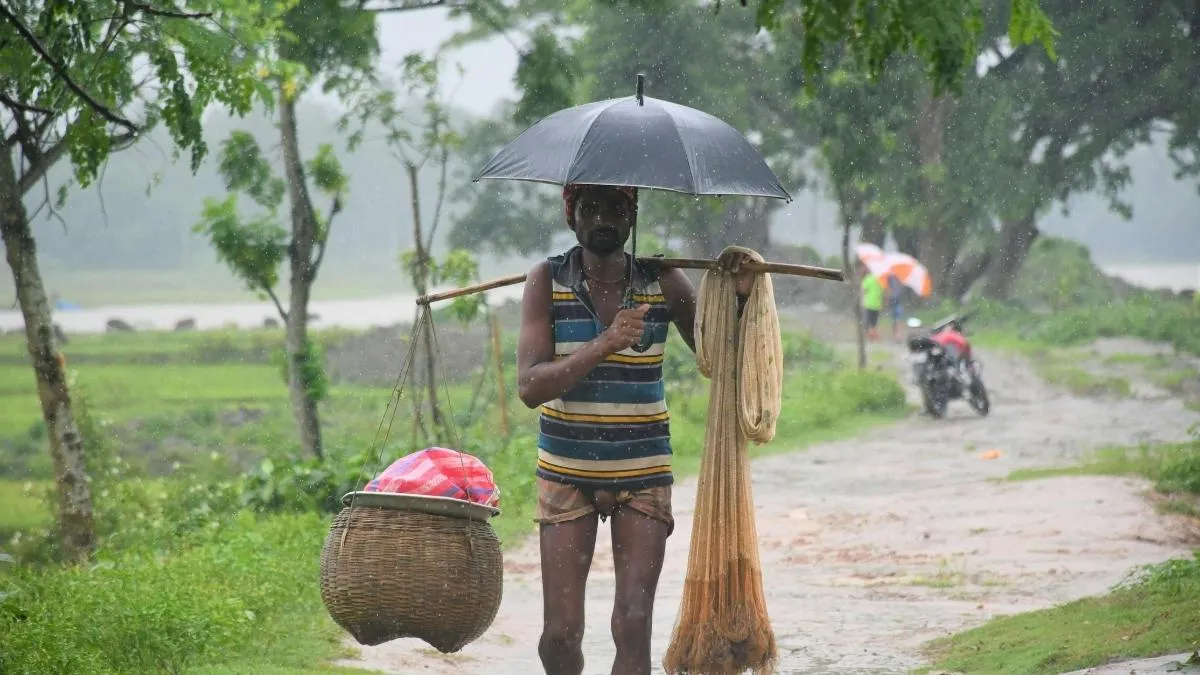
The monsoon is far more than just heavy rainfall. It is a time when we experience a reversal of winds along with a temperature shift on our planet.
But the recent Southwest Monsoon charts report that India will jump from largely deficit rainfall in June in Southwest region to flash flood warning in North in July.
For student preparing for geography exams or for anyone curious about the current climate alerts in India these ten questions about Monsoons are going to break down the complex weather system in a quiz form for you to learn fast and test your climate IQ.
10 Monsoon Quiz Questions with Answers
Put your textbook knowledge to the test with these 10 rapid fire multiple choice questions and read the explanation for the right answer later.
Q1. What primary physical process drives the initiation of summer monsoon winds?
A) The Earth's magnetic field changes
B) Differential heating of land and sea
C) Severe tropical ocean storms
D) Mountain volcanic activity
Correct Answer: B) Differential heating of land and sea
Explanation: Land heats up much faster than the ocean in summer. This creates a hot low pressure zone over the land which sucks in cooler moisture rich and high pressure air from the sea.
Q2. Which branch of the Southwest Monsoon reaches the western coast of India first?
A) Bay of Bengal branch
B) Arabian Sea branch
C) Northeast Monsoon branch
D) Mediterranean branch
Correct Answer: B) Arabian Sea branch
Explanation: The peninsular shape of India splits the incoming summer winds into two. The Arabian Sea branch hits the western coast from Kerala first around June 1st and carries three times more moisture than the eastern branch.
Q3. Which geographic region receives heavy annual rainfall exceeding 200 cm?
A) Ladakh region
B) Thar Desert
C) Western Ghats
D) Interior Deccan Plateau
Correct Answer: C) The Western Ghats
Explanation: The Western Ghats act as a wall. When the moisture rich Arabian Sea winds hit the mountains they are forced to rise rapidly then cool and dump heavy orographic (mountain induced) rain on the coastal slopes.
Q4. Which wind system causes the winter rainfall along India's southeastern Coromandel Coast?
A) Southwest Monsoon
B) Westerlies
C) Northeast Monsoon
D) Western Disturbances
Correct Answer: C) Northeast Monsoon
Explanation: These winds reverse direction in October and blow from land to sea and are also known as the retreating monsoon. They pick up moisture over the Bay of Bengal and drop it as winter rain on the coast of Tamil Nadu.
Q5. Why does the interior Deccan Plateau receive very low rainfall?
A) It lacks vegetative forest cover
B) It sits in the rain shadow of the Western Ghats
C) High winds push the clouds away
D) It maintains a constant freezing temperature
Correct Answer: B) It sits in the rain shadow of the Western Ghats
Explanation: Once the monsoon winds cross over the peaks of the Western Ghats, they lose most of their moisture. As the air descends onto the plateau, it warms up and dries out to create a rain shadow zone.
Q6. The shifting of which global low-pressure belt pulls the monsoon winds across the equator?
A) Polar Easterlies
B) Subtropical Jet Stream
C) Inter-Tropical Convergence Zone (ITCZ)
D) Subpolar Trough
Correct Answer: C) Inter-Tropical Convergence Zone (ITCZ)
Explanation: The ITCZ is a low-pressure belt where trade winds meet. In summer it shifts northward over the Asian landmass and acts like a vacuum that pulls southern trade winds across the equator into India.
Q7. What are the two main climate functions of the Himalayan Mountains?
A) Deflecting ocean currents and lowering global sea levels
B) Blocking cold Arctic air and trapping monsoon moisture inside the region
C) Generating high-pressure zones and creating cyclones
D) Speeding up the Earth's rotation and absorbing solar radiation
Correct Answer: B) Blocking cold Arctic air and trapping monsoon moisture inside the region
Explanation: The Himalayas act as a shield that prevents freezing Central Asian winds from entering the subcontinent while simultaneously forcing summer monsoon winds to drop their rain inside the border rather than escaping north.
Q8. Which weather phenomenon brings vital winter rain to Northwest India for Rabi crops?
A) Northeast Monsoon
B) Western Disturbances
C) El Niño Southern Oscillation
D) South-West Monsoon
Correct Answer: B) Western Disturbances
Explanation: These are non-tropical storms originating over the Mediterranean Sea. High-altitude jet streams carry them eastward to northwest India, bringing winter showers crucial for growing wheat crops.
Q9. What does the Arabic word "mausim", from which the word monsoon is derived, literally mean?
A) Torrential downpour
B) Shifting clouds
C) Ocean storm
D) Season
Correct Answer: D) Season
Explanation: The word directly translates to "season." Historically sailors used the term to describe the seasonal wind patterns that reversed direction every six months across the Indian Ocean.
Q10. What force causes the summer monsoon winds to curve from the southwest after crossing the equator?
A) Gravitational pull
B) Centrifugal force
C) Coriolis force
D) Frictional drag
Correct Answer: C) Coriolis force
Explanation: The Coriolis force is caused by the Earth’s rotation. It deflects moving air masses to the right in the Northern Hemisphere, turning the southern trade winds into the famous Southwest Monsoon.

Harshita Singh is an education and general knowledge journalist with over 5 years of experience in educational writing. Specializing in US affairs and GK, Harshita has a track record of breaking down intricate geopolitical and historical subjects into clear, digestible insights for learners. Her strong background in text analysis, coupled with a Bachelor of Arts (Hons) in English from the University of Delhi, helps her produce authoritative, thoroughly researched content that empowers readers to engage confidently with global current affairs. For inquiries or academic insights, you can reach out to her directly at harshita.singh@jagrannewmedia.com.