How Did the Red Fort Become the Venue for Independence Day Flag Hoisting?
The article describes the events of Red Fort from the time of Shah Jahan when it was formerly used as a Mughal palace to the incidents happening after 1857 Revolution and the INA trials. How Jawaharlal Nehru started tradition of unfurling the national flag on August 15, 1947 at Red Fort and made it a symbol of Indian independence.
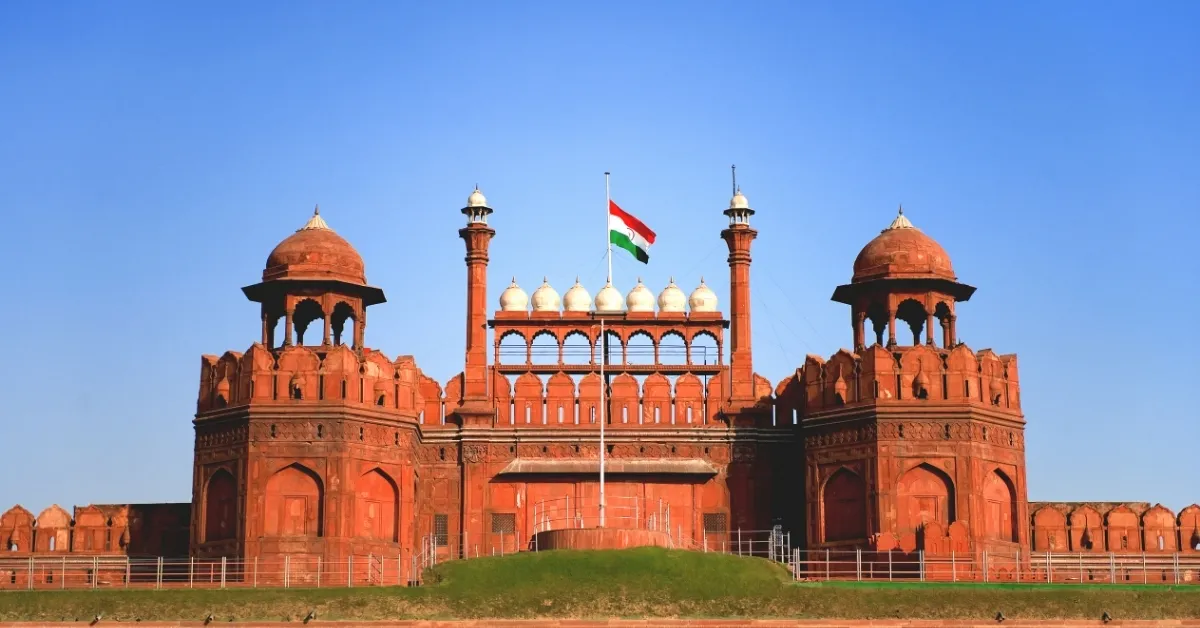
On August 15 every year, patriotism fills the hearts of Indian citizens when the national flag is hoisted at the Red Fort in Old Delhi. The occasion is special as it reminder of the sacrifices made by freedom fighters and commemorates India's transition to a sovereign nation in 1947.
But what made the Red Fort a royal place for the Prime Minister of India to express his views? This journey of the Red Fort from a royal palace to a fortress is an interesting story made of architecture, history and politics.
The Heritage and Architectural Legacy of Lal Qila
Lal Qila was constructed by Mughal Emperor Shah Jahan over period of ten years. The Red Fort (Lal Qila) was actually a political and ceremonial hub of the Mughal Empire. It defines authority and potency in the administrative matters of the subcontinent through its twenty-five-foot-tall red sandstone walls. It represented supreme authority, wealth and administrative power in the subcontinent.
The power of Hindustan remained with whoever controlled Lal Qila for centuries. However with the decrease of Mughal power in India Lal Qila saw changes in history.
When British East India Company began to gain power in India and in the 19th century, when the company than British Crown gained absolute control of the fortress, turning its historic courtyards into British military barracks.
The Red Fort: A Symbol of India's Quest for Freedom
The historical significance of Red Fort in representing struggle for freedom dates long before the year 1947 and goes back to Indian rebellion of 1857, which is recognised as the First War of Independence in India by historians. The sepoy insurgents along with freedom fighters declared Bahadur Shah Zafar as the leader of the revolt against the British East India Company as they fought inside the Red Fort.
The revolt was suppressed by Britishers and made the last Mughal emperor face exile. The fort remained a symbol of the ultimate form of resistance to Indian masses.
Later, the Red Fort became the venue of anti-colonial struggles once again with the British conducting trials of the Azad Hind Fauj (Indian National Army or INA) soldiers.
The trials of the soldiers triggered a politically charged atmosphere in India uniting the masses against colonial rule.
August 15, 1947: Pandit Jawaharlal Nehru and the Historic Unfurling
On August 15, 1947, when India finally gained freedom from British control. The newly born nation needed a venue for its independence celebrations that carried deep emotional and political significance.
Despite the fact that speech "Tryst with Destiny" was given earlier at the Constitution Hall (Parliament House) on the eve of independence. But the act of obtaining independence needed a special place. Prime Minister Pandit Jawaharlal Nehru decided that national flag should be hoisted at the Lahore Gate of the Red Fort.
The action of taking down the British Union Jack from the top of the Fort with the Indian Tricolour atop the ramparts of the Red Fort was a monumental visual statement. With this act, the country demonstrated that it had liberated itself from foreign control.
This event has become a matter of tradition; keeping in mind the history and significance of 1947, every Prime Minister of India repeats the action of Pandit Nehru by hoisting the flag and giving a speech on the occasion and outlining the nation's progress, challenges, and future roadmap.
Today, the Red Fort stands not merely as a relic of medieval architecture or Mughal opulence, but as a living monument to India's hard-earned freedom, unity, and democratic resilience.

Manisha Waldia is a distinguished content strategist with 5 years of experience crafting premium educational content for UPSC and State PCS, with a focus on deep conceptual analysis across Polity, Geography, History, and Environment. She currently brings this expertise to Jagran Josh, where she covers major national and international events, current affairs, and static general knowledge. Over her career, Manisha's specialized insights have led her to curate high-impact materials and serve as a UPSC Mains answer-evaluator for India’s top institutes—including Drishti IAS, Shubhra Ranjan IAS, Study IQ, GS Score, and PWonlyIAS. She has also worked alongside leading NGOs like Oxfam India and Avani Kumaon.
Contact: manisha.waldia@jagrannewmedia.com

-1786186420903_t.webp)
-1786183125041_t.webp)
-1786179973494_t.webp)

![[लाइव] UPTET Result 2026: इंतजार खत्म! यूपी टेट रिजल्ट upessc.up.gov.in पर होगा घोषित, कैंडिडेट्स ऐसे कर सकेंगे चेक](https://img.jagranjosh.com/images/2026/August/782026/up-tet-result.jpg)