BRICS Cross-Border Payment System Explained: Features, Benefits and Impact on Global Trade
What is the BRICS Cross-Border Payment System? Learn about its features, benefits, objectives, and potential impact on global trade, de-dollarization, and international financial cooperation among BRICS nations.
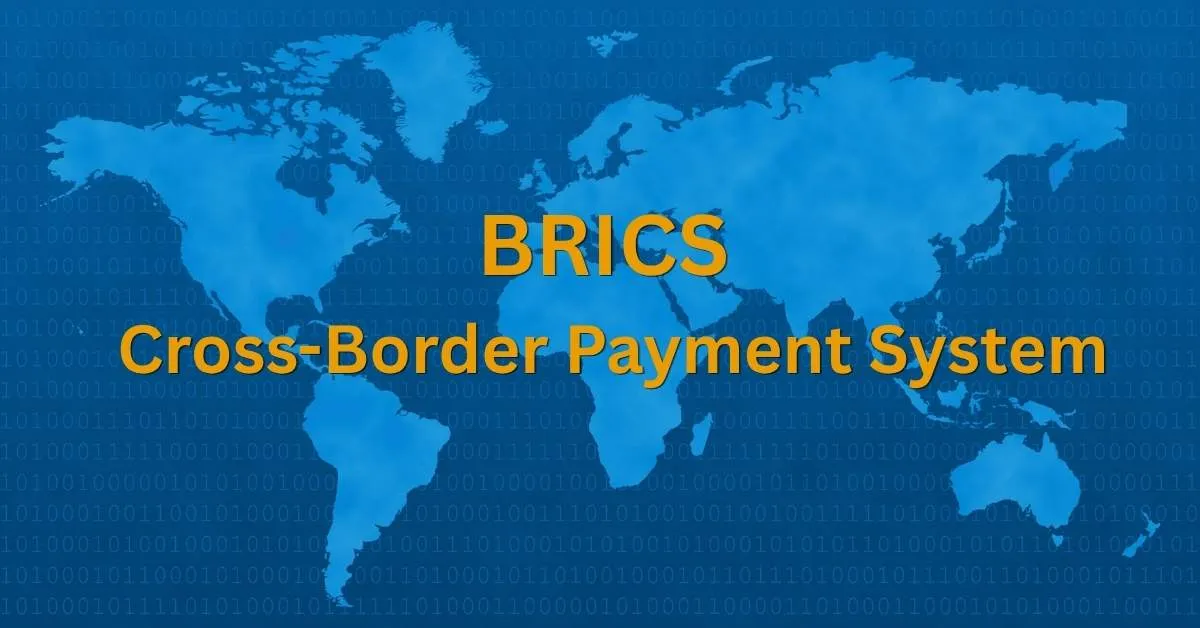
The BRICS are looking at establishing a cross-border payment mechanism through which international transactions can take place quicker and easier, while having less reliance on traditional financial systems dominated by the West. With the processes of globaliation and financial relations being affected by global trade growth and geopolitical developments.
BRICS are working on new payment methods to promote local currencies in trade and financial integration of BRICS.
The BRICS countries include Brazil, Russia, India, China, and South Africa; in addition, the group members expanded to Egypt, Ethiopia, Iran, Saudi Arabia, and UAE. These countries are developing an autonomous cross-border payment project commonly known as BRICS Pay.
The initiative seeks to allow people to trade internationally quickly and more affordably. The goal is to lessen reliance on Western-operated payment systems such as SWIFT and the US dollar.
What is the BRICS Cross Border Payment System?
The BRICS Cross Border Payment System is a dispensed messaging and settlement method designed to connect the national payment systems and central banks of the members.
Using BRICS Pay, instead of conducting international money transfers through foreign partners or converting funds into US dollars or euros, countries can directly pay for international trade using their own currencies (such as an Indian rupee, Chinese yuan, Russian ruble, etc.) or secured digital assets.
Features of the BRICS Payment Framework
| Feature | Description |
| Interoperability of Local Systems | Connects domestic payment networks such as India’s UPI/RuPay, Russia’s MIR/SPFS and China’s CIPS. |
| Local Currency Settlement | Facilitates bilateral trade directly in local currencies without requiring mandatory conversion to USD or EUR. |
| Use of Distributed Ledger Technology (DLT) | Employs blockchain and encrypted messaging technologies to ensure secure, tamper-proof, and transparent transaction logs. |
| CBDC Integration | Designed to support Central Bank Digital Currencies (e.g., India's Digital Rupee ( e₹), China's e-CNY) for instant digital clearing. |
| Decentralized Architecture | Lacks a single central clearing entity, ensuring no single nation can unilaterally impose financial sanctions or block access. |
Need for an Alternative Global Payment Mechanism
The necessity of creating a non-Western payment network is brought about by several structural and geopolitical factors:
-
Geopolitical sanctions and weaponization of finance: The disconnection of several Russian banks from SWIFT in 2022 demonstrated the risks of depending on a centralized, Western-oriented payment system for international payment.
-
Hefty transaction fees: Traditional means of money transfer which entails multiple correspondent banks in cross-border settlements incurs huge transaction and currency conversion costs.
-
Settlement delays: Regular SWIFT transfers take 1 to 5 days on average to transfer money internationally.
-
De-dollarization tendencies: Developing markets are looking for ways of protecting themselves from fluctuations of the US dollar exchange rate and changes in the monetary policy of the US Federal Reserve.
Impact on Global Financial Order and the US Dollar
| Economic Aspect | Traditional System (SWIFT / USD) | Emerging BRICS Payment System |
| Dominant Currency | US Dollar (USD) & Euro (EUR) | Basket of Local Currencies / Digital Assets |
| Governing Framework | Western-led financial regulations | Multilateral consensus among BRICS Central Banks |
| Infrastructure | SWIFT messaging network | Integrated DLT / SPFS / CIPS / UPI rails |
| Sanction Vulnerability | High (subject to US/EU jurisdiction) | Low (Decentralized and bilateral) |
The BRICS payment initiative represents a significant change towards a multipolar financial environment, but financial specialists indicate that it aims to serve as a complementary option rather than a substitute for SWIFT or the US dollar, which still makes up the bulk of currencies held worldwide and international debt issuances.

Manisha Waldia is a distinguished content strategist with 5 years of experience crafting premium educational content for UPSC and State PCS, with a focus on deep conceptual analysis across Polity, Geography, History, and Environment. She currently brings this expertise to Jagran Josh, where she covers major national and international events, current affairs, and static general knowledge. Over her career, Manisha's specialized insights have led her to curate high-impact materials and serve as a UPSC Mains answer-evaluator for India’s top institutes—including Drishti IAS, Shubhra Ranjan IAS, Study IQ, GS Score, and PWonlyIAS. She has also worked alongside leading NGOs like Oxfam India and Avani Kumaon.
Contact: manisha.waldia@jagrannewmedia.com


![[LIVE] RRB Group D Answer Key 2026: Download CBT Response Sheet PDF - Direct Link Shortly](https://img.jagranjosh.com/images/2026/September/692026/RRB-Group-D-Answer-Key-2026-Live--Updates.jpg)
![[OUT] EMRS Tier 2 Result 2026 Live: Download PRT, TGT and PGT Result PDF at nests.tribal.gov.in](https://img.jagranjosh.com/images/2026/August/3182026/EMRS-Tier-2-Result-2026.jpg)