Beyond Kesavananda Bharati: How the Basic Structure Doctrine Evolved
How did the Basic Structure Doctrine evolve after the landmark 1973 Kesavananda Bharati judgment? Explore key post-1973 Supreme Court cases
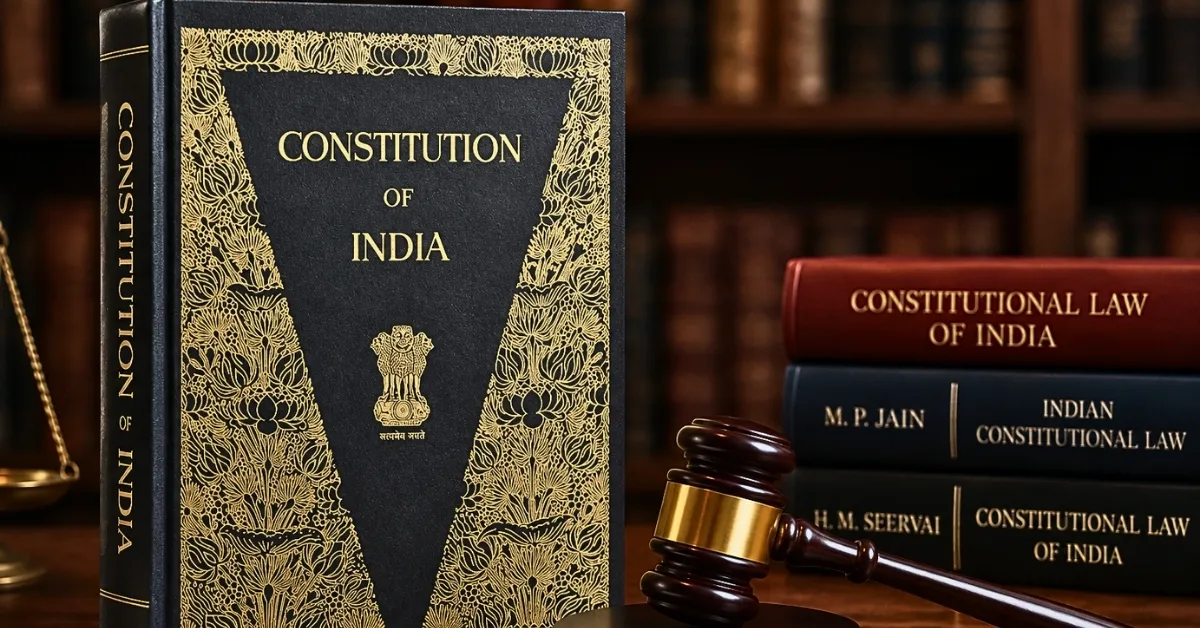
The Basic Structure Doctrine is viewed as the foundation of Indian Constitutional Law. The doctrine begun in the famous Kesavananda Bharati v. State of Kerala (1973) case, many do not realize how it evolved into a safeguard for democracy in India.
In the judgment delivered in 1973, it was established that although Parliament is entitled to make amendments to any part of the Constitution via Article 368, it cannot change or destroy its Basic Structure.
However, the 13-judge bench intentionally left the definition of Basic Structure broad. For the next five decades, the Supreme Court of India has elaborated and clarified this doctrine through several landmark rulings
| Year | Landmark Case | Context | Principle / Element Added |
| 1973 | Kesavananda Bharati v. State of Kerala | 24th & 25th Amendments challenged; 13-judge bench. | Introduced the Basic Structure Doctrine. |
| 1975 | Indira Nehru Gandhi v. Raj Narain | Election dispute; 39th Amendment passed during Emergency. | Free and Fair Elections; Rule of Law; Judicial Review. |
| 1980 | Minerva Mills Ltd. v. Union of India | 42nd Amendment gave unlimited amending power to Parliament. | Harmony between Fundamental Rights and Directive Principles. |
| 1981 | Waman Rao v. Union of India | Validity of land reform laws under the 9th Schedule. | Prospective application (Cut-off date: April 24, 1973) for the 9th Schedule. |
| 1994 | S.R. Bommai v. Union of India | Arbitrary use of President’s Rule under Article 356. | Secularism; Federalism; Democracy. |
| 2007 | I.R. Coelho v. State of Tamil Nadu | Blanket protection to laws added to the 9th Schedule. | Judicial review of laws added to the 9th Schedule after April 24, 1973. |
| 2015 | Supreme Court Advocates-on-Record Association (NJAC Case) | 99th Amendment replacing Collegium with NJAC. | Independence of the Judiciary. |
The Pre-1973 Tug-of-War: Judicial Review vs. Parliamentary Supremacy
To understand how the doctrine evolved after 1973, it is critical to go back to the constitutional clash that precipitated it:
- Shankari Prasad Case (1951) and Sajjan Singh Case (1965): The Supreme Court held that Parliament’s power under Article 368 enabled it to amend any part of the Constitution, including Part III or Fundamental Rights.
- I.C. Golaknath v. State of Punjab (1967): It reversed its earlier views and declared that Fundamental Rights held “supreme position” and Parliament could not interfere with or abolish them.
- Reactions from the Parliament: In response to it, Parliament added the 24th, 25th and 29th Constitutional Amendment Acts giving itself unlimited amending power under Article 368.
- Kesavananda Bharati case (April 24, 1973): A bench of 13 judges narrowly ruled that Parliament has the power to amend the Fundamental Rights, but cannot change the significant part of the Constitution known as “Basic Structure.”
Landmark Cases: Post-1973 Judicial Evolution
Indira Nehru Gandhi v. Raj Narain (1975)
The Allahabad High Court set aside the election of Prime Minister Indira Gandhi. In order to counter this, the Parliament passed the 39th amendment act of 1975 according to which the election of the Prime Minister and Speaker becomes non-justiciable.
In this case, Supreme Court applied the Basic Structure Doctrine for the first time for the invalidation of a Constitutional amendment. Core Doctrine Additions: Free and Fair elections, Judicial review and Rule of Law.
2. Minerva Mills Ltd. v. Union of India (1980)
The Parliament enacted the Constitutional Amendment Act 42. The Amendment added Clauses (4) and (5) to Article 368, stating that there are no limits over powers of amendment of Parliament and making the amendments not subject to judicial review.
The Supreme Court struck down clauses (4) and (5) of Article 368. Chief Justice Y.V. Chandrachud gave the view that a limited power of amendment is a basic structure of the Constitution.
The Core Doctrine of Balance and Harmony of Fundamental Rights (Part III) and Directive Principles of State Policy (Part IV). The concept of Judicial Review
Waman Rao v. Union of India (1981)
The case called into question the legitimacy of the land reform laws included in the 9th Schedule of the Constitution.
The Supreme Court defined the time limitations for the application of the Basic Structure Doctrine whereby it stated that every amendment of the Constitution from April 24, 1973 (the date when the Judgement of the Kesavananda Bharati case was held) onwards could be challenged in court on the ground of violating the Basic Structure.
4. S.R. Bommai v. Union of India (1994)
In this case, Article 356 (President's Rule) has been misused which led to the resignation of different elected state governments in multiple states.
A 9-judge bench of supreme court judges in a case has ruled that the invocation of Article 356 can be judicially reviewed.
Core Doctrine Added
-
Federalism: States have a separate constitutionally recognized status from that of the Union.
-
Secularism: State policies must not favor any religion.
5. I.R. Coelho v. State of Tamil Nadu (2007)
The 9-judge panel reassessed the immunity granted to laws formed under the Ninth Schedule according to Article 31B with a unique judgment in this case.
The Supreme Court concluded that immunity granted under Article 9 is not complete or absolute.
All laws created under the Ninth Schedule after April 24, 1973 that affect the basic rights provided under Part III especially Articles 14, 19 and 21 violate the Basic Structure and will be found unlawful by the Judiciary.
6. Supreme Court Advocates-on-Record Association/NJAC (2015)
Parliament enacted the 99th Constitutional Amendment Act, 2014 for the establishment of National Judicial Appointments Commission (NJAC) in replacement of the previous Collegium system.
The Supreme Court, with a five-judge Constitution Bench declared the 99th Amendment null and void.
The independence of the Judiciary constitutes the basic structure and the process of judicial appointment should protect that critical independence of the institution.
Principles of the Basic Structure
Even if the Supreme Court has not furnished a complete definition as such, it has deemed the following principles as components of ‘Basic Structure’:
-
Supremacy of the Constitution
-
Sovereign, Democratic, Republican nature of Indian Polity
-
Separation of powers of Legislature, Executive and Judiciary
-
Federal character of the Constitution
-
Secular character of the Constitution
-
Rule of law
-
Judicial review
-
Independence of judiciary
-
Principle of equality
-
Cohesion and balance between Fundamental Rights and Directive Principles
-
Free and fair elections
-
Limited amendment power of the Parliament etc.
The evolution of the Basic Structure Doctrine following Kesavananda Bharati has demonstrated that the Indian Constitution is not simply a historical document. Starting as a decision presented in a 7:6 verdict in 1973, this doctrine has evolved into a key instrument that prevents political forces from transforming the key democratic principles of the country.
This development has resulted in the advancement of the aforementioned doctrine, allowing it to find its application in protecting the principle of Free and Fair Elections in Indira Gandhi (1975), ensuring Secularism and Federalism in S.R. Bommai (1994), removing legislative gaps in I.R. Coelho (2007), and maintaining the independence of the Judiciary in the NJAC case (2015).

Manisha Waldia is a distinguished content strategist with 5 years of experience crafting premium educational content for UPSC and State PCS, with a focus on deep conceptual analysis across Polity, Geography, History, and Environment. She currently brings this expertise to Jagran Josh, where she covers major national and international events, current affairs, and static general knowledge. Over her career, Manisha's specialized insights have led her to curate high-impact materials and serve as a UPSC Mains answer-evaluator for India’s top institutes—including Drishti IAS, Shubhra Ranjan IAS, Study IQ, GS Score, and PWonlyIAS. She has also worked alongside leading NGOs like Oxfam India and Avani Kumaon.
Contact: manisha.waldia@jagrannewmedia.com

-1787998321217_t.webp)



![[Out] UGC NET June 2026 Result Live: यूजीसी नेट रिजल्ट ugcnet.nta.nic.in जारी, डायरेक्ट लिंक से करें चेक](https://img.jagranjosh.com/images/2026/August/2782026/UGC-NET-Result-2026-Marksheet-link-pdf.jpg)