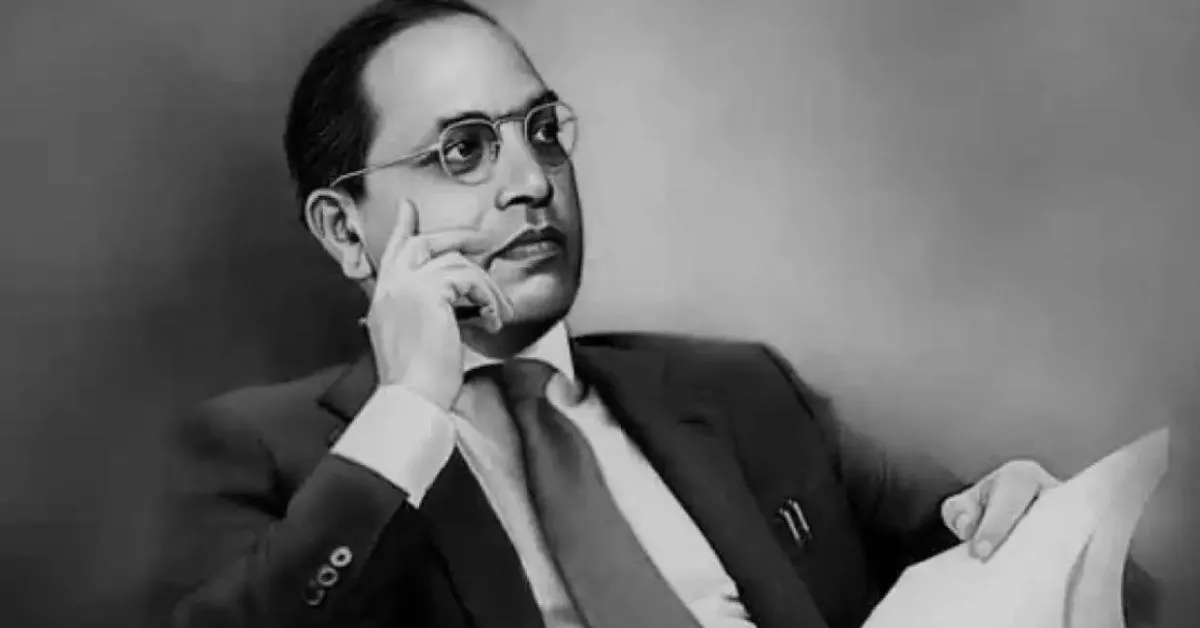
Personality of the Day is a special series that highlights inspiring individuals who have created a lasting impact on society through their ideas, leadership, and contributions. Each feature aims to help readers understand why these individuals are remembered and how their work continues to influence the world today.
Today’s personality is Dr. B. R. Ambedkar, a visionary leader, social reformer, jurist, and the chief architect of the Indian Constitution. He is best known for his tireless fight against caste discrimination, his role in shaping India’s democratic framework, and his efforts to secure equal rights and dignity for all citizens.
Here is a detailed overview of Dr. Ambedkar’s life, major contributions, career journey, and personal background, helping readers gain a clear understanding of his lasting legacy and influence.
READ| Personality of the Day: Narendra Modi
Personality of the Day: Dr. B. R. Ambedkar
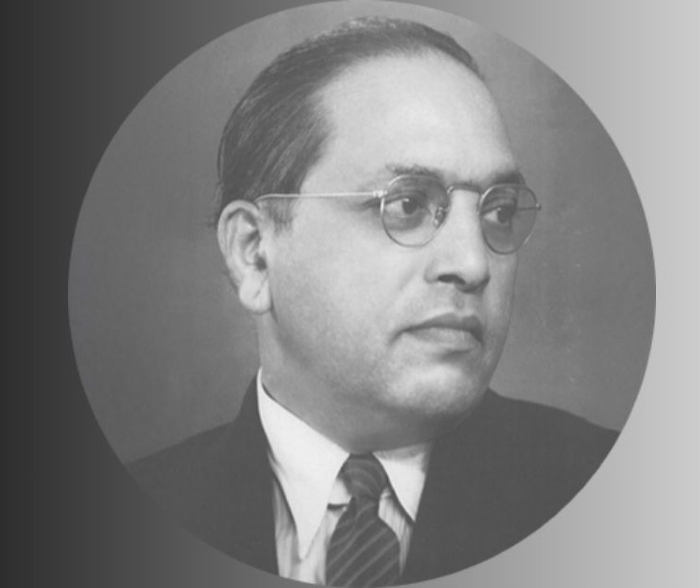
Source: Dr. Ambedkar Foundation
Dr. Bhimrao Ramji Ambedkar (14 April 1891 – 6 December 1956), commonly called Dr. B. R. Ambedkar or Babasaheb Ambedkar, was an Indian jurist, economist, social reformer and politician. He belonged to a community that faced caste-based exclusion and used his education and public office to fight for social equality, legal reform and political empowerment for the marginalised. Ambedkar served as India’s first Minister of Law and was the chair of the Drafting Committee of the Constituent Assembly that wrote the Constitution of India.
Britannica mentions: “He served as the first law minister of the government of India (1947–51).”
READ| Personality of the Day: Nelson Mandela
Why is Dr. B.R. Ambedkar Famous? His Major Contributions
Here are some of the reasons why Dr. B.R. Ambedkar is considered as an important figure in Indian history.
Principal Architect of the Constitution

Source: The Quint
Ambedkar chaired the Drafting Committee of the Constituent Assembly and played a central role in framing the Constitution, shaping its fundamental rights, safeguards for minorities and provisions on equality and justice. His legal thinking and drafting work helped form the legal foundation of the Indian Republic.
The Constitution of India website states: “Ambedkar became a key figure in India’s constitution-making process due to the offices he held and his interventions and speeches in the Assembly. He was the Chairman of the Assembly’s most crucial committee – the Drafting Committee and a member of other important Committees. As its Chairman, he had to defend the Draft Constitution which the Committee prepared, and therefore intervened in nearly every debate.”
Economist and Policy Thinker
Ambedkar held advanced degrees in economics and law and wrote on currency, finance and labour. He argued for land reforms, industrialisation and measures to reduce inequality. His economic writings influenced debates about India’s development path in the mid-20th century.
Champion of Social Justice

Source: Ambedkar Foundation
Born into the Mahar community, which was considered “untouchable” under the old caste order, Ambedkar campaigned for the rights of Dalits and other oppressed groups. He organised movements, negotiated legal protections, and argued for political representation and affirmative measures to secure social mobility and dignity. His activism included public speeches, legal actions and political organisation.
The Constitution of India website states: “Ambedkar also played a key role in social movements that fought for the rights of Dalits. In 1924, he founded the ‘Bahishkrit Hitakarani Sabha‘ for the social upliftment of the ‘depressed classes’ with the motto: “Educate, Agitate, Organise”. In 1927, a Depressed Classes Conference was organised at Mahad, located in Raigad district. Here, Ambedkar led a historic protest that culminated in a large group of Dalits drinking water from a public tank, breaking repressive social and physical norms that had existed for centuries.”
“A few months later, he organised a public burning of the Manusmriti at the same place. This ancient Hindu law book was the most well known among several such scriptures which placed cruel social and legal constraints on the ‘untouchables’. The burning was a strong statement against the centuries old discrimination and repression faced by the Dalits,” it adds.
Advocate for Education and Legal Equality
Ambedkar believed education was the principal weapon for social change. He pushed for wider educational access for the oppressed and used law and constitutional guarantees to protect civil liberties, equal citizenship and the rule of law.
Dr. B.R. Ambedkar: Life, Career, and Family
Here is a detailed overview on the life of Dr. B.R. Ambedkar.
Early Life
Ambedkar was born on 14 April 1891 in Mhow which is now renamed as Dr Ambedkar Nagar, in present-day Madhya Pradesh. Despite caste discrimination, he won scholarships and studied at institutions in India and abroad, earning degrees from the University of Bombay, Columbia University (M.A., Ph.D.) and the London School of Economics (D.Sc.). His advanced training in law and economics equipped him for public service and scholarship.
The Constitution of India website states: “Bhimrao Ramji Ambedkar was born on 14 April 1891 in the Mhow Army Cantonment, Central Provinces (present-day Madhya Pradesh) to a Dalit family. His family’s low caste status resulted in his early life being marked by discrimination, segregation and untouchability. Ambedkar’s academic life was prolific. He obtained a Bachelor’s degree in economics and political science from Elphinstone College, a Master’s degree from Columbia University in economics, a doctoral degree from the University of London in 1923, and another doctoral degree from Columbia University in 1927.”
“Ambedkar’s higher education in the USA had been sponsored by the Maharaja of Baroda, therefore he was obligated to return and serve under the Princely State. He joined the Accountant-General’s Office in Baroda in 1918, but he was forced to leave in only 11 days as he was unable to find any permanent place of residency due to his caste identity,” it adds.
Ambedkar’s Public Career
Ambedkar began as an academic and civil servant, later entering public life to fight caste exclusion. He founded organisations to mobilise Dalit communities, participated in British-era legislatures, and served as the first law minister of independent India (1947–1951). His leadership in drafting the Constitution (as chair of the Drafting Committee) is a central achievement of his public career.
Family and Personal Life

Source: Br Ambedkar.in
Ambedkar married Ramabai in 1906; she supported him through his early education and activism and died in 1935. Ambedkar later married Savita Ambedkar in 1948.
Ambedkar passed away on 6 December 1956. He is remembered as a national leader whose ideas shaped modern India’s legal and social architecture. Public institutions, universities, awards and monuments (including statues and an airport named after him) honour his legacy. His writings — including Annihilation of Caste and The Buddha and His Dhamma — continue to be widely read.
The INC website mentions: “Three days after completing his final manuscript The Buddha and His Dhamma, Ambedkar died in his sleep on 6 December, 1956, at his home in Delhi.”
Quotes By Dr. B. R. Ambedkar

Source: Britannica
Below are five quotes by Dr. B.R. Ambedkar reflects his thoughts on equality, education and freedom.
“I measure the progress of a community by the degree of progress which women have achieved.”
-
“The relationship between husband and wife should be one of the closest friends.”
-
“Cultivation of mind should be the ultimate aim of human existence.”
-
“Life should be great rather than long.”
-
“Humans are mortal. So are ideas. An idea needs propagation as much as a plant needs watering. Otherwise both will wither and die.”
-
“Though, I was born a Hindu, I solemnly assure you that I will not die as a Hindu.”
READ| Dr. B.R. Ambedkar Quotes
In conclusion, Dr. B. R. Ambedkar matters because he combined scholarship, moral courage and political action to challenge entrenched social hierarchies and build legal structures that protect equality and rights. His influence reaches law, education, politics and social movements.
READ| Personality of the Day: Virat Kohli





Comments
All Comments (0)
Join the conversation