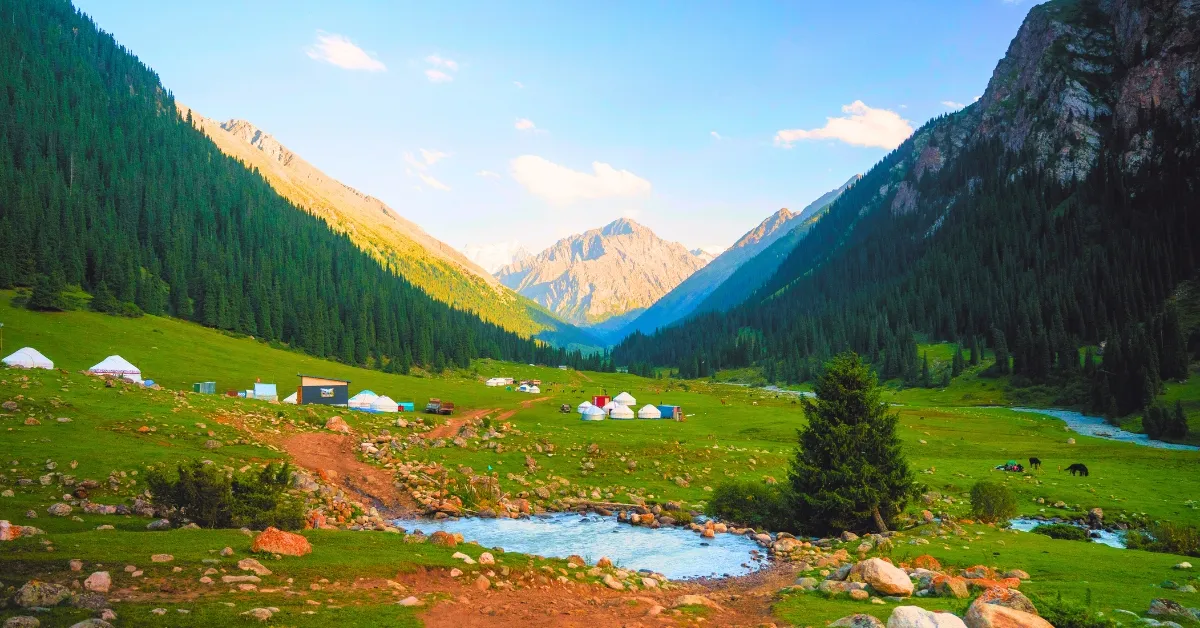
India is a land of stunning natural beauty, a vibrant mosaic of landscapes that captivate the soul. From the towering, snow-capped peaks of the Himalayas in the north to the sun-drenched beaches of the south and from the arid deserts in the west to the lush, green rainforests of the east, every corner holds a wonder. This incredible diversity gives India some of the most breathtaking views on Earth. But do you know there are special places in the world which are so beautiful they are compared to the most precious gems? Have you heard of the valley that is famously known as the "Jewel in the mountains"? In this article, we'll take a journey through this magnificent valley to discover why it has earned such a beautiful, well-deserved title.
Which Valley Is Known As The Jewel In The Mountains?
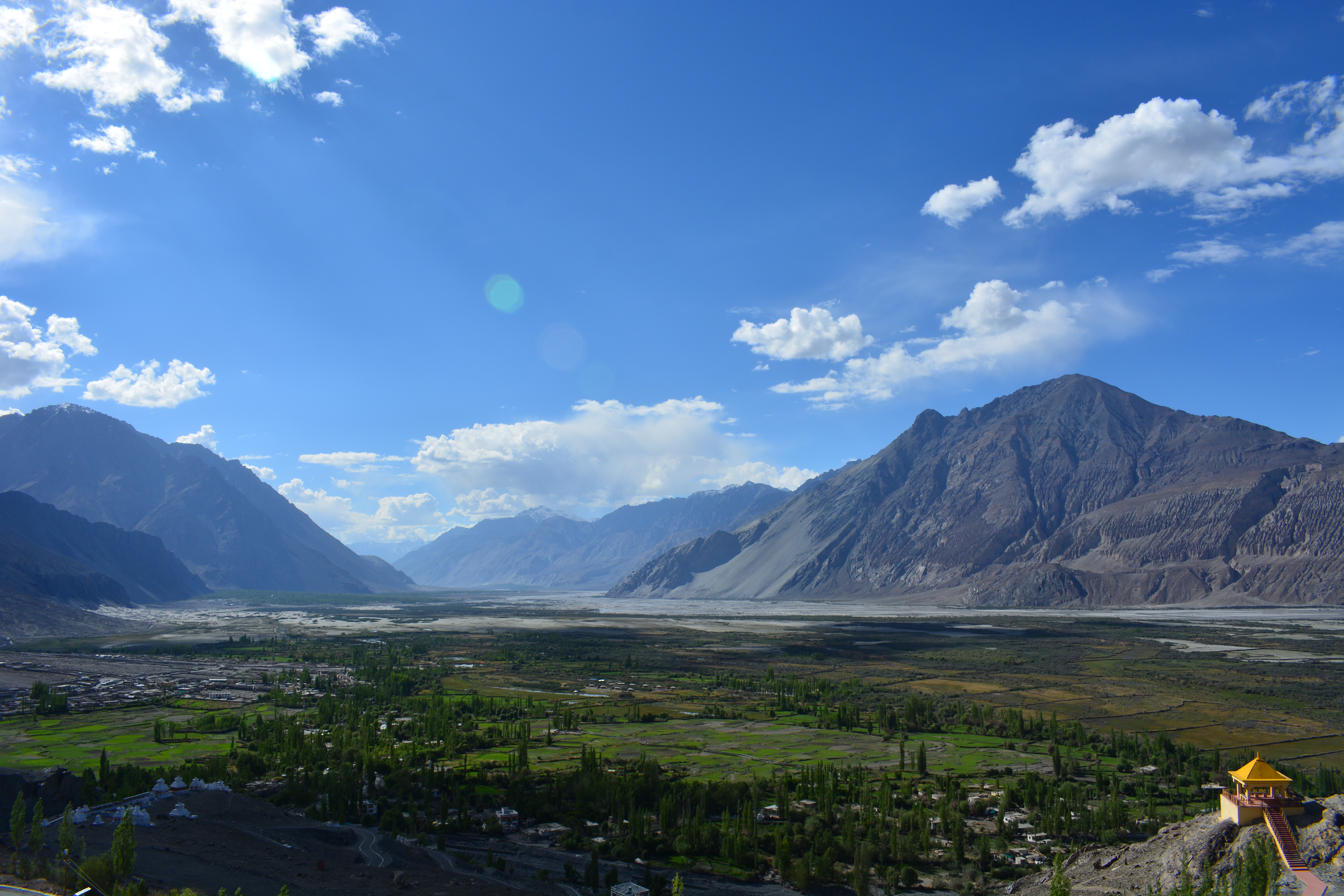
The valley famously known as the "Jewel in the Mountains" is the Nubra Valley in Ladakh, India. Located in the northern part of Ladakh, this high-altitude cold desert is situated at an average elevation of about 10,000 feet (3,048 metres). The Karakoram and Ladakh mountain ranges flank it. The valley is nicknamed the 'Jewel' for its stark yet beautiful contrasts: golden dunes nestled between barren mountains, with lush green oases blooming along the Shyok and Nubra Rivers. It was historically a vital stop on the ancient Silk Route trade network, adding to its cultural and strategic importance. To reach it, one must cross the iconic Khardung La, one of the world's highest motorable passes.
10 Lesser-Known Facts About Nubra Valley

- The traditional name for the valley is "Ldumra", which means "Valley of Flowers" in Ladakhi, a name it earned for the relatively lush vegetation along the riverbanks compared to the rest of the cold desert region.
- The famous Hunder Sand Dunes are believed to be the remnants of an ancient glacial lake that once filled the valley floor.
- The valley is home to the rare Bactrian Camels, which have two humps. They are descendants of the camels that carried cargo along the ancient Silk Route.
- The villages close to the Line of Control (LOC), like Turtuk, were once part of Pakistan and became a part of India only after the 1971 Indo-Pak War, preserving a distinct Balti culture and language.
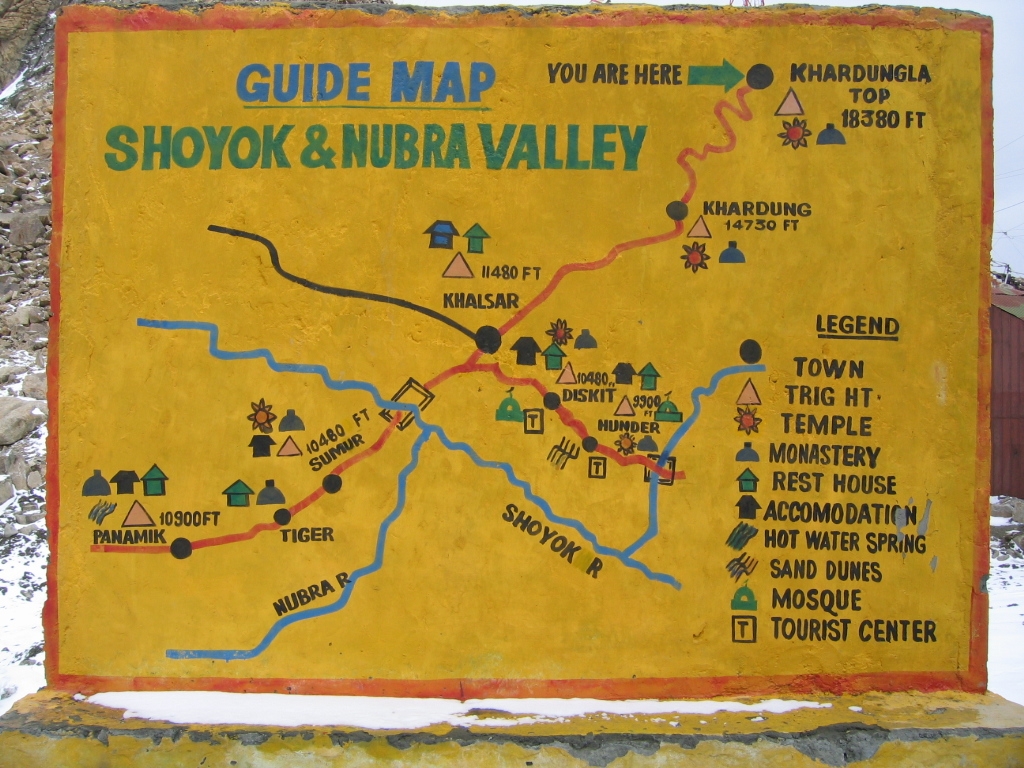
- Panamik is the last settlement accessible to civilians on the route leading to the Siachen Glacier, the world's highest battlefield.
- The Diskit Monastery, the oldest and largest in the valley, features a towering 106-foot (32-meter) statue of Maitreya Buddha facing the Shyok River.
- The valley is formed by the confluence of the Shyok and Nubra Rivers, whose glacier-fed waters irrigate the fertile pockets of the desert.
- Due to the high altitude, clear, unpolluted air, and minimal light pollution, the valley offers exceptional stargazing, with the Milky Way often visible at night.

- The mountains surrounding Nubra Valley are part of the Trans-Himalayan Range, which contains geological evidence (sedimentary rocks) of the ancient Tethys Ocean that closed millions of years ago when the Indian tectonic plate collided with the Eurasian plate.
- The valley exhibits a true cold desert climate (Köppen classification BWk), characterised by sparse precipitation (often less than 100 mm annually), intense solar radiation, and extreme diurnal (day-night) temperature variations.
- Due to its elevation and proximity to Central Asia, the Nubra Valley, like the rest of Ladakh, is significantly impacted by atmospheric brown clouds (ABCs) or aerosols, which can influence glacial melt rates and regional climate patterns by reducing the snow's albedo (reflectivity).
- The vegetation in the valley, particularly the hardy Sea Buckthorn (Hippophae rhamnoides), is adapted to permafrost or seasonally frozen ground, which helps stabilise the soil and prevent erosion in the fragile ecosystem.
- The predominant plant life, known as Xerophytes (drought-resistant plants), has small, often spiny, or waxy leaves to minimise evapotranspiration, a key biological adaptation to the extreme aridity.
- The high elevation and low atmospheric density result in significantly higher levels of unfiltered ultraviolet (UV) radiation exposure. This factor influences the pigmentation (darker skin) and genetic adaptation of the local population.
- The current topography, featuring dramatic cliffs and deep gorges, is the result of continuous tectonic uplift (due to the India-Asia collision) balanced by the relentless erosional power of the glacial meltwater rivers over millions of years.
Which Valley is known as the Jewel of Nature?
While many valleys earn glowing nicknames, several are celebrated explicitly as "jewels" in the realm of nature:
- Kashmir Valley (India): Widely celebrated as "Paradise on Earth," it is often called the "Jewel in the Crown of Kashmir." Its fame rests on breathtaking scenery, including shimmering sapphire lakes (such as Dal Lake) and historic Mughal gardens.
- Kalam Valley (Pakistan): This valley is explicitly titled "The Jewel of Nature" by numerous travel enthusiasts, thanks to its pristine and stunningly preserved natural landscapes.
- Pahalgam (India): Located in the Kashmir region, Pahalgam is often described as a "jewel in the mountains", particularly for the scenic Lidder River that flows through it.
- Nubra Valley (India): This dramatic high-altitude cold desert in Ladakh is commonly referred to as the "Crown Jewel" of the region, known for its striking contrasts of dunes and green oases.
While the Kalam Valley is specifically named "The Jewel of Nature", the title is shared by many places, like the Kashmir Valley, which are revered as foundational "jewels" of their respective countries.





Comments
All Comments (0)
Join the conversation