Which Planet Has The Most Oxygen Other Than Earth?
Do you know which planet has the most oxygen? While Earth supports life, a tiny, cratered world surprisingly holds the highest percentage of atmospheric oxygen (42%) in our solar system. Let's discover this fascinating, sun-scorched planet and its unique atmosphere.

Have you ever looked up at the stars and wondered if we could breathe on other worlds? Earth is famous for its blue skies and fresh air, but what about our planetary neighbours? In our solar system, there are 8 official planets orbiting the Sun. Each one is wrapped in a completely different blanket of gases.
For example, Jupiter and Saturn are giant balls of hydrogen and helium, while Venus is choked by a thick, suffocating layer of carbon dioxide. In fact, Venus has the most dangerous and toxic atmosphere, where clouds of sulphuric acid can melt metal!
But oxygen is the life-giving gas that gives life to Earth. Surprisingly, there is another planet that holds an incredibly high percentage of oxygen in its atmosphere, even more than Earth's 21%. In this article, we’ll take a look at this extraordinary planet, which has given Earth tough competition in terms of oxygen abundance.
Which Planet Has The Highest Oxygen Level In The Entire Solar System?
When we talk about oxygen, everyone thinks of Earth first. But if we look at the actual percentage of oxygen in a planet's atmosphere, a tiny rocky world takes the crown. Believe it or not, Mercury has the highest percentage of oxygen of any planet in our solar system.
Which Planet Is This And What Is Its Nickname?
The planet we are talking about is Mercury. It is the very first planet from the Sun. Because it orbits the Sun incredibly fast, taking just 88 Earth days to complete one full trip, scientists give it a cool nickname. It is often called the "Swift Planet" or the "Iron Planet" because of its massive iron core.
Does Mercury Have Any Moons?
Many planets have many moons. For example, Jupiter has over 90 moons! But Mercury is completely lonely. It has 0 moons orbiting it. This is because it is too close to the Sun. The Sun's massive gravity would just pull any small moon away from Mercury and swallow it up.
What Is Its Geography Like, And Does It Have Waterfalls?
Source: NASA
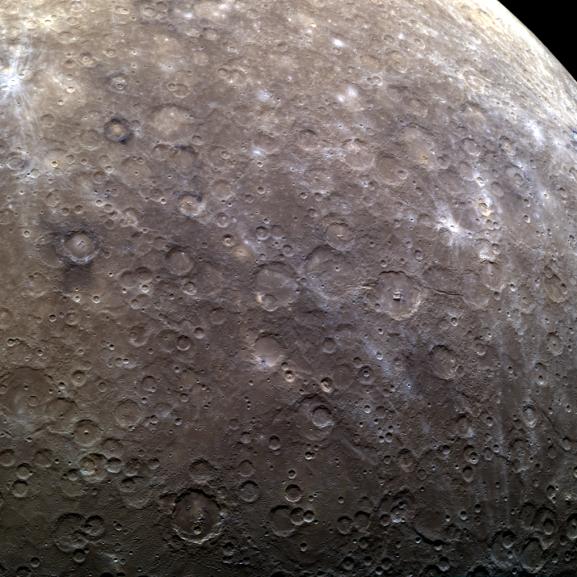
Mercury's geography looks a lot like our Moon. It is covered in thousands of deep craters, huge cliffs, and smooth plains. The temperature here is wild. During the day, it reaches up to 430°C, hot enough to melt lead. At night, it drops down to -180°C. Now, you might wonder if a planet with so much oxygen has beautiful waterfalls.
The short answer is no. Mercury has absolutely zero liquid water or waterfalls on its surface. It is a completely dry, rocky desert. Any liquid water would instantly boil away during the daytime or freeze solid into ice at night.
How Does It Have The Most Oxygen?
Source: NASA
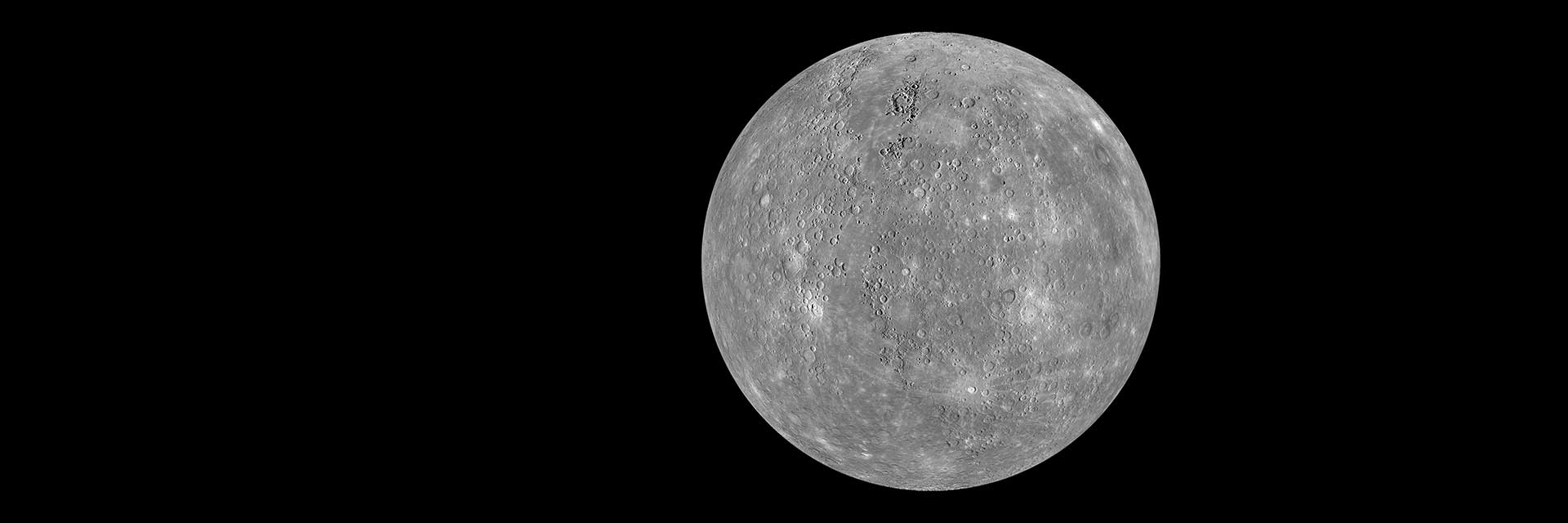
This is where the science gets really interesting. Mercury doesn't have a thick atmosphere like Earth. Instead, it has a super-thin layer called an "exosphere". According to NASA data from space missions, this thin exosphere is made of 42% molecular oxygen.
To put that into perspective, Earth's atmosphere only contains about 21% oxygen. So, by pure percentage, Mercury has double the oxygen level of Earth. However, because the exosphere is so incredibly thin, it is almost a vacuum.
There are very few actual oxygen molecules floating around, so humans could not breathe there at all without a spacesuit. The oxygen is constantly created when the powerful solar wind hits the planet's rocky surface and knocks oxygen atoms loose from the soil.
5 Lesser-Known Facts About Mercury
Here are some quick and exciting facts about the Swift Planet that you can share with your friends:
- A Year is Shorter Than a Day: Mercury rotates very slowly on its axis. It takes about 59 Earth days to spin once, but only 88 days to orbit the Sun. This means a single day-night cycle on Mercury takes 176 Earth days!
- It's Not the Hottest Planet: Even though Mercury is closest to the Sun, Venus is actually hotter. This is because Venus has a thick atmosphere that traps heat, while Mercury has no atmosphere to keep the warmth in.
- It is Shrinking: Scientists found out that Mercury's iron core has been cooling down over the last 4 billion years. As it cools, the planet wrinkles and shrinks. It has lost about 14 kilometres in diameter!
- It Has Ice: Even though it is super close to the Sun, scientists discovered water ice inside deep craters at Mercury's north and south poles. These craters are always in deep shadow, so the sun never shines on them.
- Discovered Long Ago: We don't know who officially discovered Mercury because it can be seen with the naked eye. It was recorded by ancient Sumerians all the way back around 3000 BC.
Surprising Facts About Oxygen in Our Solar System
When we think of oxygen, we usually only think of Earth. But oxygen exists across our solar system in some very unexpected ways! Here is what you need to know:
- The Highest Percentage (Mercury): Mercury actually has the highest percentage of molecular oxygen (O₂) in its atmosphere. However, its atmosphere (called an exosphere) is so incredibly thin that it is almost a total vacuum. There is not enough actual air to breathe!
- The Most Trapped Oxygen (Venus): If you count oxygen that is locked inside other gases, Venus takes the crown. Its thick, heavy atmosphere is 96% carbon dioxide (CO₂). Because carbon dioxide contains oxygen atoms, Venus actually holds vastly more total oxygen in its air than any other rocky planet.
- The Most Total Oxygen (Uranus): If you look at an entire planet from its surface down to its core, ice giants like Uranus win. Uranus contains significantly more total oxygen than Earth because it is packed with massive amounts of water ice deep inside its mantle.
- The Oxygen-Making Moon (Europa): While it isn't a planet, Jupiter's icy moon Europa has a super cool feature. The sun's radiation constantly breaks down the ice on its surface, creating a thin oxygen atmosphere. It actually produces enough oxygen every single day to keep a million humans breathing!
Conclusion
In conclusion, exploring our solar system always brings amazing surprises. While Earth remains the only planet where we can step outside and take a deep breath, Mercury holds a shocking secret with its 42% oxygen exosphere. It just goes to show that space science is full of twists and turns. Even though it has the highest level of oxygen by percentage, the extreme temperatures and lack of a thick atmosphere make it a beautiful but deadly world.

Kriti Barua is a skilled digital journalist and communications professional with 4+ years of experience, currently writing for the General Knowledge section at Jagran New Media. She has established herself as a subject matter expert in History, Geography, Trending National and International News, Sports, Science, and Defence, producing clear, reliable, and search-optimised content that connects with readers worldwide.
Kriti holds a BA degree from Delhi University and a one-year diploma in TV Production and Journalism, an academic background that adds research depth and strong storytelling instincts to her writing. Her experience spans brand writing, content marketing, and digital media, giving her a sharp understanding of what makes content both helpful to readers and visible in search.
At Jagran New Media, she applies this expertise to national and international news coverage, query-based articles, and in-depth pieces across her specialist subject areas. Her content is defined by easy language, factual accuracy, strong keyword strategy, and reader-friendly storytelling.


