Which Is the Largest Country in the Indian Subcontinent?
India is the largest country in the Indian subcontinent by area and population. Know India’s area, geographical location, coastline and key facts.
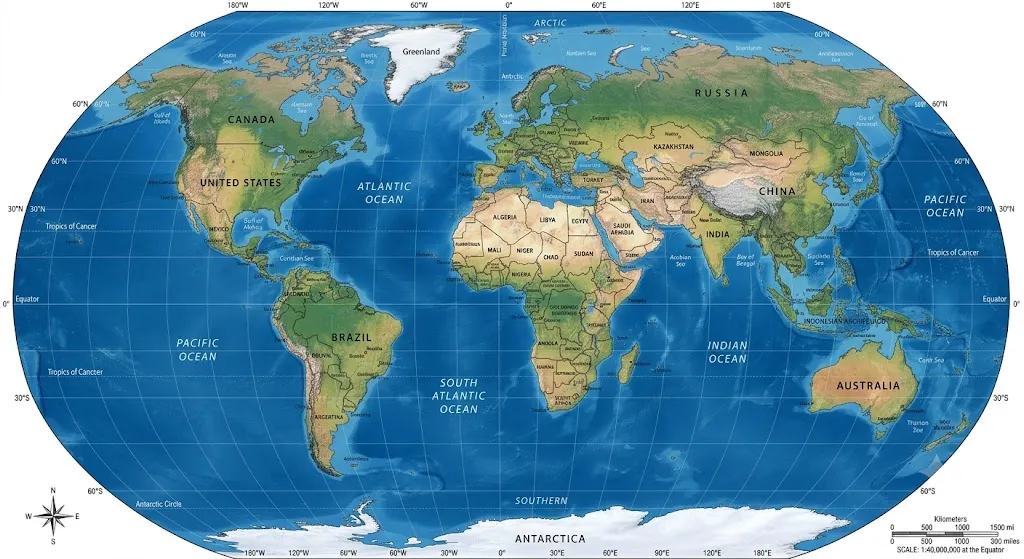
India is the largest country in the Indian subcontinent by both area and population. With an area of approximately 3.29 million square kilometres India has a major portion of the region’s landmass. Keep reading to know in detail.
What Is the Indian Subcontinent?
The Indian subcontinent is a geographical and cultural region in South Asia. It is located in the southern part of the Asian continent and is largely separated from the rest of Asia by the Himalayan mountain system. The region is generally associated with India, Pakistan, Bangladesh, Nepal, Bhutan and Sri Lanka.
Which Is the Largest Country in the Indian Subcontinent?
India is the largest country in the Indian subcontinent. It is the largest country in the region in terms of geographical area, population, length of coastline, economic size and number of states and union territories. India has an area of around 3.29 million sq km, making it the seventh largest country in the world by area.
India’s Geographical Location
India is located in South Asia. It occupies a large part of the Indian subcontinent and extends from the Himalayan region in the north to the Indian Ocean in the south. India is bordered by Pakistan in the northwest, China, Nepal and Bhutan in the north, Bangladesh and Myanmar in the east, Arabian Sea in the west, Bay of Bengal in the east and Indian Ocean in the south.
How Large Is India?
India covers approximately 3,287,263 square kilometres. Some important geographical facts about India are:
| Feature | Information |
| Country | India |
| Capital | New Delhi |
| Continent | Asia |
| Region | South Asia |
| Area | 3,287,263 sq km |
| World ranking by area | 7th |
| Largest country in Indian subcontinent | India |
| Highest mountain range | Himalayas |
| Southernmost mainland point | Kanyakumari |
India’s Population
India is also the most populous country in the Indian subcontinent. Its population is more than 1.4 billion, making it the world’s most populous country. India Compared With Other Countries in the Subcontinent India is considerably larger than the other major countries of the Indian subcontinent.
| Country | Approx. Area |
| India | 3.29 million sq km |
| Pakistan | 0.88 million sq km |
| Afghanistan* | 0.65 million sq km |
| Bangladesh | 0.15 million sq km |
| Nepal | 0.15 million sq km |
| Sri Lanka | 0.066 million sq km |
| Bhutan | 0.038 million sq km |
India’s Coastline
India has a long coastline along the Arabian Sea, Bay of Bengal and Indian Ocean. The country’s coastline, including its mainland and islands, extends for approximately 7,516.6 km.
Why Is India Geographically Important?
India occupies a strategically important position in South Asia because of its size and location. Some important geographical features include the Himalayas in the north, the Thar Desert in the west, the Indo-Gangetic Plain in the north, Deccan Plateau in central and southern India, Western and Eastern Ghats, Arabian Sea, Bay of Bengal and Indian Ocean.
Is India a Subcontinent?
India is a country, not a subcontinent. The term Indian subcontinent refers to the larger geographical region of South Asia. India is the largest country within this region.
Why Is It Called a Subcontinent?
The Indian subcontinent is considered geographically distinct from much of the rest of Asia because of its distinct geological history, large geographical area, himalayan boundary, unique physical features and diverse climate and ecosystems.

Jasreet Kaur is a journalist with over 3 years of experience in digital media and news content creation. She specializes in covering Trending News, including major National and International developments, with a focus on delivering accurate, engaging, and reader-friendly stories. Prior to this, she worked with Zee News as a Content Writer, where she gained extensive experience in news reporting and content strategy. Driven by curiosity, credibility, and a passion for impactful journalism, Jasreet aims to contribute to informed public discourse while supporting positive growth in organizations, society, and the world.



![[Out] UGC NET June 2026 Result Live: यूजीसी नेट रिजल्ट ugcnet.nta.nic.in जारी, डायरेक्ट लिंक से करें चेक](https://img.jagranjosh.com/images/2026/August/2782026/UGC-NET-Result-2026-Marksheet-link-pdf.jpg)