Key Points
- Goats (Capra hircus) were domesticated ~10,000 years ago in the Zagros Mountains.
- The FAO estimates over a billion goats exist, crucial for dairy and textiles.
- A 2024 study in Nature found goats possess high cognitive abilities.
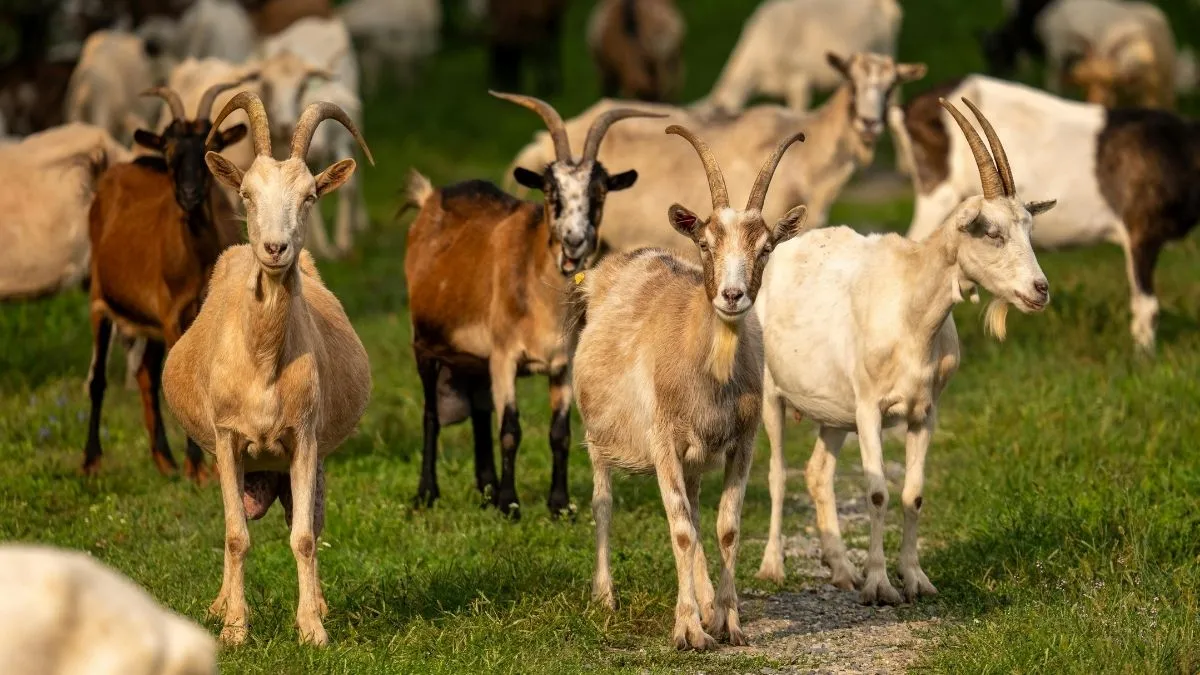
Only a few biology enthusiasts and science students know what the scientific name for a goat is. Goats (Capra hircus) are amazing animals. They were one of the first animals that people domesticated almost 10,000 years ago in the Zagros Mountains.
The Food and Agriculture Organization (FAO) says that there are more than a billion goats in the world. They are very important in the dairy and textile industries.
This article tells you everything you need to know about the scientific name for a goat, the different types of goats that live in the wild, and the biological classification of goats.
What is the Scientific Name of a Goat?
Capra hircus is the scientific name for a goat. This is specifically about the domestic goat. These animals belong to the genus Capra, which also includes wild species like ibexes and markhors.
Using the scientific name of a goat helps researchers and livestock experts talk to each other clearly across cultures.
Even if they use different common names, everyone is talking about the same biological entity this way.
Classification of Goat
The taxonomy of a goat puts it in the Bovidae family, which means it is closely related to cows and antelopes. This is how their classification is broken down hierarchically:
-
Kingdom: Animalia
-
Phylum: Chordata
-
Class: Mammalia
-
Order: Artiodactyla (Even-toed ungulates)
-
Family: Bovidae
-
Subfamily: Caprinae
-
Genus: Capra
-
Species: C. hircus
Also Read - What is the Scientific Name of a Rabbit?
Different Types of Goats and Their Scientific Name
There are over 300 recognized breeds of goats globally. They are generally categorized based on their utility: dairy, meat, or fiber (wool). Below are some of the most significant types of goats and their scientific designations.
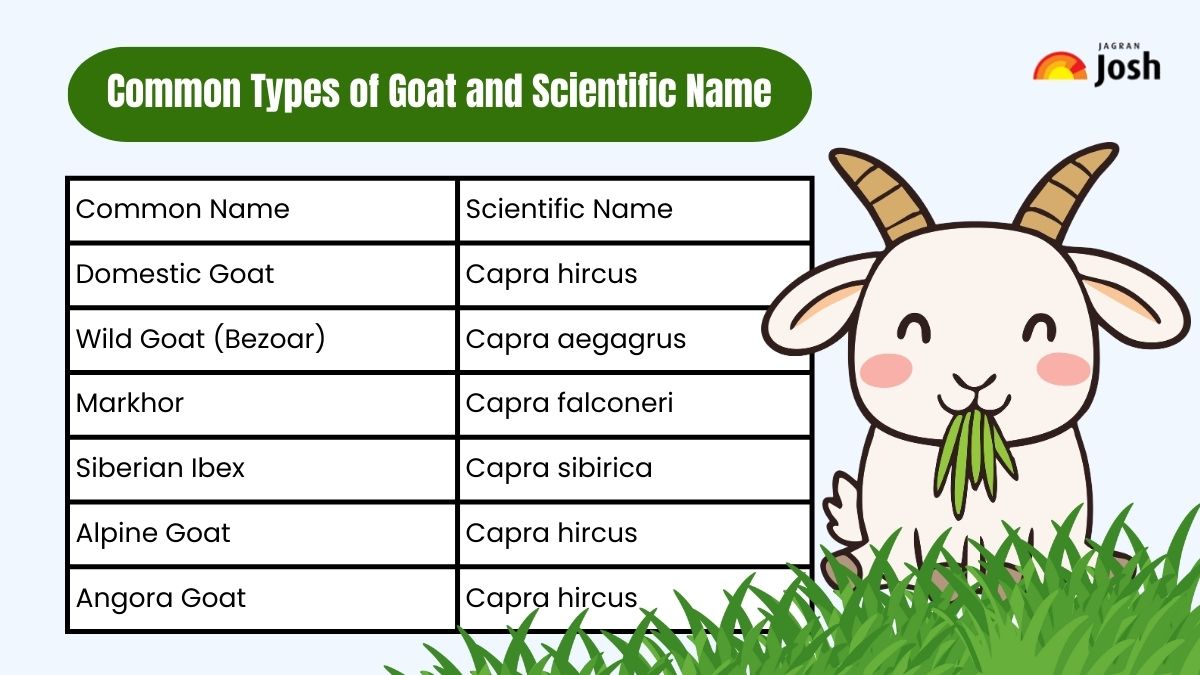
| Common Name | Scientific Name | Found In | Status/Use |
| Domestic Goat | Capra hircus | Worldwide | Livestock (Milk/Meat) |
| Wild Goat (Bezoar) | Capra aegagrus | Western Asia | Vulnerable |
| Markhor | Capra falconeri | Central Asia | Near Threatened |
| Siberian Ibex | Capra sibirica | Northern Asia | Least Concern |
| Alpine Goat | Capra hircus | French Alps | High Milk Yield |
| Angora Goat | Capra hircus | Turkey/Asia Minor | Mohair Production |
Check Out - What is the Scientific Name of Human Beings?
What is the Difference between a Goat and a Sheep?
People often mix up goats and sheep because they are about the same size, but their anatomy and behavior make it easy to tell them apart.
-
The Tail: A goat's tail usually points up. On the other hand, a sheep's tail hangs down and is often cut short (docked) for cleanliness in domestic breeds.
-
Feeding Habits: Goats are browsers; they look for leaves, twigs, and shrubs, often standing on their hind legs to reach high branches. Sheep are grazers, preferring to eat grass close to the ground.
-
Chromosomes: Biologically, they are very different. Goats have 60 chromosomes, while sheep have only 54. This difference makes crossbreeding (creating a geep) extremely rare.
-
Horns: Goat horns are usually narrower and grow upward or backward, while sheep horns tend to curl in a spiral on the sides of the head.
Check Out - What is the Scientific Name of a Pine Tree?
To understand where goats fit into our ecosystem, you need to know that their scientific name is Capra hircus. Goats are very important because they give us Pashmina wool and are a main source of food in developing countries. A study in Nature from 2024 found that goats have very high cognitive abilities, which means they are smarter than people thought.





Comments
All Comments (0)
Join the conversation