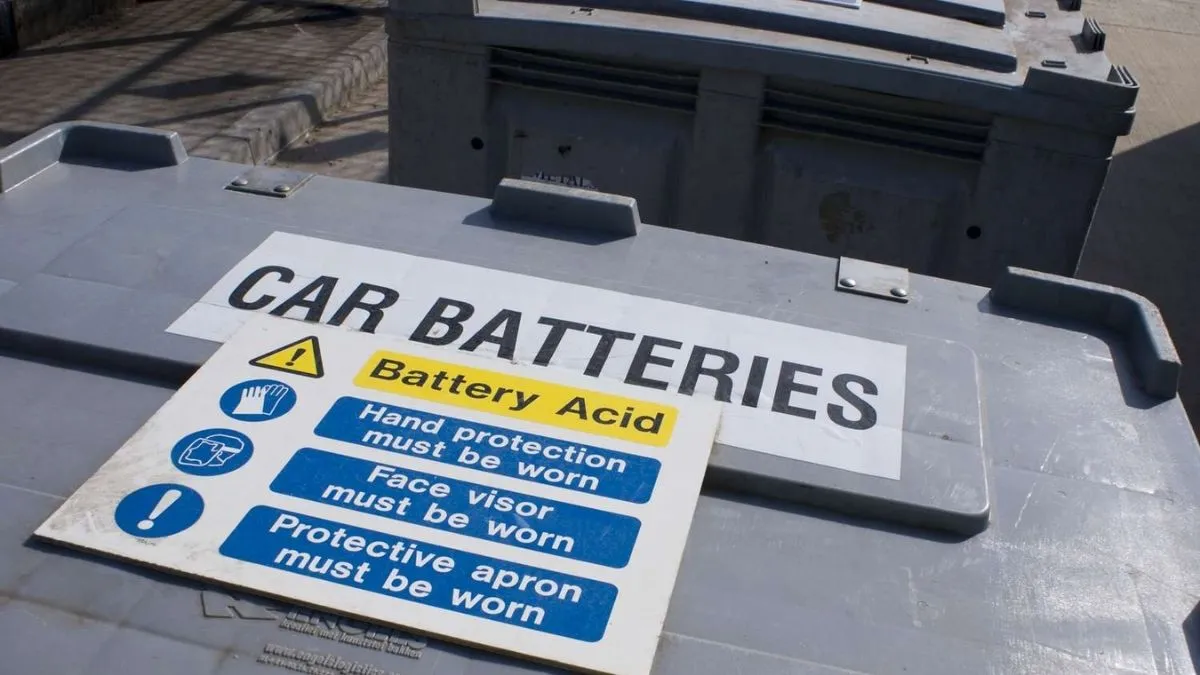
A lead-acid battery is a type of rechargeable battery, invented in 1859. It uses lead plates (electrodes) submerged in battery acid, which we learn further in this article. This battery acid is known for its ability to provide high surge currents at a low cost, making it ideal for starting cars.
Continuing in our series of chemical names and formulas, we learn that battery acid is a compound that acts as an electrolyte. This battery acid is the enabler for chemical reactions to produce electricity in lead-acid batteries.
Now, as we know, in everyday life, we refer to substances and compounds by their commonly known names, but the International Union of Pure and Applied Chemistry (IUPAC) has a scientific name and formula for all compounds, including battery acid.
As per IUPAC, the nomenclature for compounds helps the scientific community avoid confusion. Also, the chemical name helps to understand the composition or ionic nature of the compound.
Previously, we learned the chemical names and formulas of salt, vinegar, bleaching powder, chalk, and many more. Today, in this article, we will learn the chemical name of battery acid.
What is the chemical name and formula for battery acid?
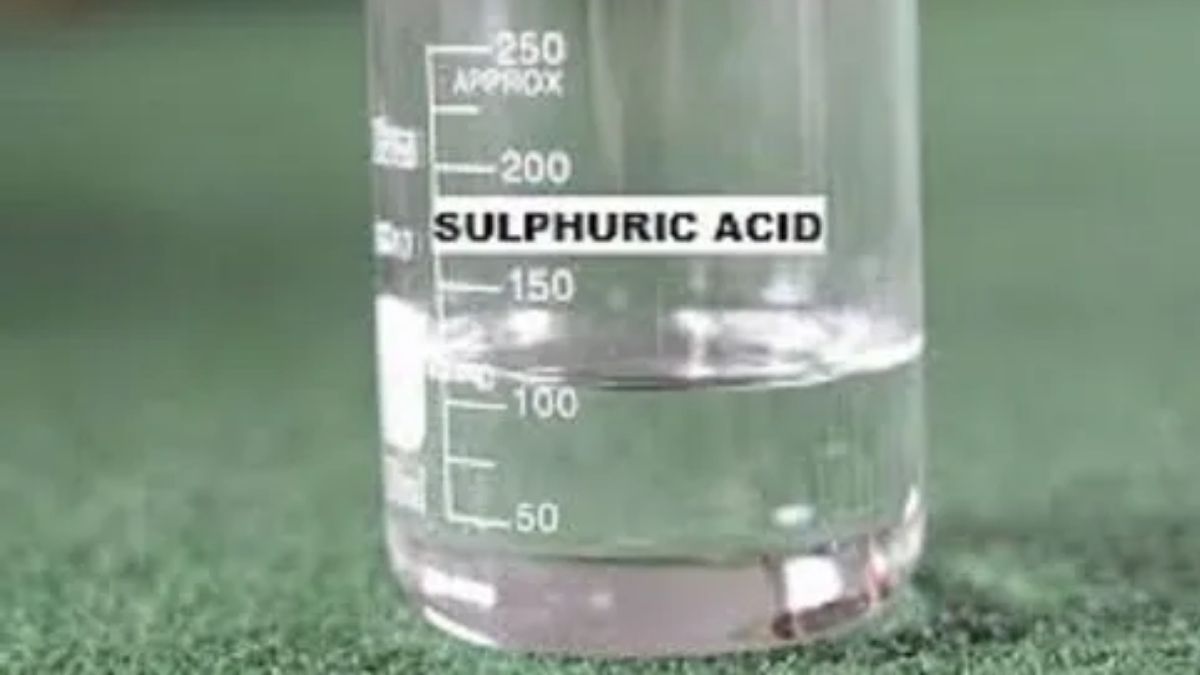
The chemical name for battery acid is sulphuric acid.
The chemical formula for battery acid is H₂SO₄ (two hydrogen atoms, one sulphur atom, and four oxygen atoms).
Properties of Sulphuric Acid
Sulphuric acid is referred to as ‘King of Acids’ due to its powerful properties, vast industrial uses, and daily life. It is also called oil of vitriol. Let us now look at the physical and chemical properties of sulphuric acid.
Physical Properties
Appearance: Colourless, dense, oily, viscous liquid
Odour: Odourless when pure, but can have a pungent smell
Density: ~1.84 g/cm³ (at room temperature)
Melting Point: ~10.31 degrees Celsius
Boiling Point: ~337 degrees Celsius
Solubility: Highly soluble in water, releasing significant heat
Chemical Properties
Composition: Sulphuric Acid
Hygroscopic: Strongly absorbs moisture from the air
Strong Acidic Nature: Ionises completely in water
Corrosive: Extremely corrosive to tissues and metals
Dehydrating Agent: Removes water from other compounds
Oxidising Agent: Can oxidise many non-metals and metals
Uses of Battery Acid
Battery acid is primarily used as the electrolyte in lead-acid batteries for vehicles and backup power. Let’s have a look.
Electrolyte: Carries ions between lead plates, allowing current flow in lead-acid batteries.
Energy storage: Facilitates the conversion of chemical energy to electrical energy
Industrial cleaning: Cleaning masonry, such as brick and concrete
Drain cleaning: Used as a powerful solvent
Other Applications: Powers vehicle starters, UPS, solar storage, etching metal, creating stained glass, etc.




-1768398283970.jpg)
Comments
All Comments (0)
Join the conversation